






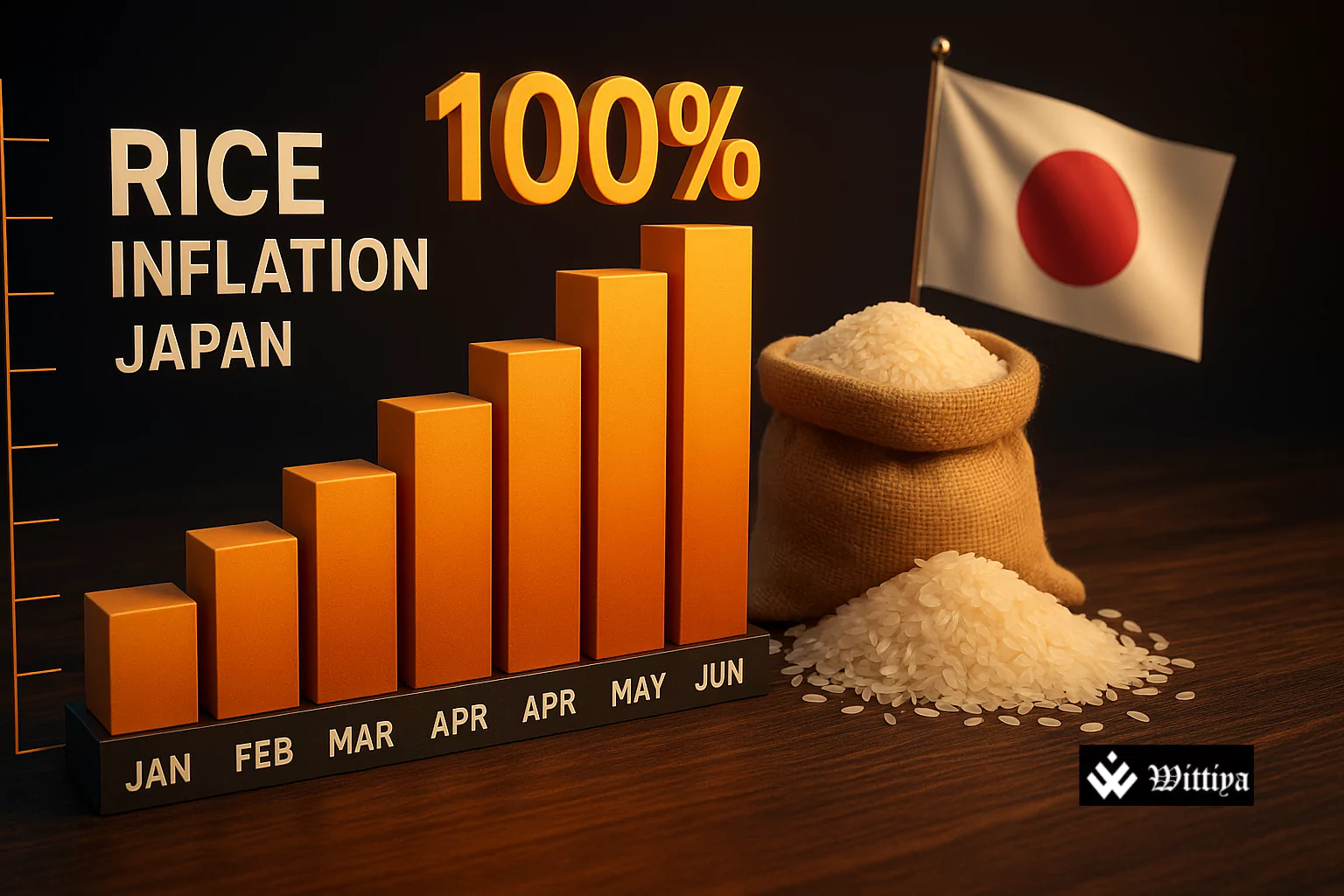
Japan’s core inflation eased to 3.3% in June 2025, retreating from a 29-month peak as rice inflation cooled slightly. Despite persistent pressure from a weak yen and looming tariffs, the inflation trajectory appears to be stabilizing.
Japan’s core inflation cooled to 3.3% year-over-year in June 2025, down from 3.7% in May, marking a retreat from a 29-month high. The moderation was primarily driven by a slight softening in rice inflation, which had previously surged to levels not seen in over five decades.
The headline inflation figure, which includes energy and food, also settled at 3.3%, down from 3.5% in the prior month. However, this marks the 39th consecutive month that inflation has remained above the Bank of Japan’s 2% target.
A closer look at food inflation reveals that rice prices rose 100.2% year-over-year in June — a minor decline from the 101.7% recorded in May. The easing follows the Japanese government’s move to release national rice stockpiles earlier this year to mitigate consumer price pressures amid poor harvests in 2023.
Meanwhile, the “core-core” inflation rate — excluding both fresh food and energy — rose slightly to 3.4% from 3.3%, a metric closely tracked by the Bank of Japan for policy signals.
Despite these signs of moderation, inflationary pressures persist. Many sectors not cushioned by state subsidies are still experiencing cost push, especially due to the ongoing depreciation of the yen. The falling yen continues to raise import prices, particularly for energy and agricultural commodities, posing a challenge to consumer purchasing power as real wages lag behind price growth.
Additionally, economic sentiment remains fragile ahead of Japan’s Upper House elections on July 20. Uncertainty surrounding the political outcome has introduced fresh volatility into financial markets.
Japan’s GDP contracted by 0.2% in the first quarter of 2025 — the first decline in a year — largely due to falling exports. The nation now faces an external pressure point in the form of a 25% tariff on key exports such as automobiles, set to take effect on August 1, compounding the existing levy already in place.
Despite a recent uptick in core-core inflation, the outlook for the Bank of Japan remains cautious. While further rate hikes are not ruled out, volatility stemming from trade tensions and domestic political dynamics may constrain the bank’s policy maneuvering room.
Japan’s economic strategy is now focused on stabilizing core prices through supply-side measures such as commodity stock releases, while closely monitoring exchange rate movements. The government’s intervention in rice stockpiles, while temporarily effective, is unlikely to create long-term relief unless harvest conditions improve and currency stability is achieved.
As the nation approaches a critical policy juncture, stakeholders are advised to prepare for persistent price fluctuations, subdued growth, and a high-interest rate environment that could extend into 2026.