






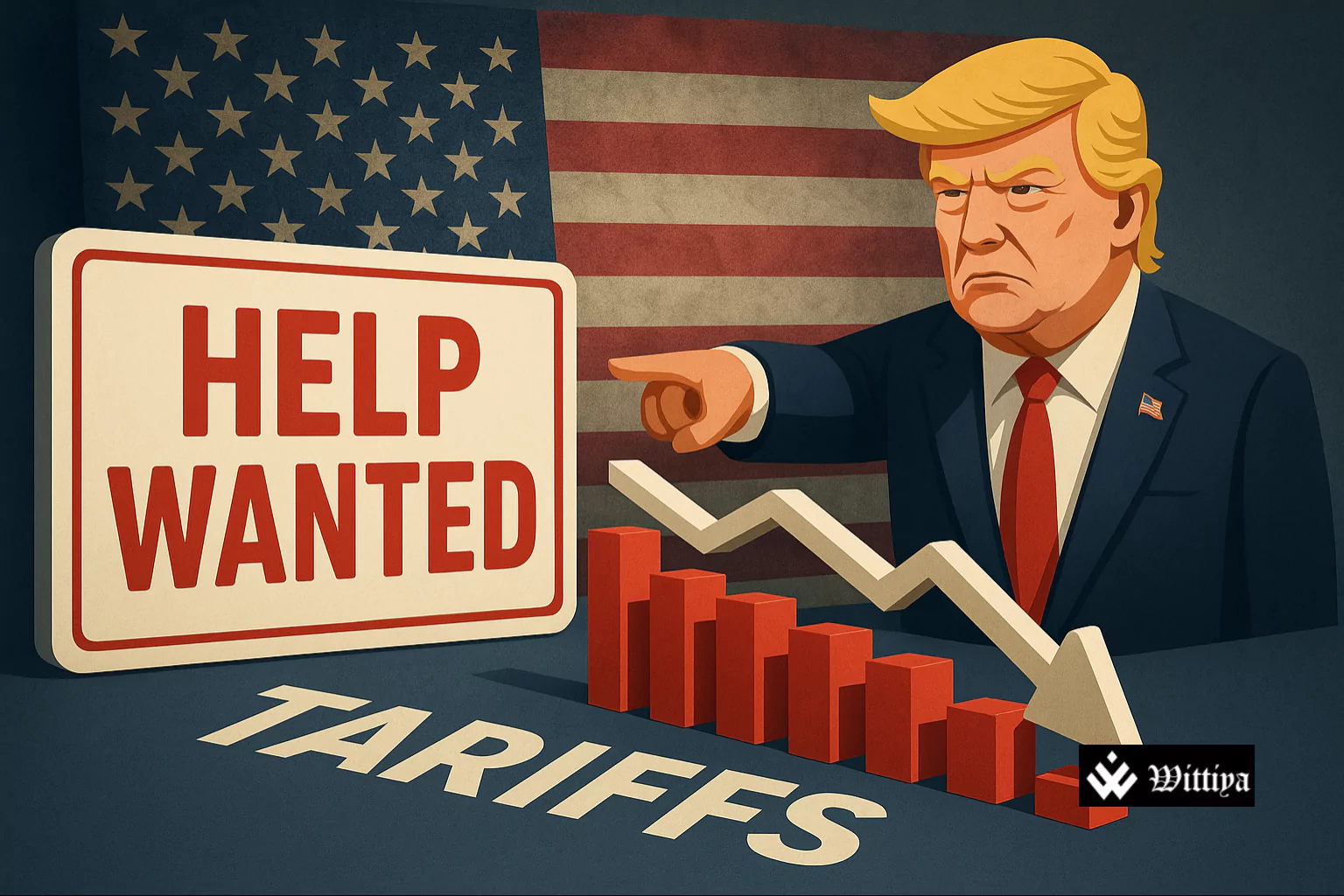
The U.S. labor market is showing signs of significant strain as President Donald Trump’s aggressive trade agenda triggers weak hiring, job cuts, and rising economic uncertainty.
The U.S. economy added just 73,000 jobs in July, far below market expectations of 115,000, according to the Labor Department’s latest data. This shortfall, coupled with downward revisions of 258,000 jobs from May and June, paints a troubling picture of the labor market under the weight of President Donald Trump’s intensified trade agenda.
The unemployment rate rose to 4.2%, with 221,000 more Americans joining the ranks of the unemployed, many exiting the labor force entirely. These figures highlight growing concern among economists and businesses about the macroeconomic implications of protectionist trade policies, which have led to an unpredictable environment for employers.
Trump’s administration has pushed forward with broad tariff impositions on imports from numerous trading partners in a bid to revive domestic manufacturing and fund recent tax reforms, a cornerstone of his economic strategy. However, the approach is yielding mixed to negative short-term effects. Manufacturing, for instance, shed 11,000 jobs in July, continuing a three-month decline, while employment in administrative support services fell by nearly 20,000.
Also Read: Trade War Sparks Swadeshi Fire in India
Despite Tata Motors, Ford, and other automakers maintaining robust domestic operations, the added costs from tariffs are now visibly hampering their employment and pricing strategies. Moreover, Procter & Gamble and other producers have passed the tariff burden to U.S. consumers, contributing to higher inflation and strained household budgets.
The Federal Reserve has so far maintained its benchmark interest rate, but the weak labor data has intensified market speculation around a potential rate cut in September. The Fed previously cited a “solid” job market as a reason to hold off on easing monetary policy. However, with average monthly job growth in 2025 slumping to just 85,000—half of 2024’s average—the central bank’s stance may soon shift.
Healthcare remained a bright spot, accounting for 76% of total job gains in July with 55,400 new positions. However, analysts warn that the narrow distribution of job growth could point to sectoral imbalances, limiting broader economic resilience.
Labor supply is also tightening due to restrictive immigration policies and an ageing population, creating structural limitations on job growth. The U.S. is now witnessing a labor pattern similar to southern Europe or Japan, where declining working-age populations strain productivity and fiscal sustainability.
Although President Trump argues that tariff hikes will lead to a manufacturing renaissance, recent job losses in that sector contradict this claim. Businesses remain hesitant to invest or expand headcount amid volatile policy signals. The executive order signed recently—introducing yet another round of tariffs effective August 7—has only heightened concerns.
Also Read: Markets Defy Tariff Tensions with a Stunning 500-Point Rally
In a politically charged move, President Trump has also targeted the leadership of the Bureau of Labor Statistics, demanding the removal of its director following the release of the report. Experts emphasize that data revisions—which Trump criticized—are standard statistical procedures, especially post-pandemic, as business reporting delays affect survey accuracy.
In sum, the US labor market is exhibiting signs of fragility, impacted by trade disruptions, falling immigration, and policy-induced uncertainty. With wage pressures easing, inflation slowing, and the economic outlook weakening, the Fed may soon need to respond more aggressively.
READ MORE ON