






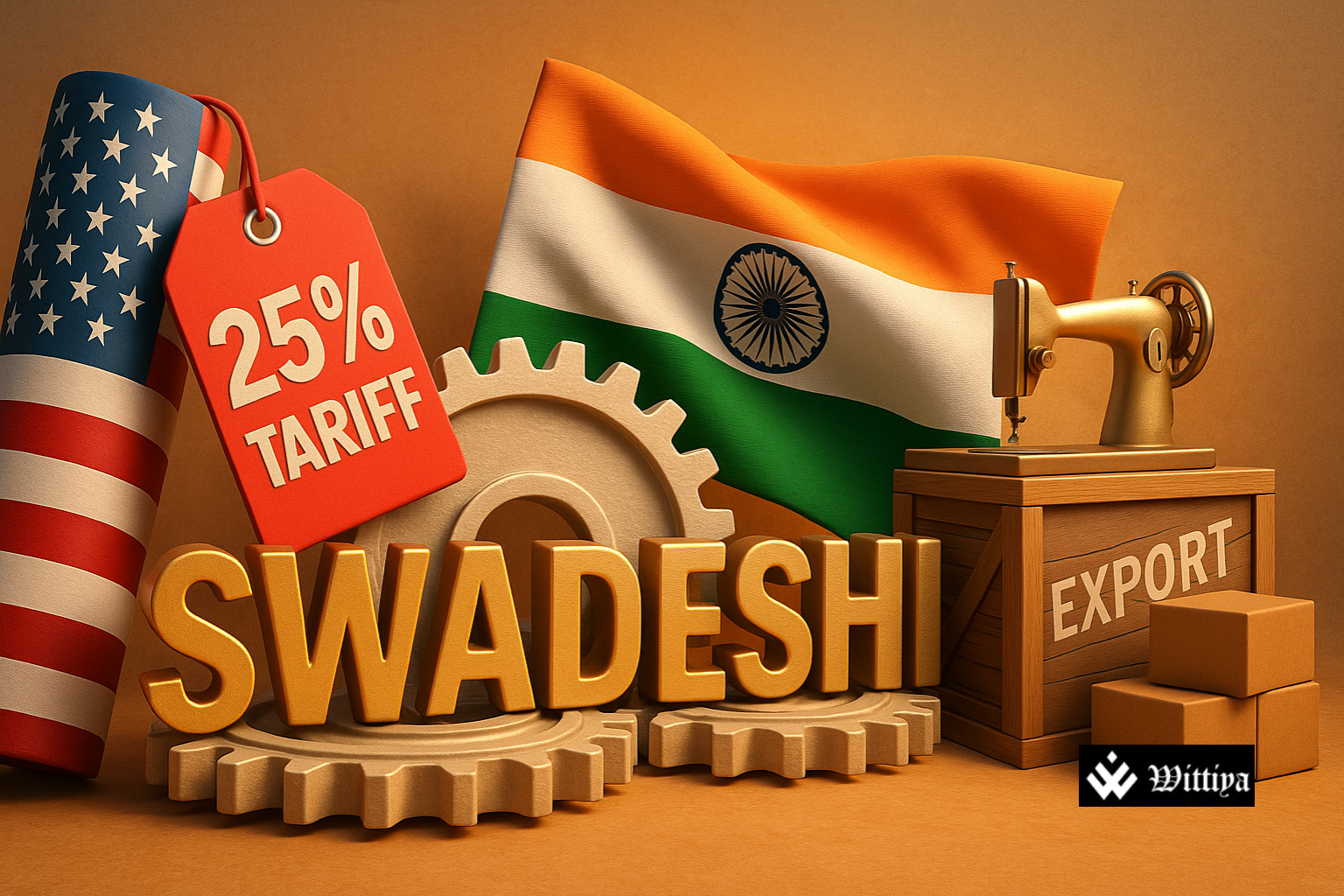
India is facing renewed trade pressure as the United States imposes a 25% tariff on its exports. In response, India is ramping up its Swadeshi (self-reliance) drive, focusing on local manufacturing, trade diversification, and targeted export support in key sectors like textiles, chemicals, and marine products. The government is also maintaining strategic ties with alternative trade partners to mitigate the long-term impact.
The imposition of a 25% tariff on Indian goods by the United States has prompted a swift and strategic response from India. While bilateral trade negotiations remain on the table, India’s approach signals that quick compromises will not be made at the cost of domestic interests. With agriculture and dairy remaining key sticking points, Indian policymakers are reinforcing a swadeshi-led path forward.
Government sources confirm that the Ministry of Commerce has held sector-specific consultations with key exporters—particularly in textiles, marine, steel, engineering, chemicals, and food processing. Exporters have voiced concerns about loss of competitiveness and potential job cuts due to reduced global demand under higher pricing structures.
To counteract these pressures, the Indian government is preparing a package of export support measures. These include financial assistance for branding and market expansion, focused subsidies for affected sectors, and infrastructure support under its Make-in-India umbrella. This is intended not only to cushion the short-term blow but to push Indian exporters toward new markets and enhance product value globally.
Also Read: List of Indian Stocks Most Impacted by U.S. Tariffs
India’s broader strategic posture is also being reshaped. Rather than yield to external pressure, the country is intensifying its engagement with other global partners. This includes continued trade with longstanding allies, ensuring that supply chains remain intact and that exports are not overly dependent on a single geography.
From an economic lens, analysts observe that India’s firm response reflects its commitment to becoming a resilient export economy. This move aligns with its structural agenda: reducing import dependency, enhancing domestic capacity, and promoting industrial policy for long-term self-sufficiency. The external shock—though disruptive in the short term—is likely to accelerate long-term competitiveness and operational diversification for Indian firms.
Experts believe this tariff-triggered policy shift could become a pivotal moment for India’s trade future. By leveraging adversity as a catalyst for reform, the government is positioning India as a self-reliant, manufacturing-driven economy equipped to navigate global headwinds.
READ MORE ON