






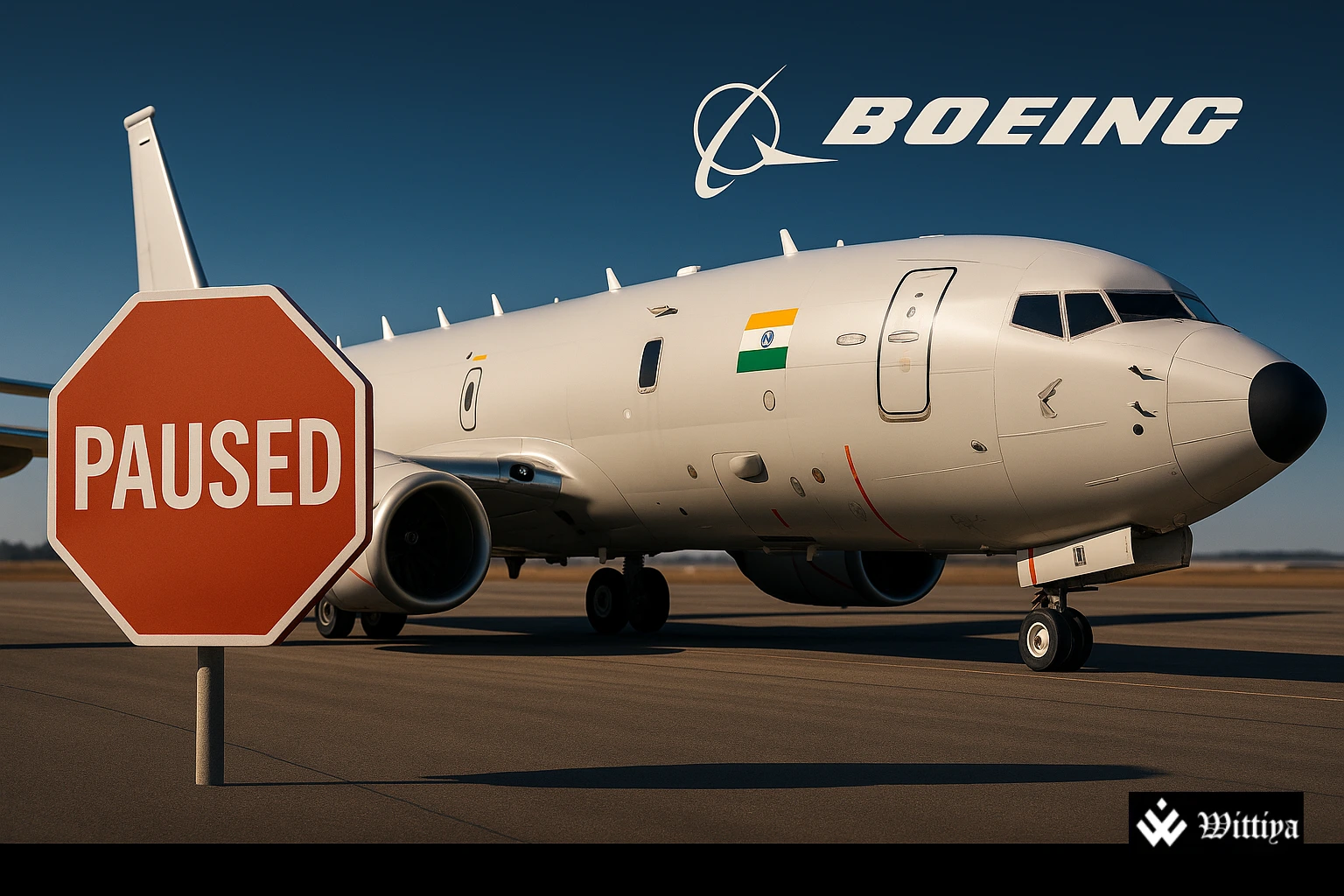
India has temporarily paused its $3.6 billion agreement to acquire Boeing P-8I maritime patrol aircraft after a substantial increase in costs driven by US-imposed tariffs, inflation, and supply chain disruptions. The decision underscores the impact of global trade policies on defence procurement and strategic planning.
Boeing Company, headquartered in Chicago, Illinois, is a premier global aerospace and defense manufacturer. Renowned for designing, manufacturing, and servicing commercial aircraft and military platforms, Boeing plays a vital role in advancing aviation technologies worldwide. The Boeing P-8I, a maritime patrol aircraft variant customized for the Indian Navy, is integral to India’s naval surveillance and reconnaissance capabilities.
India’s Ministry of Defence has reportedly decided to pause its planned $3.6 billion procurement of additional Boeing P-8I maritime patrol aircraft. The original contract, approved by the US State Department in 2021, was valued at $2.42 billion for six jets. Since then, the cost has escalated significantly, driven by a combination of factors including inflationary pressures, supply chain challenges, and newly imposed tariffs by the United States government.
Also Read: India-US Trade Strains Deepen Amid 50% Tariff Escalation
The primary catalyst for the price increase is a 25% tariff imposed by the US administration in early August 2025. This tariff affects key parts and components used in the construction of the aircraft, many of which involve Indian-origin materials or exports incorporated into Boeing’s manufacturing process. Consequently, Boeing has faced higher production costs, which have been transferred to buyers, including the Indian government, resulting in nearly a 50% hike in the total project cost.
In light of these developments, India’s defence authorities have elected to pause the acquisition to conduct a thorough strategic reassessment. The review will consider the budgetary implications of the cost increase, evolving geopolitical contexts, and India’s broader strategic autonomy objectives related to defence procurement. This pause reflects a measured approach to balancing defence modernization with financial prudence. To date, there has been no formal announcement from the government regarding the suspension or resumption timeline of the deal.
Also Read: India Accelerates Economic Reforms to Offset US Tariff Impact
Parallel to this, Air India is advancing its fleet modernization by retrofitting its legacy Boeing 787-8 Dreamliners at Boeing’s US facilities. The first retrofitted Dreamliner is expected to rejoin the fleet by the end of 2025, following necessary certification and quality assurance procedures. Air India operates a total of 33 Dreamliners — 26 Boeing 787-8 models and 7 Boeing 787-9 models.
The retrofit will feature a modernized three-class cabin configuration, consisting of 20 Business Class seats, 25 Premium Economy seats, and 205 Economy Class seats. This upgrade aims to enhance passenger comfort and operational efficiency, aligning with Air India’s goals for competitive international service and improved customer experience.
Also Read: Trump’s Tariff Surge Could Shave 0.4% Off India’s FY26 GDP
This development underlines India’s ongoing commitment to upgrading its aviation infrastructure while maintaining a cautious stance on large-scale defence procurements amid shifting global trade policies and economic conditions. The decision to pause the Boeing P-8I deal marks a strategic step to ensure optimal use of defence resources while navigating the complexities of international supply chains and tariffs.
READ MORE ON