






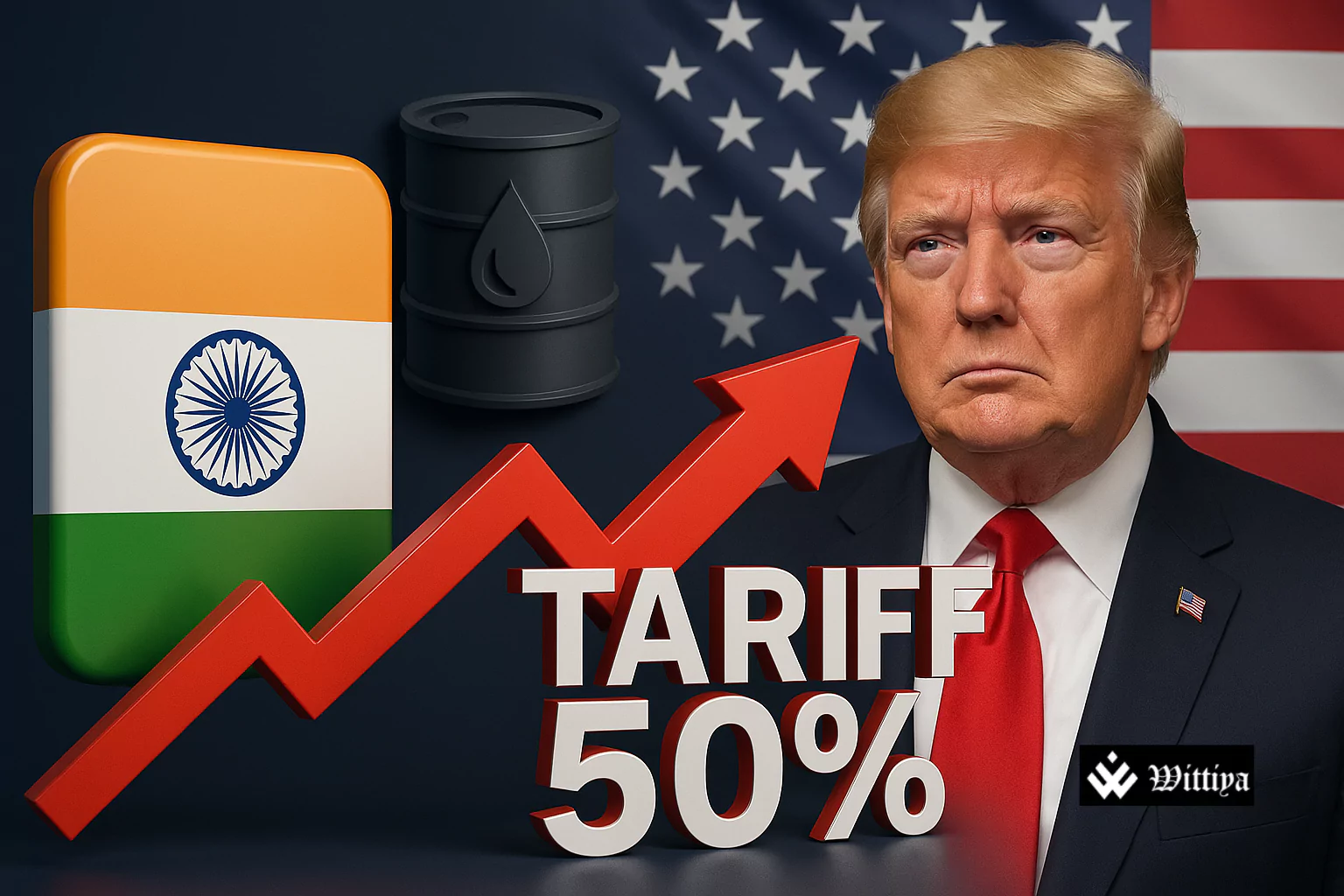
India’s strategic trade relationship with the United States is under pressure following the 50% tariff imposition on Indian exports. With over $131.8 billion in annual bilateral trade, the duty hike has the potential to distort export flows, weaken economic trust, and shift supply chain strategies.
The foundation of India’s trade partnership with the United States has come under significant stress after the U.S. administration enforced a 50% tariff on a broad array of Indian exports. This development not only poses a serious threat to near-term trade flows but also forces Indian policymakers to rethink the structure, risk, and diversification of its international trade strategy.
Bilateral Trade Snapshot: India and the United States (FY 2024–25)
| Trade Indicator | Value (USD) |
| Total Bilateral Trade Volume | $131.8 Billion |
| Indian Exports to the U.S. | $86.5 Billion |
| Indian Imports from the U.S. | $45.3 Billion |
| % of Indian Exports Affected | ~55% |
Diplomatic Undercurrents and Strategic Realignments
The U.S. has justified the tariff hike by pointing to India’s continued oil imports from Russia. However, experts argue that trade penalties as a form of geopolitical leverage could risk damaging long-standing alliances. India, defending its sovereign energy policy, is unlikely to reverse course, indicating a potentially prolonged phase of diplomatic strain.
Given that high-performing sectors like textiles, shrimp, chemicals, gems, and engineering goods are heavily impacted, exporters are now re-routing trade toward less tariff-sensitive markets such as Europe, Southeast Asia, and West Asia.
Also Read: Sectoral Shock: Indian Exporters Brace for 50% U.S. Tariff Hit
Impact by Sector: Tariff Sensitivity Analysis
| Export Sector | Approx. Annual US Export Value | Tariff Rate Post-Hike | Vulnerability |
| Textiles & Apparel | $10.3 Billion | Up to 63.9% | Very High |
| Gems & Jewellery | $12 Billion | ~52% | High |
| Shrimp & Seafood | $2.24 Billion | 33.26% | High |
| Leather & Footwear | $1.18 Billion | 50%+ | Moderate–High |
| Chemicals | $2.34 Billion | Up to 54% | Moderate |
| Machinery & Appliances | ~$9 Billion | 51.3% | Moderate |
Policy Outlook: Trade Diversification & FTA Strategy
India’s policymakers now face growing calls to fast-track Free Trade Agreements (FTAs) with ASEAN, the European Union, and Latin America. Simultaneously, export promotion councils are urging for:
- Revised Export Incentive Programs
- Interest Subvention Schemes
- Sector-specific relief packages for MSMEs
There is a strategic opportunity for India to de-risk trade concentration by expanding ties with emerging markets and building local value chains that reduce global supply reliance.
Expert Viewpoint
Experts tracking global trade dynamics say the U.S. tariff move could mark a new phase in global economic bifurcation, especially as geopolitical factors begin to influence tariff diplomacy. They caution that a prolonged tariff regime will likely reduce India’s export margins and global competitiveness unless domestic manufacturing is made more efficient and incentivized.
Exporters Call for Government Support
Exporters—especially those in MSME-driven sectors—have urged the Indian government to roll out short-term liquidity support, including:
- Working capital loans with deferred repayment
- Waiver of export credit interest
- Increased RoDTEP and RoSCTL incentives (remission of duties and taxes)
Without such support, there is a growing fear that exporters may lose key U.S. clients, or worse, exit global markets due to sustained unprofitability.
Trade Risk Summary: India’s Export Exposure to U.S. Tariffs
| Indicator | Impact Assessment |
| Export Order Volume | Likely to decline 40–50% |
| Supply Chain Stability | At risk, redirection underway |
| MSME Profit Margins | Severely compressed |
| Trade Balance (India-US) | May shrink significantly |
| Diplomatic Tension Index (Short-Term) | Elevated |
India is at a critical economic juncture where external trade tensions must be managed through a blend of policy precision, diversification, and diplomacy. As global supply chains undergo transformation, India’s ability to swiftly adapt—while safeguarding its exporters—will define the resilience of its external sector for the next decade.
READ MORE ON