






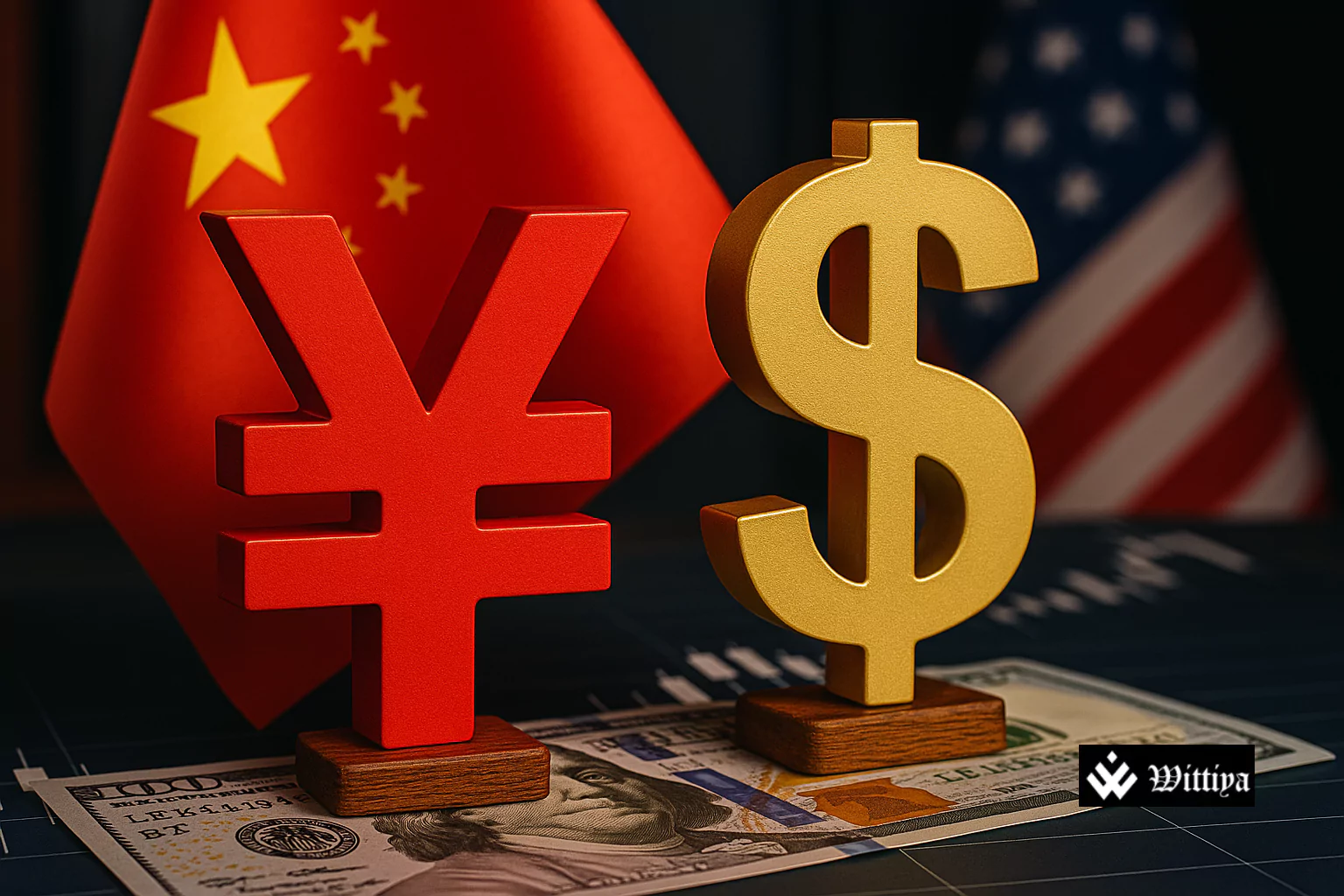
China’s yuan rebounded from a near two-month low against the US dollar after the People’s Bank of China issued a stronger-than-expected midpoint rate, reflecting a strategic move to stabilize the currency despite global dollar strength. The central bank’s actions signal a commitment to currency stability amid external headwinds.
China’s yuan regained strength on Thursday after dipping to a near two-month low against the US dollar, driven by an assertive move from the People’s Bank of China (PBOC), which set the daily reference rate significantly stronger than market forecasts.
The PBOC fixed the yuan’s midpoint at 7.1494 per US dollar, a full 568 pips above estimates, marking the largest such premium since April 30. This strategic guidance, well beyond what market participants expected, sent a clear message that China’s central bank is committed to maintaining currency stability amid persistent dollar strength and external economic pressures.
The onshore yuan responded by appreciating to 7.1921 per dollar in early Asian trading, recovering from the overnight low of 7.2. The offshore yuan also gained 0.19%, trading at 7.1995 per dollar, reflecting growing confidence in the central bank’s currency management approach.
Analysts tracking the forex markets noted that Thursday’s fix reaffirms the PBOC’s active role in countering volatility caused by global dollar movements and external macroeconomic risks. Market players widely interpret the central bank’s stronger-than-expected midpoint as a stabilizing move, especially in light of the US Federal Reserve’s cautious tone on interest rate cuts and continued dollar resilience.
“This was a deliberate intervention by the PBOC to guide market expectations,” said one senior trader. “The central bank clearly wants to avoid runaway depreciation and maintain control over the yuan’s trajectory.”
The currency move came despite domestic headwinds, including another month of contraction in China’s manufacturing sector in July. However, these concerns were somewhat offset by recent policy guidance from China’s top leadership, which highlighted plans to tackle overcapacity and ensure industrial competitiveness in the second half of the year.
Meanwhile, the Hong Kong Monetary Authority continued its interventions to defend the Hong Kong dollar, which remained close to the weaker bound of its trading band. The spot USD/HKD was last seen at 7.8498, as market participants continued to take advantage of favorable carry trade conditions.
Looking forward, financial experts anticipate that China will maintain this assertive stance in managing currency expectations, especially as trade policy uncertainties and global interest rate divergence continue to impact capital flows and exchange rates.
The yuan remains within the PBOC’s allowable trading band of 2% on either side of the daily fix, but the central bank’s strong signaling suggests that policymakers are closely watching market sentiment and remain prepared to intervene when necessary.
READ MORE ON