






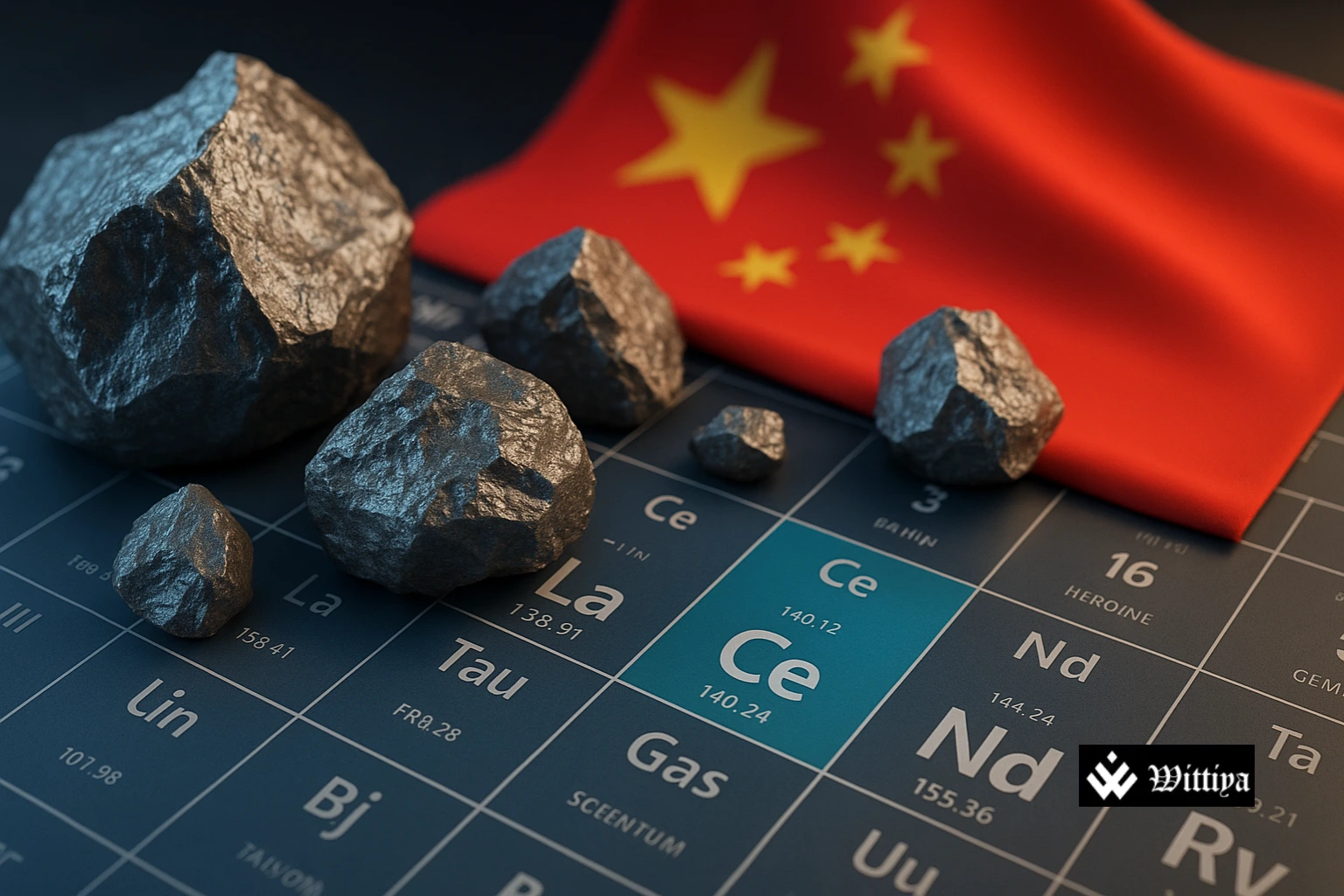
Rare earth elements (REEs)—17 unique metals foundational to modern technologies—are the building blocks of electric vehicles, wind turbines, smartphones, and advanced military systems. Despite holding substantial REE reserves, Western nations gradually relinquished control of extraction and processing to China. This was not due to a lack of resources but stemmed from conscious policy and economic choices rooted in environmental concern, global trade dynamics, and underestimated strategic importance. Today, that choice has enabled China to forge an overwhelming monopoly in rare earth processing—a global chokepoint with profound implications for technology, trade, and national security.
Rare Earths: The Critical Yet Contested Base of Modern Tech
Rare earth elements are found naturally across the globe but require sophisticated processes to extract, separate, and refine. Their importance lies in unique physicochemical properties—such as strong magnetic capabilities and complex electron configurations—that make them irreplaceable in:
- Permanent magnets for EV motors, drones, wind turbines
- Laser and sensor systems in satellites and defense hardware
- High-performance alloys in aerospace and semiconductor manufacturing
- Phosphors and catalysts in lighting, batteries, and displays
For example, a single offshore wind turbine can contain up to 600 kg of neodymium‑iron‑boron (NdFeB) magnets, and modern smartphones use dysprosium and terbium in tiny but critical quantities coloring displays and enabling touch sensitivity. Losing reliable access to these materials equates to a serious disruption in multiple industrial ecosystems.
Western Reluctance: Why Mining Went Offshore
1. Harsh Environmental Constraints
Rare earth mining and processing generate large volumes of toxic and radioactive byproducts. Ore bodies often contain thorium and uranium, requiring careful handling. The use of strong acids to extract rare earth oxide (REO) fractions produces toxic effluents. In Appalachian states of the U.S. and areas of Australia and Europe, environmental regulations tightened through the 1980s and 1990s—requiring permits, clean-up liability, and water-quality protections that increased cost burdens. In one landmark case, the closure of the U.S.’s Mountain Pass mine in California in 2002 was ultimately driven not by resource exhaustion, but by rising environmental litigation and prohibitive compliance costs.
By contrast, China allowed lower‑cost, higher‑pollution mining methods to proceed unimpeded in provinces like Inner Mongolia and Jiangxi. The trade-off was clear: economic efficiency over ecological custodianship.
2. The Pull of Economic Globalization
The early 2000s saw the ascendancy of globalization. Western manufacturers prioritized lean supply chains and cost arbitrage. China offered:
- Subsidized rare earth processing plants
- Access to cheap labor and utilities
- Trade incentives and export rebates
For electronics and automotive firms, sourcing REEs from China became a straightforward cost-cutting decision. Entire components and finished goods—including critical components like NdFeB magnets—were offshored to China, with no financial incentive to localize supply.
3. Absence of Strategic Industrial Policy
China invested early—since the 1990s—in building vertically integrated REE ecosystems. It nationalized REE assets under state-owned enterprises, created export controls, and set aggressive production targets. Every step—mining, separation, refining, magnet manufacturing—received government support.
Western economies treated REEs as commodities. There was no cohesive industrial strategy to protect domestic mining or develop refining infrastructure. In the U.S., political debate over strategic mineral funding languished, and in Europe, national coordination was fragmented. Without government backing, private investment stalled; mining projects stayed dormant or moved overseas.
Also Read: India’s Grand Push to Break Free from Rare Earth Dependence
China’s Vertical Control: Development of a Processing Empire
1. Mining and Refinement Strategy
From the 1990s onward, China transformed its rare earth industry with scale:
- 70%+ of global REE mining output by 2025
- Over 90% of global processing capacity
- 100% of premium NdFeB magnet production
China achieved this through three core tactics:
- Consolidation into SOEs: Smaller mines were merged into large state-run groups, enabling coherent strategic planning.
- Export quotas and licensing: China regulated exports to shape internal pricing and external availability.
- Subsidies for downstream industries: Magnet manufacturers and REO separation plants received low-interest loans and favorable access to power, land, and ports.
2. Export as a Geopolitical Tool
China’s rare earth dominance has been weaponized:
- In 2010, China halted REE exports to Japan amid a dispute over the Senkaku/Diaoyu islands. Prices soared, forcing automakers and electronics firms to scramble.
- In 2025, export controls on seven medium and heavy rare earth oxides—key ingredients in defense and EV magnets—were introduced in retaliation against U.S. semiconductor export restrictions.
These episodes highlighted how rare earths were no longer just an industrial input—they had become tools of geopolitical bargaining.
The Hidden Costs of Outsourcing: Strategic Vulnerabilities
While Western industries benefited from low-cost sourcing, the long-term consequences are stark:
- Defense Supply Risk: U.S. military programs rely on REE-linked components—targeting radar, missile guidance, and battlefield drones. A sudden export cutoff could disrupt entire defense supply chains.
- Clean-Tech Fragility: EV makers, aerospace firms, and clean-energy companies globally rely on China for magnets. A prolonged disruption could push clean energy rollout timelines backward.
- Resurgence Barriers: Even if mines reopen in the West, processing infrastructure lags; most refining machinery, reagents, and experienced labor remain centered in China. Restarting such a system would involve capital‑intensive rebuilding.
Also Read: Is India’s State-Owned Mineral Leader Key to Rare Earth Independence?
Can Western Countries Rebuild Control of the Rare Earth Chain?
Efforts are underway—but rebuilding will be slow and costly.
1. Mining Restart Initiatives
- MP Materials (California) resumed mining at Mountain Pass in 2017. The mine is expected to reach 10,000 metric tons of REE oxide by 2028.
- Australia’s Lynas Corporation, now building refining capacity in the U.S. and Malaysia to create a second supply axis.
- India, with reserves in Odisha and Andhra Pradesh, is negotiating joint ventures with U.S. tech and engineering firms.
2. Processing and Magnet Manufacturing
- The U.S. Department of Defense has allocated $500 million in subsidies and incentives to develop domestic magnet production.
- Grants and loans to firms like Noveon Magnetics, Vulcan Elements, and Energy Fuels are targeting processing capacity in Utah, Texas, and North Carolina.
- Recycling is being prioritized: Apple and other tech firms are investing in magnet recovery from devices—creating closed-loop supply.
But serious hurdles remain:
- Permitting delays and public opposition to new REE plants.
- Higher production costs due to stricter environmental standards.
- A lack of trained chemical/refinery engineering workforce to run separation plants.
Broader Consequences and Risks
1. Economic Tools Become Weapons
China’s ability to throttle rare earth exports gives it leverage in broader trade conflicts. It’s symbolic and practical: exports of critical inputs are a strategic lever in diplomatic negotiations.
2. Technological Nationalism and Decoupling
Countries are increasingly linking REE strategy to national security. Policies now favor “trusted supply chains”—not just efficient ones. Examples:
- The U.S. CHIPS Act includes rare earth development clauses
- The EU lists REEs as critical minerals for tech sovereignty
- Australia, in collaboration with U.S. and Japan, is building supply buffer stocks
3. Market Disruption Scenarios
If China chooses to suddenly restrict REE exports, global industries may face:
- Price spikes in NdFeB magnets by 300–400%
- Forced shift to ceramic or ferrite magnets, with performance trade-offs
- Temporary shutdowns in EV assembly lines and defense contractors
These disruptions could be highly destabilizing, particularly for companies without alternative sourcing.
Valuing the Cost of Strategic Neglect
Western outsourcing of rare earth supply was not inevitable—it was a policy choice. The decisions prioritized cost at the expense of resilience. Today, reversing this strategy requires:
- Decades of investment in mines, processing plants, and magnet factories
- Policy alignment across governments and private sectors
- Workforce development in metallurgy, chemical engineering, and rare earth technologies
- Environmental innovation to meet stricter standards without sacrificing scale
It is a high-cost but necessary investment in sovereignty over critical infrastructure.
READ MORE ON