






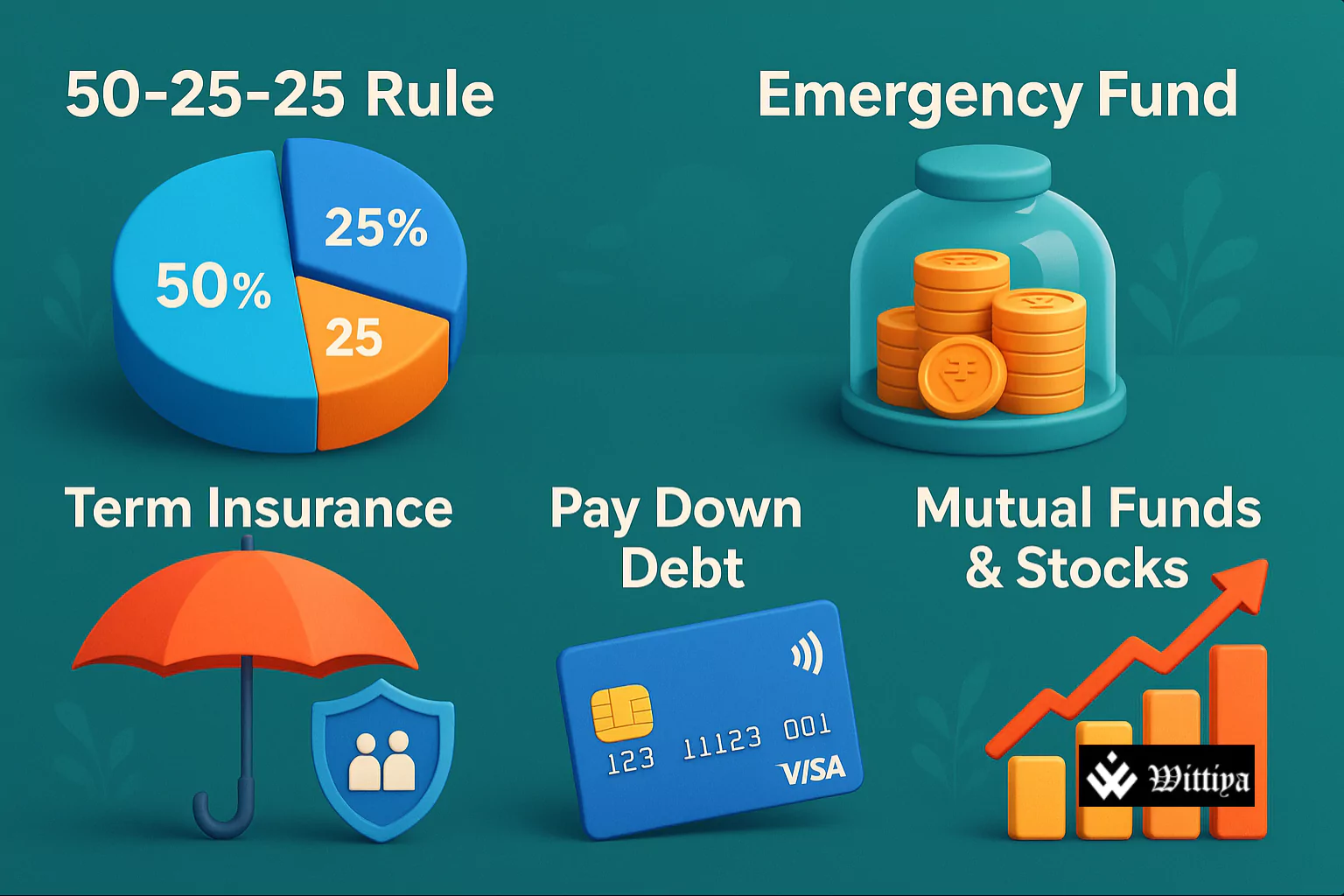
In India, many struggle with financial stress due to disorganized spending and lack of planning. A step-by-step financial strategy—including smart budgeting, insurance, debt repayment, and disciplined investing—can help achieve lasting financial freedom.
Financial freedom isn’t reserved for the rich—it’s for anyone who’s disciplined, structured, and strategic with their money. In today’s economy, where inflation bites into salaries and market volatility tests patience, many Indians feel financially stuck. But by following a systematic, expert-backed plan, you can reclaim control over your money and build wealth that lasts.
Start With a Smarter Budget Rule
Most people earn, spend, and save whatever remains. That’s backward. True financial planning begins with saving first, then spending.
Experts recommend the 50–25–25 rule:
- 50% for essentials (rent, bills, groceries)
- 25% for discretionary expenses
- 25% for savings and investments
If you earn ₹1,00,000, that means ₹25,000 should be saved upfront—before lifestyle spending creeps in. This not only accelerates your financial goals but also protects your future from lifestyle inflation.
Also Read: What Is a Meme Stock and How It’s Shaping Trading in the U.S.
Build an Emergency Fund Before You Invest
Before aiming for returns, secure your foundation. An emergency fund covering 6 to 9 months of essential expenses is critical. For someone with ₹50,000 in monthly needs, that’s ₹3–4.5 lakh set aside in a liquid mutual fund or auto-sweep account.
Why not use a savings account or fixed deposit? Because they either earn less or lock in your money. The right instruments provide liquidity, safety, and better interest.
Don’t Delay Health & Life Insurance
Medical emergencies and untimely deaths can financially devastate families. Surprisingly, while many insure their cars, they neglect their most valuable asset—themselves.
Every Indian household should have:
- Health insurance: ₹10 lakh for individuals, ₹20 lakh+ for families
- Life insurance: Pure term cover only, equal to 20–50x your annual income
For instance, an individual earning ₹12 lakh/year should aim for ₹2 crore in life cover, costing around ₹2,000/month.
Also Read: Understanding Credit Reports and What Affects Your Score
Avoid bundled investment-linked policies. Instead, opt for term insurance, which provides maximum protection at minimum cost.
Clear Expensive Debt Quickly
Before jumping into investments, wipe out high-interest loans. Credit cards and personal loans can carry interest rates from 12% to 36%, significantly higher than average investment returns. Paying off these debts gives a guaranteed risk-free return.
Focus on clearing:
- Credit card balances
- Personal loans
- Auto loans
Mortgage or home loan repayments can continue on schedule unless the interest burden is unusually high.
Invest With Discipline Based on Goals
With a strong base—budget, emergency fund, insurance, and no costly debt—it’s time to invest with purpose.
Low-to-moderate risk options for short- to mid-term goals:
- Public Provident Fund (PPF)
- National Pension Scheme (NPS)
- Senior Citizen Savings Scheme
- Sukanya Samriddhi Yojana (SSY) for daughters below age 10
High-risk, high-reward investments for long-term goals (10–15 years):
- Mutual Funds: SIPs in equity or hybrid schemes based on risk tolerance
- Stocks: Only after mutual funds and surplus are in place
Mutual funds remain a core investment vehicle because of their diversification, professional management, and flexibility. SIPs help navigate market volatility and build wealth steadily.
Following this structure builds a future where money no longer controls you—you control it.
Conclusion
Financial freedom in India isn’t about luck or income level. It’s a repeatable process:
- Budget smartly with the 50–25–25 rule
- Build a separate emergency fund
- Secure health and life with the right insurance
- Eliminate expensive debt
- Invest wisely and consistently
READ MORE ON