





A bad credit score in India not only restricts personal loan access but also impacts employment opportunities, especially in the financial sector. Understanding how scores are calculated, what influences them, and how to rebuild a damaged credit profile can empower individuals to take charge of their financial future.
In India’s growing economy, driven by increasing access to personal finance, your credit score acts like a financial identity card. Whether you’re seeking a home loan, credit card, business loan, or even a job in the financial sector, this single number can make or break opportunities.
A bad credit score, often ignored until it’s too late, can cost you thousands in higher interest, loan rejections, or lost career prospects. This article dives into what constitutes a bad score, why it matters, and how you can repair and maintain a healthy financial profile.
What Is a Credit Score and Who Calculates It?
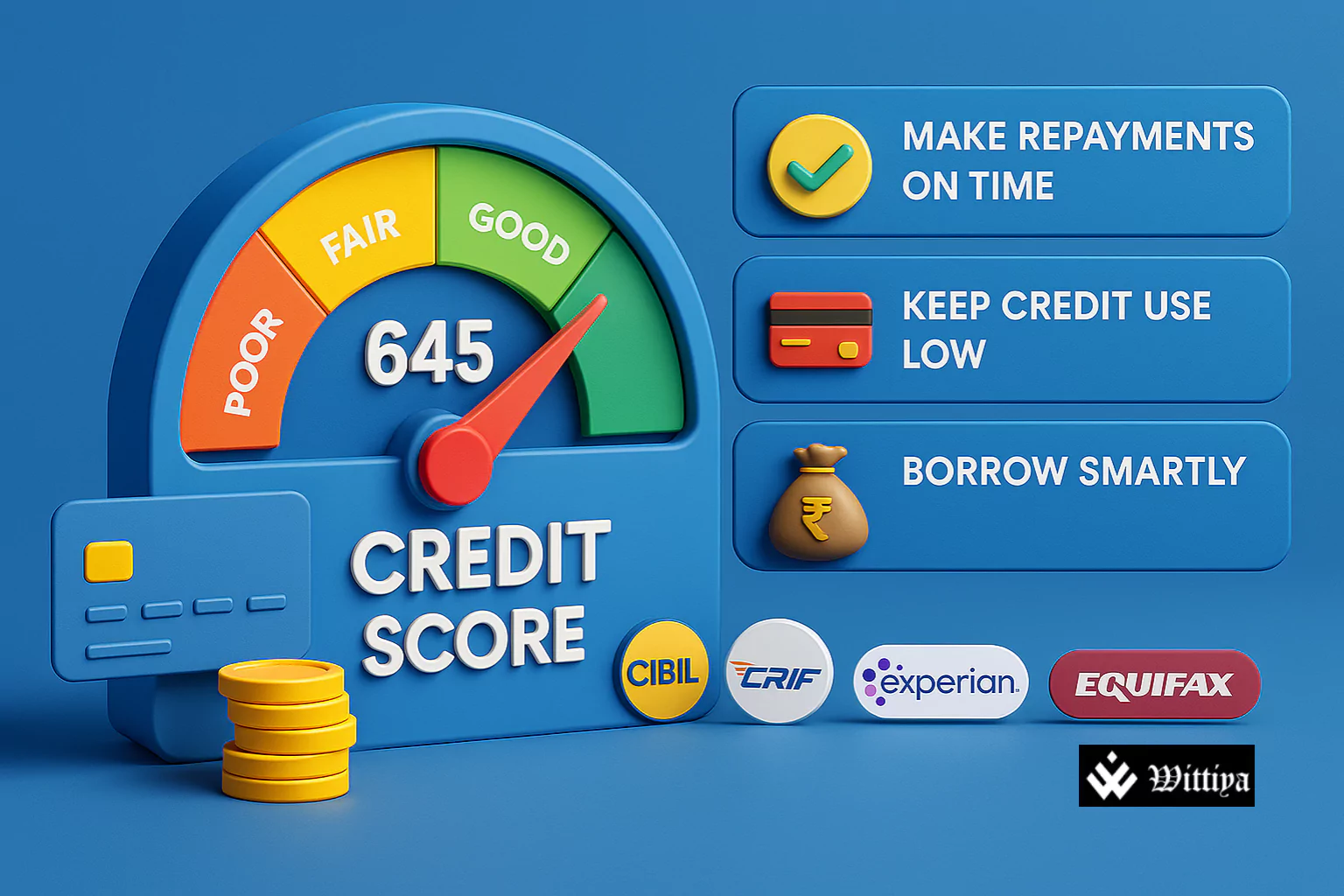
A credit score is a three-digit number between 300 and 900 that summarizes your credit behavior. In India, it is calculated by credit bureaus such as:
These bureaus receive data from banks and NBFCs (non-banking financial companies) and assess your ability and willingness to repay credit.
What Is Considered a Bad Credit Score in India?
| Credit Score Range | Category | Implications |
| 300–549 | Very Poor | High likelihood of rejection, seen as financially risky |
| 550–649 | Fair to Doubtful | Limited credit access, higher interest rates, low approval probability |
| 650–749 | Good | Reasonable loan approval rates, moderate terms |
| 750–900 | Very Good to Excellent | Fast approvals, low interest rates, best terms from lenders |
In India, anything below 650 is considered weak, and below 550 often results in automatic rejections.
Real-Life Impact of a Poor Credit Score
1. Loan Rejections
Most banks have minimum score requirements for home, auto, or personal loans. A score below 600 is often met with instant rejection—even for small-ticket loans.
Example: A salaried employee with a ₹35,000/month income applied for a ₹2 lakh personal loan but was rejected due to a score of 545, despite a steady job.
2. Higher Interest Rates
Even if you get approved, the interest charged may be much higher than average. For example:
- A borrower with a 780 score may get a personal loan at 11.5%
- A borrower with a 600 score may be offered 18–22%, increasing EMI burden
3. Credit Card Disapproval
Banks often deny credit cards to those with scores under 650. Even secured credit cards may come with lower credit limits and fewer rewards.
4. Job Rejections in the Financial Sector
A bad credit history reflects financial irresponsibility. Banks, NBFCs, and fintech firms frequently check credit history before hiring, especially for roles involving financial handling.
Case Insight: Multiple candidates in India have faced hiring delays or denials in public banks due to poor repayment records, confirmed in legal disputes.
5. Reduced Negotiation Power
A good credit score gives you power to negotiate lower processing fees, interest rates, or special perks. A bad score puts you in a weaker position with lenders.
What Factors Harm Your Credit Score?
- Missed or Late EMIs
- Payment history makes up ~35% of your score.
- One missed EMI or unpaid credit card bill can drop your score by 50–100 points.
- High Credit Utilization Ratio
- Using more than 30% of your credit limit shows over-reliance on debt.
- Example: If your credit card limit is ₹1,00,000, avoid spending more than ₹30,000 without paying it off.
- Too Many Loan Applications
- Every application generates a “hard inquiry.”
- Multiple inquiries in a short time reduce your score and label you “credit hungry.”
- Defaulting or Settling Loans
- Loan settlements (where you pay less than what you owe) are recorded and harm long-term credibility.
- Loan settlements (where you pay less than what you owe) are recorded and harm long-term credibility.
- No Credit History
- Ironically, having no loans or credit cards also affects your score, as it gives no data to lenders.
- Ironically, having no loans or credit cards also affects your score, as it gives no data to lenders.
Proven Ways to Rebuild a Bad Credit Score in India
1. Dispute Credit Report Errors
Visit credit bureau websites and download your free report. Look for:
- Duplicate loans
- Payments marked as missed when paid
- Accounts not owned by you
Dispute immediately online or via email for corrections.
2. Start Paying On Time, Every Time
Set auto-debits or reminders. Missed payments stay on your report for 2–3 years.
Pro tip: Even paying the minimum amount due on your credit card can protect your score from drops.
3. Maintain a Low Credit Utilization Ratio
Keep credit card balances under 30–40% of your limit. Pay twice a month if needed.
4. Avoid New Loans Unless Absolutely Necessary
Lenders prefer stability. Let your credit profile settle and recover before applying again.
5. Build a Healthy Mix of Credit
Have both:
- Secured loans: Home, gold, or vehicle loans
- Unsecured loans: Credit cards, personal loans
Regular payments on both types help boost your credibility.
How Long Does It Take to Improve a Bad Credit Score?
| Issue Type | Recovery Time (Estimate) |
| Minor payment delays | 3–6 months |
| Credit utilization issues | 2–4 months (with correction) |
| Loan defaults or settlements | 12–24 months |
| No credit history | 3–9 months (with credit activity) |
The Role of Credit Bureaus in India
Credit bureaus are regulated by the RBI and play a pivotal role in shaping India’s credit landscape. Their aim is to ensure:
- Transparent access to credit information
- Responsible credit behavior among borrowers
- Risk-based pricing for lenders
Lenders rely heavily on the CIBIL Score and other bureau scores to assess risk before granting loans. Many banks have tied automated approval decisions directly to score thresholds.
A bad credit score is a financial roadblock—but it’s not a dead end. The right habits, timely payments, and monitoring your credit behavior can steadily rebuild your profile in as little as 4–8 months. In today’s world, maintaining a good score is not just about getting loans—it’s about protecting your future opportunities.
Your credit score is your financial reputation. Guard it wisely, fix it strategically, and use it to unlock long-term stability and opportunities in India’s growing financial landscape.
READ MORE ON