





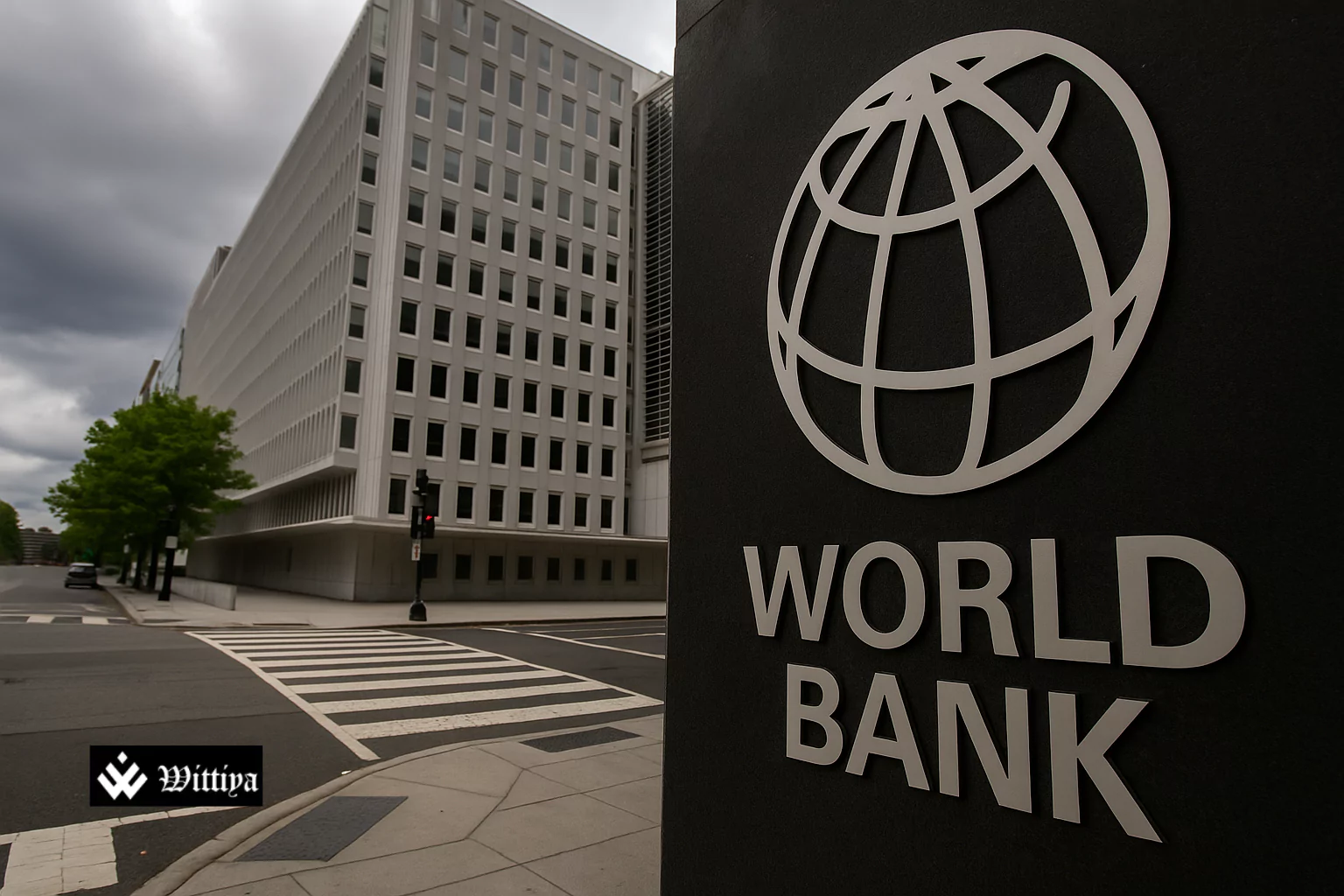
On June 25, 2025, the World Bank, headquartered in Washington, D.C., United States, revised its global economic outlook for 2025, lowering its growth forecast from 2.7% to 2.3%, citing escalating trade tensions and tariff-related disruptions as the primary reasons. The report emphasizes how international trade conflicts, especially among major economies, are hindering economic expansion worldwide. The World Bank is an international financial institution that provides loans and grants to the governments of low- and middle-income countries for development programs.
The World Bank, an international financial institution headquartered in Washington, D.C., has sharply downgraded its global growth forecast for 2025, projecting a 2.3% expansion — down from the previously estimated 2.7%.
In its latest Global Economic Prospects report released on June 25, the World Bank cited growing international trade uncertainty and tariff-related disruptions as key factors behind the lower outlook. The institution warned that this could mark the slowest pace of global economic growth since 2008, excluding full-fledged recessions.
“International discord — about trade, in particular — has upended many of the policy certainties that helped shrink extreme poverty and expand prosperity after the end of World War II,” said Indermit Gill, Senior Vice President and Chief Economist of The World Bank Group.
The World Bank also revised down its 2025 growth projections for several major economies. The United States is now expected to grow by just 1.4%, a 0.9 percentage point drop, while the euro area’s GDP forecast was cut by 0.3 percentage points to 0.7%.
The U.S. is currently engaged in a series of negotiations with major trading partners after President Donald Trump reintroduced steep tariffs in April. Talks are ongoing with China, with meetings taking place this week in London following a temporary reduction in levies agreed upon in May. Meanwhile, discussions between the U.S. and the European Union continue ahead of July deadlines for new tariffs.
The World Bank indicated that the economic landscape could improve if these trade disputes are resolved through meaningful agreements. “Our analysis suggests that if today’s trade disputes were resolved with agreements that halve tariffs relative to their levels in late May, 2025, global growth could be stronger by about 0.2 percentage point on average over the course of 2025 and 2026,” Gill added.
Other major economic bodies have echoed similar concerns. The Organisation for Economic Co-operation and Development (OECD) also reduced its 2025 global growth forecast to 2.9% earlier this month, citing trade volatility as a key risk.
With global trade relationships hanging in the balance, economists warn that sustained uncertainty could further erode investor confidence and delay economic recovery.