







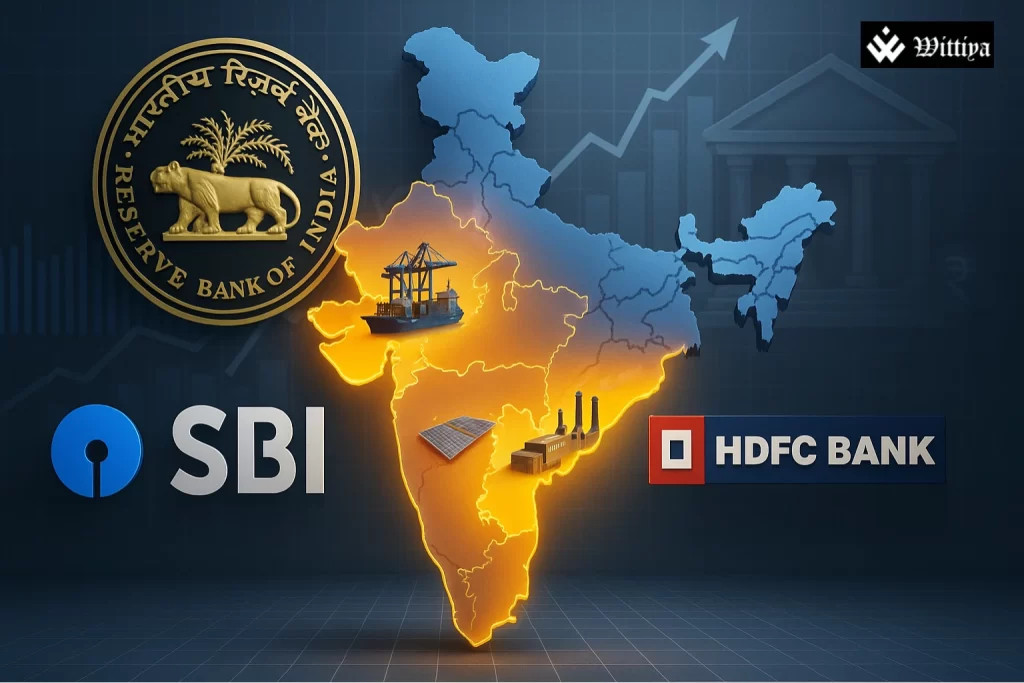
Gujarat leads bank-financed investments in India 2025, scintillating Maharashtra being next, indicating the strong regional trend of western India dominating project funding.
India’s financial map is a reflection of regional strengths when large-scale investments are involved. The trend of state-wise project funding in India in this case is dominated again by Gujarat and Maharashtra— the two states that manage to secure the most significant part of bank-backed projects in spite of the overall downturn of the investment climate.
Based on the results of a staff study of Reserve Bank of India (RBI), banks and financial institutions have financed projects aggregating ₹3.7 trillion in FY25 in 907 initiatives. While Gujarat embraced 152 projects, Maharashtra stood next with 111. These states together with Uttar Pradesh, Andhra Pradesh, and Rajasthan accounted for almost 60 percent of the total project cost.
This long-established pattern serves as evidence that infrastructure readiness, industrial policy, and market size are some of the important factors that determine the flow of capital all over India.
Gujarat’s Winning Formula
Gujarat has been the most successful state in attracting investments in India through the last ten years as it has been the highest recipient of projects supported by bank financing over and over again.
- Ports & Connectivity
It’s nearly impossible to beat the state’s natural advantages. The long coast lined with major ports such as Mundra and Kandla makes Gujarat a gateway to the world for Indian companies. For companies relying on imports and exports activities—like petrochemicals, cars and engineering—this connection not only cuts down on the costs but also ensures that the whole process runs without hitches.
- Industrial Corridors and Clusters
The state’s industrial corridors, particularly the one along the Delhi-Mumbai Industrial Corridor (DMIC), have changed the face and character of those areas into highly concentrated zones of economic activities. The manufacturing clusters in Sanand, Dahej, and the potentially transformative Dholera Special Investment Region are well equipped to provide the investors with the most modern infrastructure, integrated logistics, and reliable power supply. The clusters have been made in such a way that they provide “plug-and-play” facilities, and thus, companies can set up operations without wasting much time for administrative procedures.
- Policy-Driven Advantage
One cannot overlook the importance of Gujarat’s policy point-of-view as well. The state has always been in the forefront when ranking the easiest places to conduct business through simplified approvals, available land, and the enthusiastic mind-set of the government. The Vibrant Gujarat Summit et al. have further highlighted Gujarat as one of the world’s top-most attractive investment destinations.
Thus, Gujarat grossed 21.4% of India’s overall project financing in FY25 and affirmed its status as the leading illuminated banker-backed investment destination.
Maharashtra: A Strong Challenger
While Gujarat is ruling, Maharashtra is definitely not far behind. The state, with 111 projects in FY25, is still a potent rival, sustained by two main features.
- India’s Financial Powerhouse
Maharashtra is the place where Mumbai, the financial capital of India, is situated. The city boasts of the State Bank of India (SBI), ICICI Bank, HDFC Bank, and other top financial institutions’ headquarters. Such an environment provides companies with easy access to the needed capital, consulting services, and a group of investors—benefits that very few areas can imitate. For the firms that are going to carry out capital-intensive projects, it is very important that they are close to the financial center of India.
- Market Depth and Skilled Workforce
The capital cities of the state, Mumbai, Pune, and Nagpur, are indeed the building bricks of Maharashtra’s enormous domestic market. A large consumer market, availability of skilled workforce, and several well-established companies in the fields of automobiles, IT, and services are just some of the reasons that the state of Maharashtra is an ideal place to start a variety of projects. It is a win-win situation for the state as it does not only attract capital but also has the capability to quickly turn the investments into businesses that are scalable.
Before I conclude, the second highest share of projects funded by state-wise banks in India is consistently held by the state of Maharashtra backed by these factors.
- Other States in the Spotlight
While Gujarat and Maharashtra have been at the top of the list, there are several other states that have made significant contributions in FY25.
Uttar Pradesh
By executing 78 bank-financed projects, Uttar Pradesh secured the third spot. It is the state’s infrastructural changes, particularly the construction of expressways and industrial hubs around Noida and Lucknow, that have been instrumental in attracting new investments. The Defense Corridor and Electronics Manufacturing Clusters, among other initiatives, are setting up UP to be a hub of innovation not only in agriculture but also in the region's broader economy.
Andhra Pradesh
While being supported by its shore and industrial policies, Andhra Pradesh grabbed a firm position in the first five. The state has been concentrating on renewable energy, ports, and agro-processing. Owing to its location on the ESE coastline, it is an attractive destination for outbound trade projects.
Rajasthan
Rajasthan has also witnessed increased activity in FY25, specifically involving energy and mineral-related projects. Because of its plentiful sun energy sources, the state has become a major player in the renewable energy field. Bank-financed projects in Rajasthan are going green at the same time making the state less dependent on fossil fuels and other resource-based industries.
Other Contributors
While the top five are mentioned, states like Tamil Nadu, Karnataka, and Telangana are not standing still and are still attracting projects related to the technology, automobile, and electronics industries. Though these states have not had a very high number of bank-financed projects in FY25, they still play a very important role as industrial ecosystems in the long-term investment growth of India.
Why Western States Lead
The RBI report places emphasis on a theme that appears over and over again – the main factors determining the best locations for investments are the quality of infrastructure, the policy, and the market potential. On the one hand, Gujarat represents the best in physical connectivity and industrial planning, while on the other, Maharashtra is perfect with financial depth and consumer strength.
Uttar Pradesh, Andhra Pradesh, and Rajasthan are a few other vibrant states, but western India’s ability to draw projects consistently over a long period of time is the real demonstration of how regional advantages keep compounding with time.
Also Read: RBI Clears Paytm Payments Services – Here’s What Changes Immediately
Changing Capital Expenditure Mood
Oddly enough, the private sector outside Gujarat and Maharashtra is more cautious even though these two places have been excellent. Total cost of project deals funded in FY25 was six percent less than that of FY24, which hints at the hesitance of corporates amid global uncertainties and domestic cost pressures.
Nevertheless, there is light at the end of the tunnel for FY26. The RBI’s evaluation asserts that the private capex pipeline is likely to hit ₹2.7 trillion if supported by a sound macroeconomic environment, the improvement of liquidity, and the government’s unwavering commitment to infrastructure development. The industrial corridor of Gujarat and the financial ecosystem of Maharashtra are, in this scenario, considered the two vital points for the country’s future growth.
The FY25 numbers help to acknowledge one more truth about India’s investment landscape: the state-wise project funding is highly concentrated in regions that blend policy clarity, infrastructure readiness, and market opportunities. Gujarat’s ports, industrial corridors, and governance remain to be the factors that make it ahead of others, while Maharashtra makes use of its financial power and market depth for staying competitive.
While India is gearing up for its next capex cycle, the story of the investment country will still be largely decided by these two states.
FAQ’s
Central vs State-funded projects – what’s the difference?
Central-funded projects receive their money from the Union Government, whereas state-funded projects are under the management of the state government.
Can private companies get state project funding?
Yes, under state-funded programs, private companies may avail of grants, subsidies, and loans.
How to find state-funded projects in India?
Look up officially approved projects on portals such as the Ministry of Finance, NITI Aayog, and state government websites and then you will find state-funded projects in India.
READ MORE ON