


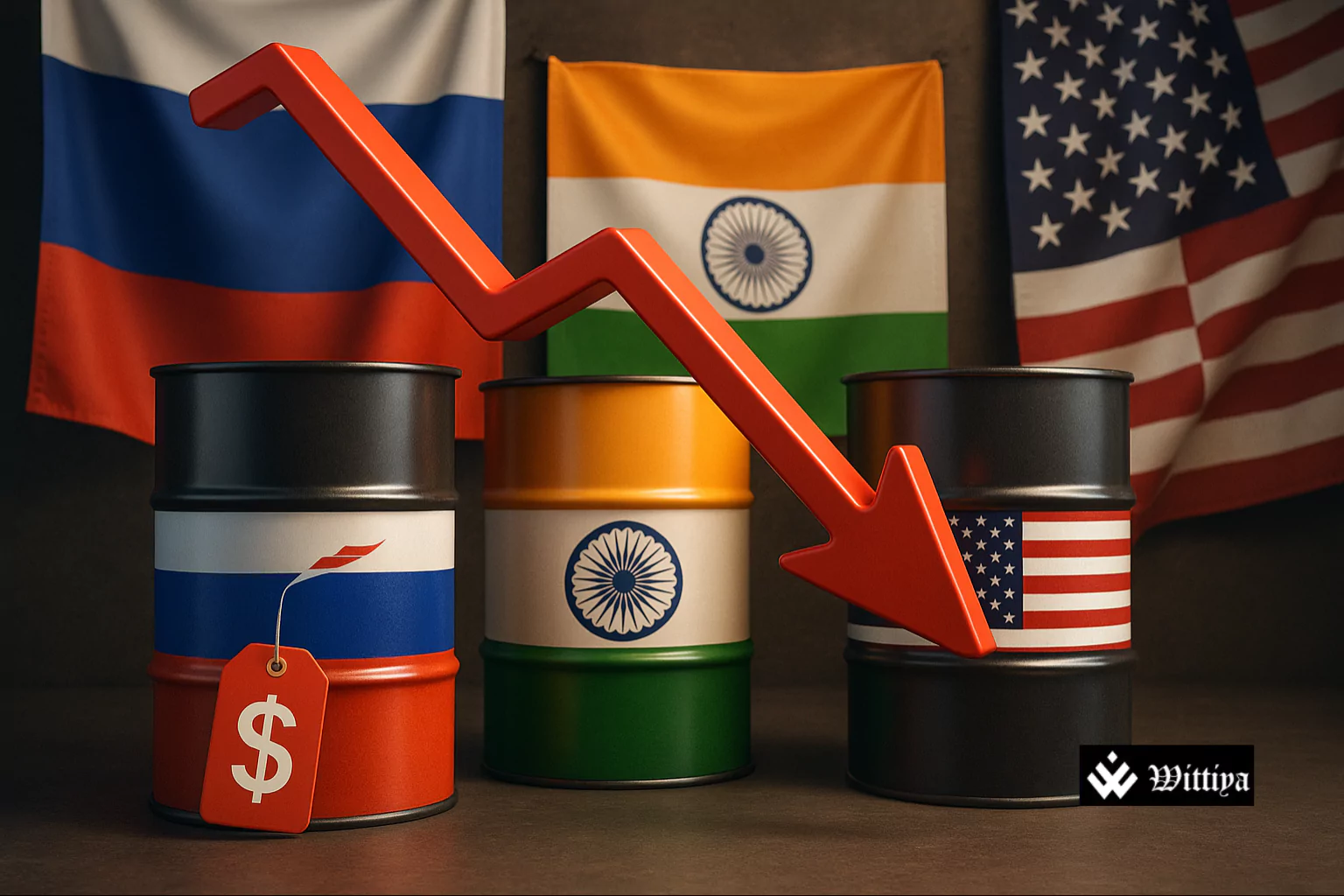
India is witnessing a shift in its crude oil import strategy as Russian oil prices drop amid international sanctions, while imports from the US surge to nearly double early 2025 levels. The uncertainty surrounding geopolitical tensions is prompting Indian refiners to reassess procurement plans, creating ripple effects in the global energy market.
Industry experts suggest this divergence in pricing and sentiment may persist in the short term. With uncertainty surrounding global policy actions, Indian refiners—especially those under public ownership—are approaching Russian crude with more caution. Maintenance-related supply increases from Russia expected between August and October may also add to downward pricing pressure.
Despite the growing concerns, a full exit from Russian oil remains unlikely. Russia still holds approximately 37% market share in India’s crude basket. However, refiners are beginning to diversify sources to limit exposure. Private refiners continue to source Russian barrels but at reduced volumes, responding to shifting price signals and market dynamics.
Meanwhile, India’s crude imports from the United States have nearly doubled, rising to around 225,000 barrels per day since May 2025. This increase underscores a broader trend toward risk-balanced sourcing, aligning with India’s long-term strategy of diversifying energy partners.
Also Read: Russia Slams US ‘Neocolonial Agenda’ After Trump Targets India
From a financial perspective, the trade-off between discounted Russian barrels and stable US supply presents a nuanced challenge. While Russian oil offers cost advantages, the external risks tied to sanctions and supply volatility are prompting Indian refiners to price in risk-adjusted margins more conservatively. Long-term procurement strategies may increasingly favor countries offering political and trade stability, even at marginally higher costs.
In conclusion, India’s evolving oil import patterns highlight the growing role of geopolitical alignment in energy procurement decisions. As global tensions continue India’s energy procurement strategy is undergoing a significant transformation as discounted Russian crude faces new headwinds from sanctions and potential penalties. At the same time, the country’s appetite for US crude has surged, signaling a recalibration of supply sources influenced by both price economics and geopolitical risk.
Russian-origin Urals crude is now trading at over $5 per barrel below the Dated Brent benchmark, a notable discount compared to near parity just two weeks ago. This price drop reflects increasing pressure from international sanctions, raising concerns among Indian refiners—particularly state-owned enterprises—that greater scrutiny could lead to disruptions or reputational risk.
to influence commodity markets, India’s refining sector is adapting with a focus on diversification, resilience, and supply security.
READ MORE ON