


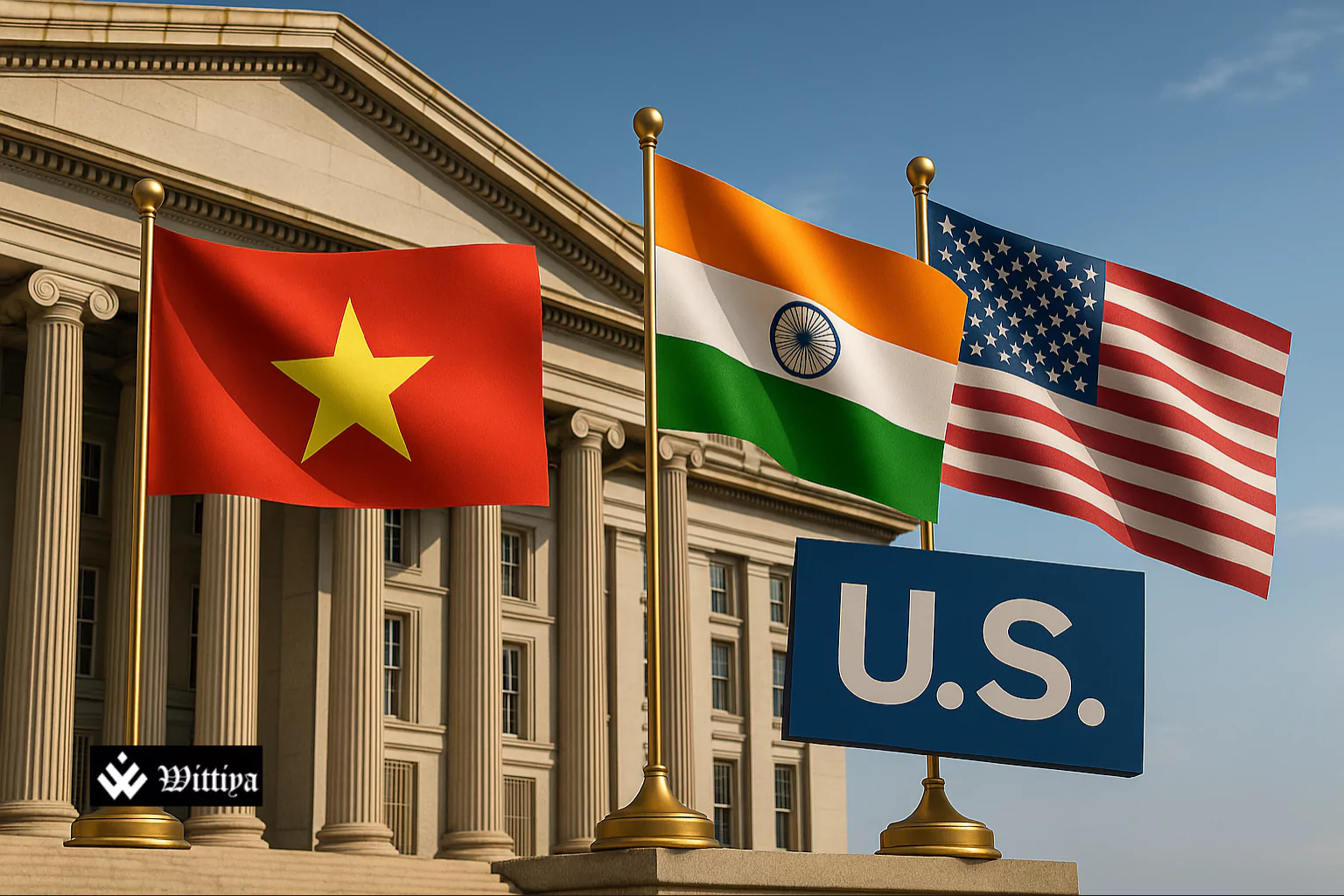
On July 3, 2025, the U.S. initiated trade discussions with nations like Vietnam and India ahead of a July 9 tariff deadline, aiming to curb Chinese influence in global supply chains while India secures trade exemptions through negotiations on origin rules.
The United States is steadily advancing its quiet trade strategy designed to marginalize China from global commerce. While the truce between Washington and Beijing remains intact, China is increasingly concerned about the growing number of bilateral and multilateral trade talks that aim to exclude Chinese supply chain components. India has now entered the negotiation process as the July 9 tariff deadline approaches.
According to ongoing discussions, the US is advocating that its trade partners agree to content restrictions that would reduce the use of Chinese-origin components in goods exported to the US. Talks with Vietnam, South Korea, and Thailand have reportedly seen these nations act preemptively to prevent rerouting of Chinese goods.
India is currently negotiating terms focused on “rules of origin,” which would require a minimum of 60% of a product’s value to be added domestically. This condition is part of Washington’s wider framework to ensure that partner countries don’t become indirect conduits for Chinese exports.
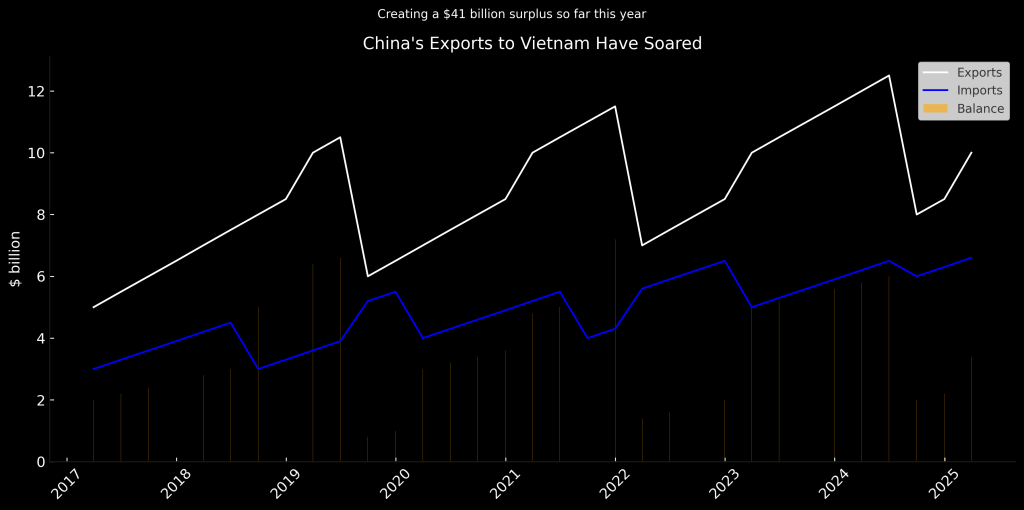
China’s trade data highlights its dominance in regional exports. As shown in the first chart, China’s exports to Vietnam have seen a substantial rise, resulting in a $41 billion surplus in 2025, as per China’s General Administration of Customs.
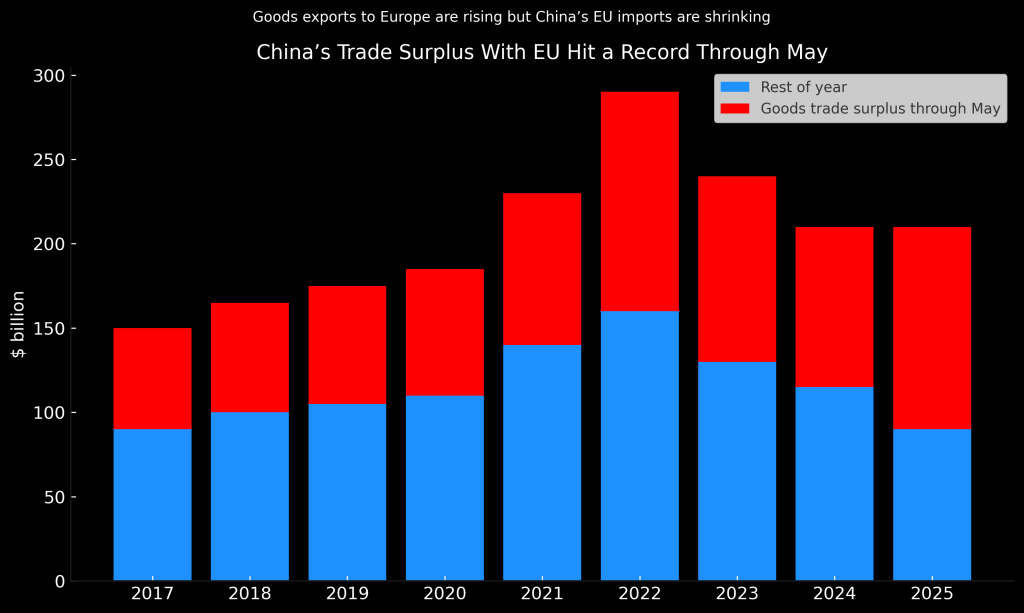
Similarly, China’s trade surplus with the European Union reached a record level through May this year. The second chart illustrates the ongoing rise in Chinese goods exports to the EU, while imports from Europe continue to shrink.
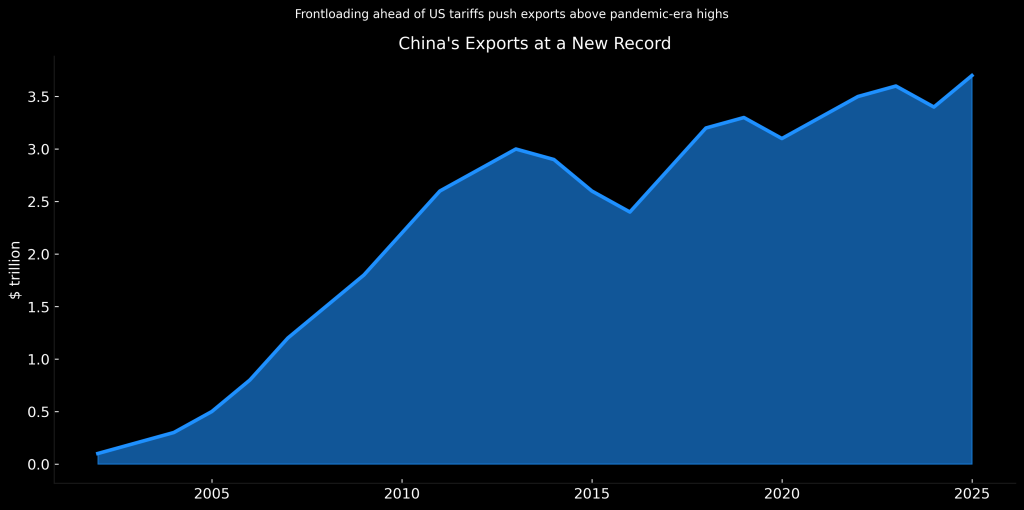
Further emphasizing the pressure, China’s total exports have surged to an all-time high, as seen in the third chart, which shows exports nearing $4 trillion, driven by companies frontloading shipments ahead of possible US tariffs.
Beijing is particularly cautious about the European Union’s ongoing trade negotiations with the United States, which may include clauses similar to the UK-US trade deal that involve restrictions on ownership and export controls in sensitive sectors like steel, aluminum, and pharmaceuticals.
China has publicly stated that it will oppose any agreement that threatens its trade interests. The Chinese Ministry of Commerce has indicated that retaliatory actions could follow if deals are made at the expense of its firms.
With the deadline for Trump’s 90-day tariff pause ending on July 9, the United States is set to impose up to 50% tariffs on countries failing to reach trade agreements. European exports to the US now outweigh exports to China, giving Washington more negotiating power. As a result, many countries are prioritizing US demands to secure access to the American market.
As trade diplomacy intensifies, India’s participation in these talks could shift regional dynamics further, especially as countries reassess their trade routes and alliances under the looming tariff deadline.