






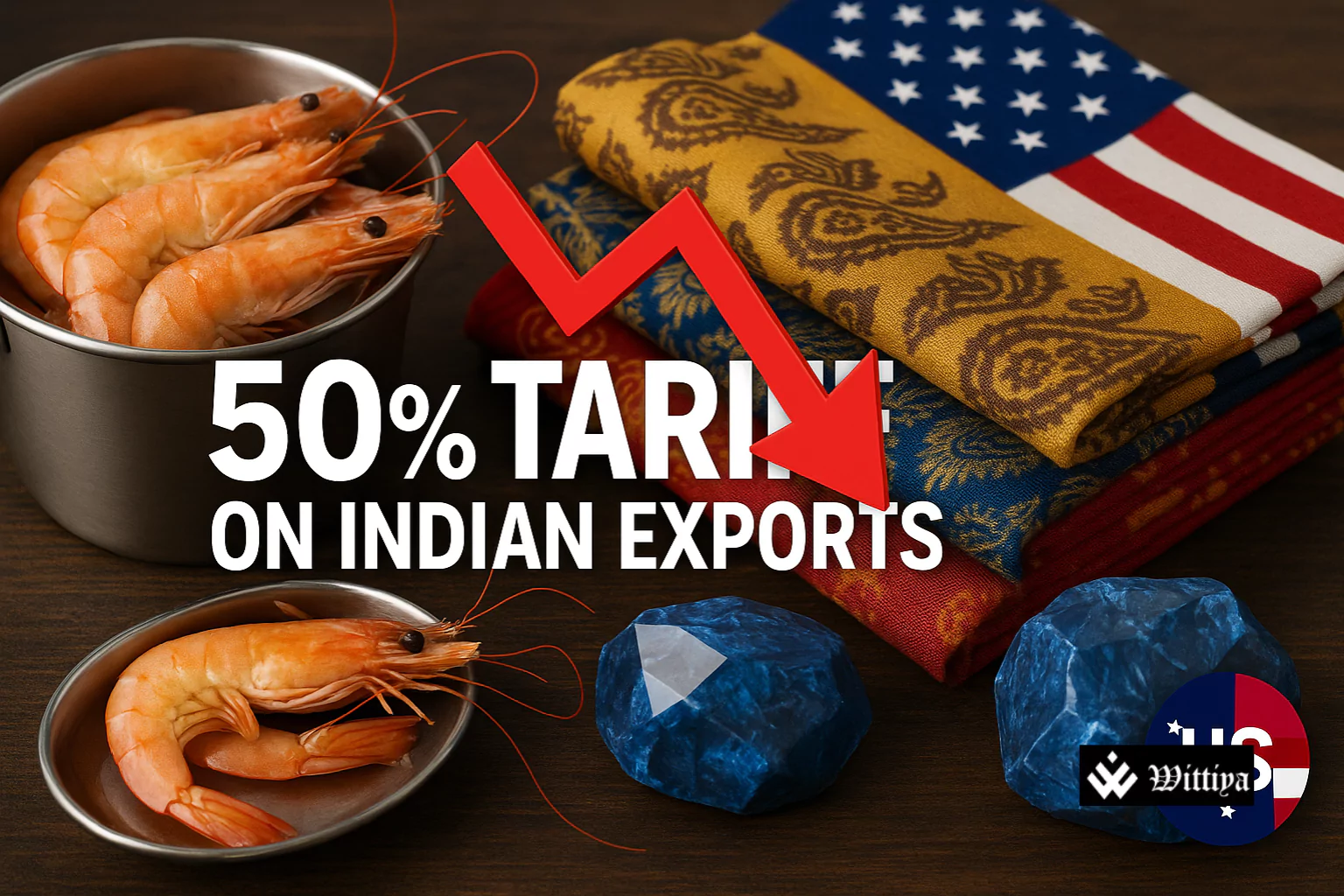
The United States has imposed a 50% tariff on Indian exports, directly impacting high-revenue sectors such as textiles, shrimp, gems, and machinery. With the new tariff structure coming into force on August 27, Indian exporters face a severe cost disadvantage of 30–35%, prompting major concerns of export decline and trade realignment.
In a significant policy move that could reshape India’s export trajectory, the United States has announced a 25% additional tariff on Indian imports, effective August 27, taking the total duty on certain goods to a staggering 50%. This development is set to affect India’s critical export sectors, including textiles, shrimp, leather, chemicals, gems, and heavy machinery.
According to analysts, this hike is not just a marginal adjustment but a potential trade disruptor, expected to slash US-bound Indian exports by 40–50%, due to sudden pricing uncompetitiveness in a global market already marked by post-pandemic volatility and inflation.
The White House stated the additional tariffs were imposed in response to India’s continued engagement in oil trade with Russia. India, however, maintains its oil purchases are driven by national energy security and economic interest, and are conducted transparently.
Also Read: Trump’s Double Standards: Tariffs for India, Tariff Cuts for Pakistan?
Sectoral Breakdown of Impact
Export-intensive sectors such as textiles and apparel, valued at over $10.3 billion, will now face cumulative tariffs of up to 63.9% in some sub-categories. The shrimp sector, already burdened with anti-dumping and countervailing duties, will now face a total import tax of 33.26% in the US, reducing competitiveness against Ecuador and Vietnam, who enjoy preferential tariff treatment.
The gems and jewellery segment (worth $12 billion in exports) and electrical and mechanical machinery (roughly $9 billion) are also expected to suffer due to new tariff ranges exceeding 50%, which could cause buyers to redirect sourcing contracts to alternate manufacturing hubs in Southeast Asia.
Cost Burden and Market Realignment
The new tariffs effectively place Indian exporters at a 30–35% price disadvantage, making it harder to retain market share. Indian micro, small, and medium enterprises (MSMEs), who dominate sectors like leather, apparel, and seafood, face the brunt of this policy.
Exporters are already witnessing order cancellations and sourcing delays from US buyers reconsidering Indian procurement due to escalated landed costs. This could lead to job losses, factory underutilization, and a loss of long-standing trade relationships, especially in cost-sensitive categories.
Trade Relationship at Stake
Bilateral trade between India and the United States reached $131.8 billion in FY 2024–25, with Indian exports accounting for $86.5 billion. The sectors impacted by the tariff account for nearly 50% of India’s total US-bound exports, raising fears of an overall trade imbalance and declining foreign exchange inflow from one of India’s top export markets.
Policy analysts suggest that unless mitigated through strategic diplomatic negotiations or trade realignment, these tariffs could compress India’s export growth by several percentage points in FY 2025–26, especially given weak global demand and high competition.
READ MORE ON