


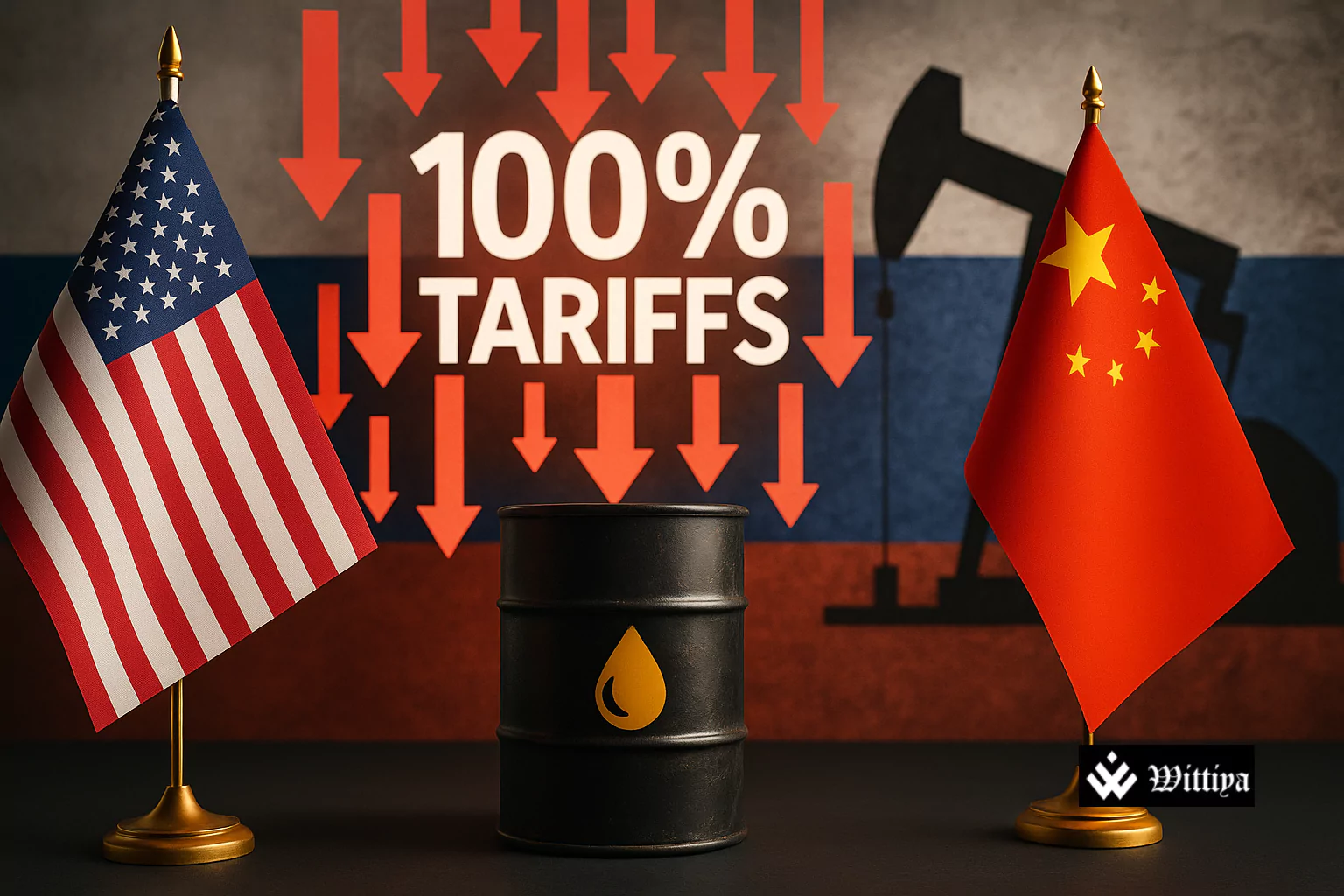
The United States has issued a strong warning to China regarding continued purchases of sanctioned Russian oil, threatening tariffs of up to 100%. The Biden administration is increasing pressure on Beijing to halt energy and technology trade that supports Russia’s war efforts in Ukraine.
Geopolitical tensions between the United States and China intensified this week as U.S. Treasury Secretary Scott Bessent delivered a direct warning to Chinese officials about the economic risks of continuing to import sanctioned Russian oil. Citing legislation under discussion in the U.S. Congress, Bessent cautioned that countries purchasing such oil could face secondary tariffs of up to 100%, with the first wave of penalties likely within 10 to 12 days unless there is progress in Moscow’s engagement toward a peace deal with Ukraine.
The remarks followed two days of U.S.-China trade discussions in Stockholm, where Bessent reiterated Washington’s disapproval of China’s energy engagements with Russia and Iran. He also highlighted U.S. concerns over the sale of more than USD 15 billion worth of dual-use technology goods from China to Russia — supplies believed to be aiding Moscow’s war infrastructure.
Also Read: How Will the US-China Trade War Impact India and Japan’s Future Deals?
This escalating rhetoric reflects mounting frustration in Washington. The proposed legislation not only empowers the U.S. President to enforce tariffs as high as 500% on Russian oil-importing nations but could also encourage U.S. allies to adopt similar punitive measures. These moves are aimed at strategically cutting off revenue flows to Russia’s energy sector, a primary funding stream for its military operations.
China, which currently imports approximately 2 million barrels of Russian oil daily, remains the largest buyer of Moscow’s crude. In response to U.S. pressure, Chinese representatives asserted their sovereign right to determine energy sourcing based on domestic policy priorities.
Also Read: Will the US-China Trade War Break China’s Banking Sector?
“They take their sovereignty very seriously,” Bessent said, suggesting that China would rather absorb the impact of tariffs than compromise its energy autonomy.
The potential economic impact extends far beyond oil. Bessent emphasized to Chinese Vice Premier He Lifeng that continued technological exports to Russia — especially components that may end up in weapon systems — are eroding China’s credibility and economic relationships in Europe.
“China’s position is damaging its public perception across Europe. It’s seen as indirectly fueling a war at Europe’s doorstep,” Bessent noted, underscoring the reputational and strategic risks Beijing faces in sustaining its current trade path with Russia.
As the situation develops, the global market is closely monitoring the implications for oil pricing, supply chain stability, and the broader recalibration of international trade alliances.
READ MORE ON