


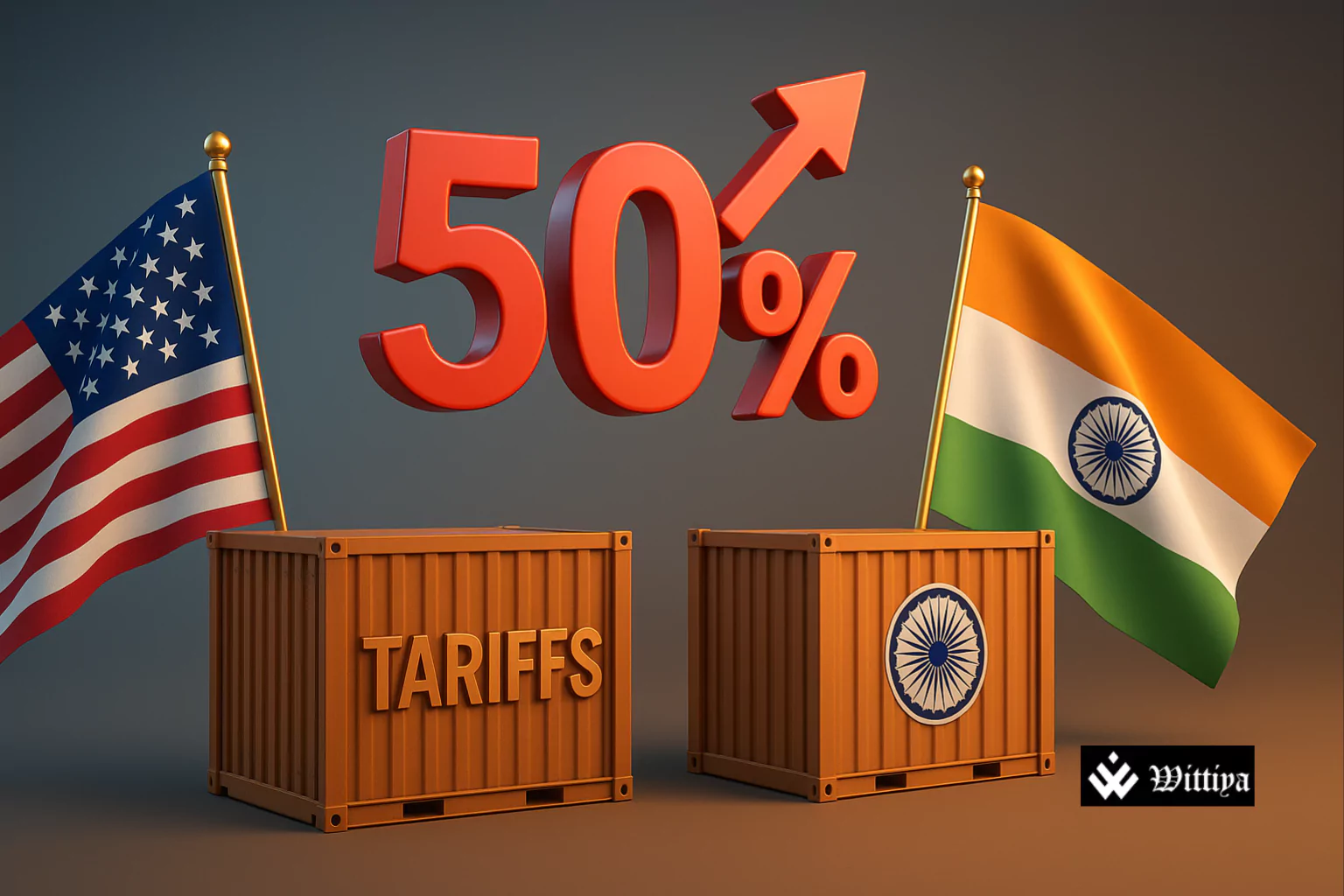
The U.S. has declared that there will be an extra 25 % tariff on products from India which will come into force on August 27 meaning the total tariffs will be 50%. The action, that is linked to India’s imports of oil from Russia, has unsettled the markets and elicited the reaction from officials in New Delhi without delay.
The United States has taken a step closer to enforcing trade policies against India by the Department of Homeland Security which has come up with a draft notice to confirm that an extra tariff of 25% shall be levied on Indian products starting from August 27, 2025. This move follows President Donald Trump’s earlier call to throttle up tariffs, sending a clear message of the administration’s hardline attitude in trade and energy-related negotiations with India.
The draft notification says that the tariffs will target Indian goods “entered for consumption, or withdrawn from the warehouse for consumption” on or after the date of effect. The notification arrives a few weeks after Trump’s proclamation about the rising tariffs linking the measure directly to India’s refusal to stop importing Russian oil.
In his earlier statement, Trump spoke about raising tariffs on Indian imports twice, i.e. to 50% while also maintaining the original baseline tariff at 25%. Introducing a 21-day negotiation period, the administration suggested that New Delhi was still able to reach a deal, especially around the energy trade policies.
Also Read: US Scraps India Trade Talks Days Before Tariffs Hit
Deeper Financial and Trade Implications
According to trade specialists, the moment of this tariff hike may impact India’s export competitiveness deeply and spread widely, especially in such areas as textiles, machinery, auto components, and chemicals. The higher tariffs may somewhat cut India’s competitive advantage in the US market; hence the Indian exporters might strategize their supply chain and choose different markets.
From the US point of view, the tariffs are considered and marketed as a means of supporting local industries and pressurizing the trading partners on the issues of strategic importance. On the other hand, economists predict the alternative view that such tariffs will raise the costs of manufacturers in the US who depend on intermediates goods from India. The consumers may then find that the increased costs of products are transferred to them in industries ranging from clothing to household goods.
The correlation between trade tariffs and India’s energy purchases adds yet another aspect to the situation. By forcing India to reject Russian oil imports, the Trump administration is seeking to connect trade actions with wider geopolitical and energy security aims. This shows a change in the manner Washington is applying tariffs—not only as an economic tool, but as a strategic instrument in foreign policy.
Market Outlook
The decision is also being announced at a time when global equity markets are feeling the effects of the geopolitical uncertainties. The analysts’ view is that volatility will be very strong in the Indian export-oriented stocks, particularly in the sectors which are heavily dependent on the US market. The currency market may also move, whereby the Indian rupee may come under pressure if the exports have a downward trend for quite some time.
On the other hand, the trade officials and industry players have a different opinion that the ongoing negotiations could still provide a cushion in the event that India agrees to import partially from Russia or embarks on a phase-wise compliance journey. Meanwhile, the businesses on both sides of the trade corridor face a lot of uncertainties.
READ MORE ON