






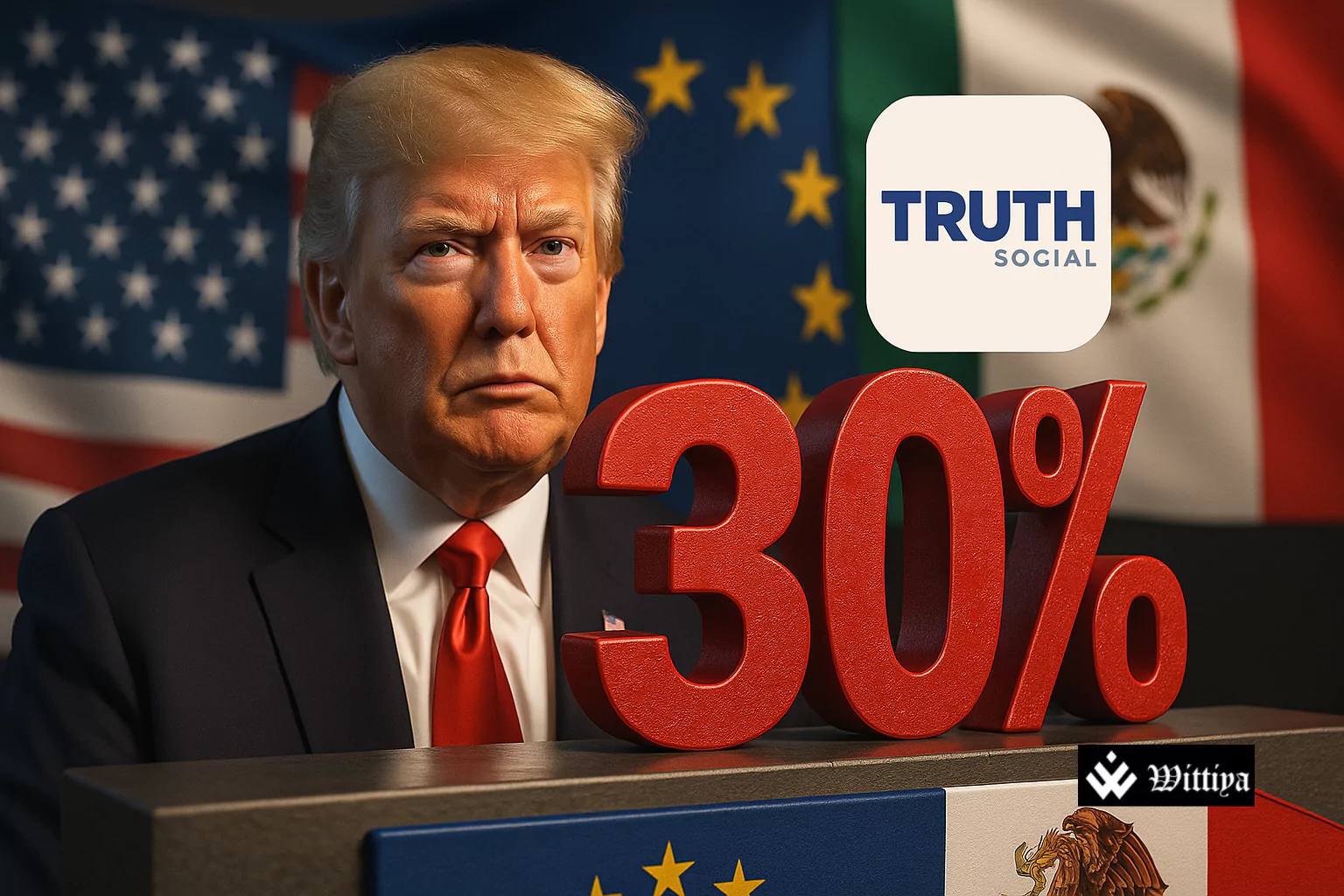
On July 13, 2025, former U.S. President Donald Trump announced a sweeping 30% tariff on goods imported from the European Union and Mexico, starting August 1. The tariffs, shared publicly via Truth Social, target U.S. trading partners for what Trump calls unfair practices. The European Commission and Mexican government have voiced strong opposition, signaling possible retaliation.
In a move that has reignited global trade tensions, former U.S. President Donald Trump announced that the United States will impose a 30% tariff on all goods imported from the European Union and Mexico effective August 1, 2025.
The announcement was made through letters posted on Trump’s social media platform, Truth Social, addressed to European Commission President Ursula von der Leyen and Mexico’s President Claudia Sheinbaum. Trump criticized both trading partners for what he described as insufficient efforts to meet U.S. trade expectations.
“Mexico has been helping me secure the border, BUT, what Mexico has done is not enough,” Trump wrote in the letter. He added that companies or nations that relocate their production to the U.S. would be spared from the new tariffs.
Trump warned that any retaliatory measures from the EU or Mexico would be met with further tariff increases. “Whatever the number you choose to raise them by will be added to the 30% that we charge,” he stated.
EU and Mexico Respond
Ursula von der Leyen responded that the new tariffs would severely impact transatlantic supply chains and urged continued dialogue. “We remain ready to work toward an agreement by August 1,” she said, adding that the EU would consider proportionate countermeasures to protect its interests.
Mexico’s government also condemned the tariffs, describing them as “unfair treatment” in an official statement. A Mexican delegation had met with U.S. officials on July 11 to discuss bilateral trade but was informed during the meeting about the impending duties.
Global Impact
According to the Office of the U.S. Trade Representative, the U.S. imported over USD 553 billion worth of goods from the EU and USD 454.8 billion from Mexico in 2022. Combined, they represent about one-third of total U.S. imports.
Trump’s administration has also issued similar tariff letters to 23 other trading partners, including Canada, Japan, and Brazil, with rates ranging from 20% to 50%. This follows Trump’s earlier “Liberation Day” move on April 2, when he imposed a global 10% tariff.
Despite a temporary pause on tariffs announced a week later, Trump has now confirmed that all pending tariff hikes will go into effect on August 1.
A Divided Trade Landscape
While some countries like the United Kingdom and Vietnam have secured preliminary trade deals with the U.S., others face uncertainty. Treasury Secretary Scott Bessent praised the UK’s proactive approach, hinting at benefits for nations that engage in good-faith negotiations.
As the August 1 deadline approaches, all eyes remain on how the EU and Mexico will react, and whether this new wave of tariffs will escalate into a broader trade conflict.