






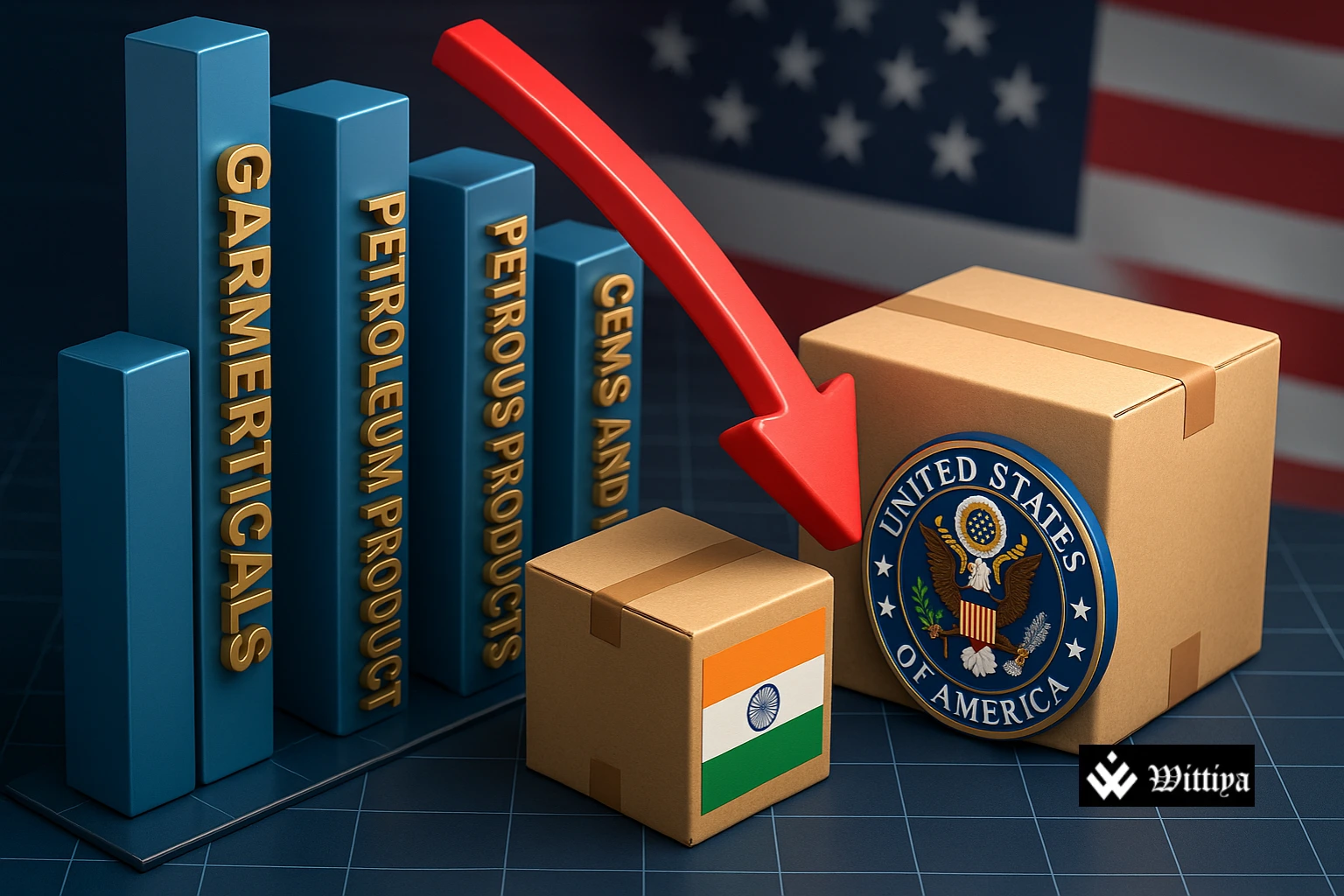
The United States has announced a 25% tariff on Indian exports, intensifying trade tensions between the two countries. President Trump confirmed ongoing negotiations but cited India’s high tariffs, Russian trade ties, and non-monetary barriers as reasons behind the move. The decision threatens to disrupt $87 billion in annual exports and derail bilateral trade goals.
India’s export-driven industries are facing a significant blow as the United States confirmed a 25% tariff on Indian goods, effective August 1. Although negotiations are still ongoing, President Trump’s administration cited India’s high import tariffs, procurement ties with Russia, and non-monetary trade barriers as justification for the punitive move.
They have one of the highest tariffs in the world now… We’re talking to India now — we’ll see what happens,”
President Trump, Unites States
Bilateral Trade at Stake: $87 Billion in Annual Exports Threatened
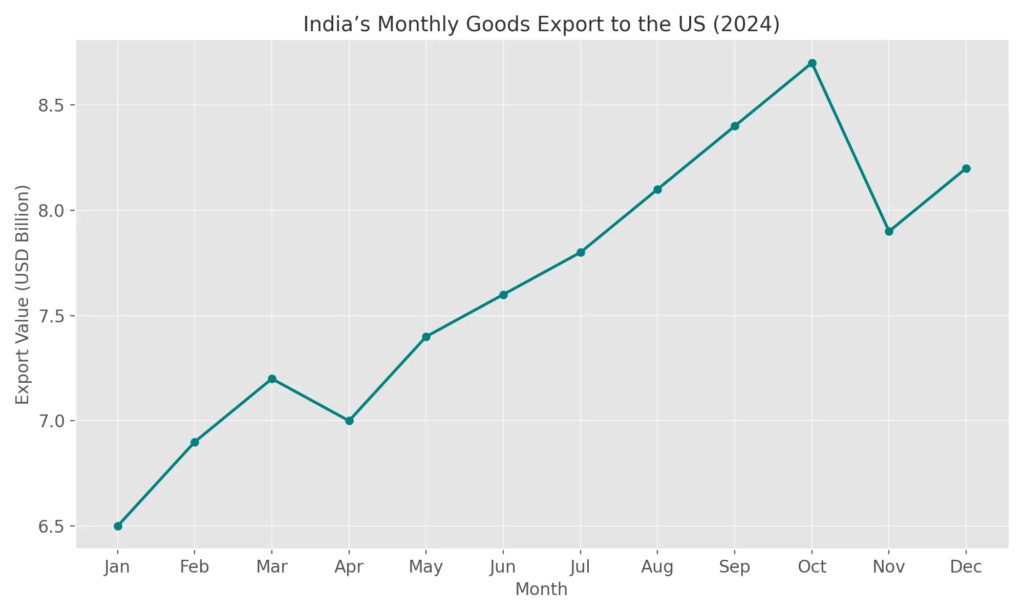
India exported approximately $87 billion worth of goods to the U.S. in 2024, accounting for nearly 25% of its total global exports. The sudden tariff escalation could jeopardize critical sectors, including:
- Textiles and garments
- Pharmaceuticals
- Gems and jewelry
- Petrochemicals
- Leather goods and furniture
India’s Monthly Goods Export to the US (2024)

Exporters Cautioned as Competitive Edge Erodes
Export-intensive industries warned that the tariffs will make Indian goods uncompetitive against rivals in Vietnam, Indonesia, and China, who currently face lower tariff rates (15–20%).
“This is a major setback… India’s cost advantage in global markets is at risk,” said a top official from India’s trade association.
Also Read: 5 Lakh Crore Gone: Indian Stock Market’s Steepest Fall in Months
Structural Trade Concerns: Non-Tariff Barriers in Focus
The tariff threat follows repeated U.S. concerns over India’s non-tariff barriers such as:
- Strict import quality controls
- Limited market access for foreign agricultural and dairy products
- Complex licensing and labeling requirements
In 2025, India maintained an average applied tariff of 39% on agricultural products, with some items like apples and corn facing rates near 50%.
Geopolitical Dimensions: BRICS Membership and Russian Trade Under Scrutiny
Trump also linked the tariff decision to India’s ongoing energy and defense ties with Russia, as well as its active role in BRICS, which he described as adversarial to American interests.
India sourced 35% of its total crude oil imports from Russia during the first half of 2025. The U.S. had earlier indicated that countries aligning with “anti-American policies” within BRICS could face additional tariffs, and India appears to be the first target under this framework.
Indian Government’s Response: Strategic Interests Will Be Protected
India’s Ministry of Commerce emphasized its commitment to protecting domestic sectors, including farmers, MSMEs, and entrepreneurs, while continuing trade talks with the U.S.
“We remain committed to concluding a fair, balanced, and mutually beneficial bilateral trade agreement,” the government said in its official response.
India has reiterated its goal to expand bilateral trade with the U.S. to $500 billion by 2030, up from $191 billion in 2024, though this escalation threatens to derail that trajectory.
Also Read: Why Trump Imposed 25% Tariffs on Indian Goods Explained
Investor Sentiment: Market Uncertainty to Persist
The tariff announcement triggered a sharp selloff in Indian equity markets on Thursday morning, with the BSE Sensex falling by 604 points and the Nifty50 slipping 183 points. Over $66 billion in investor wealth was erased within the opening minutes of trade.
Analysts suggest the Indian market may face short-term volatility, especially in export-heavy sectors, unless negotiations lead to a rollback or relaxation of the announced tariffs.
Looking Ahead: Trade Talks Hang in Balance
President Trump has hinted at potential flexibility depending on India’s willingness to substantially cut its existing tariff barriers. However, with less than 48 hours remaining before implementation, the outcome remains uncertain.
India’s strategic decisions in trade alignment, particularly its energy dependence and BRICS involvement, will now play a pivotal role in shaping future diplomatic and commercial relations with the United States.
READ MORE ON