






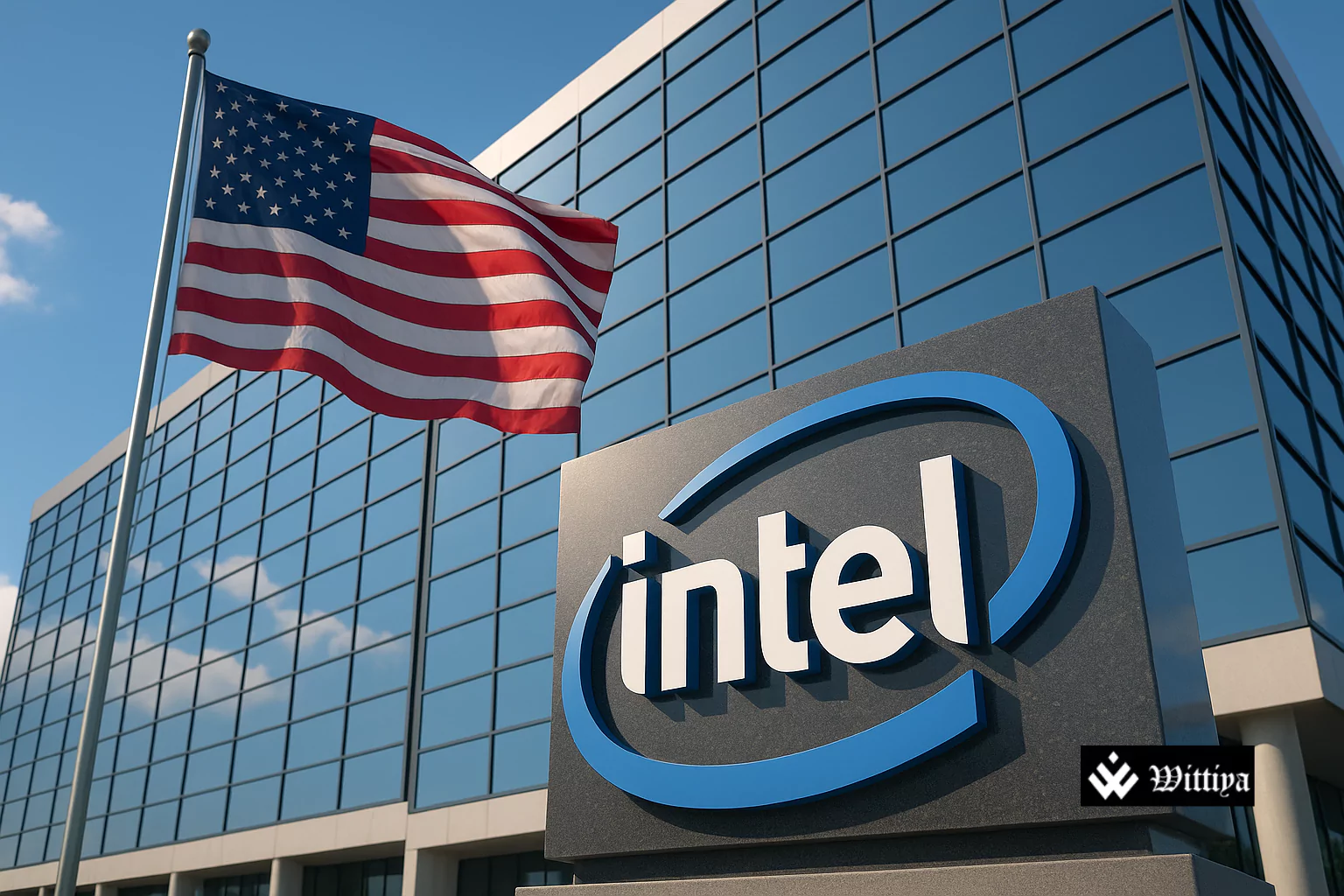
U.S. President Trump and Intel have signed a brand new agreement worth $8.9 billion to expand semiconductor production on American soil thus enhancing the United States economic and national security agenda.
Intel Corporation (Intel) has joined in a landmark deal with the Trump Administration, signifying one of the biggest public-private partnerships in the American semiconductor sector. To align with the U.S. strategy to ensure technological and manufacturing leadership, the U.S. government would invest $8.9 billion in Intel common stock.
The 433.3 million shares or 9.9% ownership will be funded by the reallocation of $5.7 billion in awarded but undisbursed CHIPS and Science Act funds and $3.2 billion from the Secure Enclave program. This raises federal support for Intel from previously announced programs to over $11 billion, highlighting Washington’s commitment to the reshaping of the semiconductor supply chain in the U.S.
A Strategic Bet on Technology Sovereignty
The investment goes beyond the financial return; it represents the national security and economic requirements of the United States. The aim of the policy makers in fortifying Intel’s U.S.-based manufacturing is to lessen the dependence on offshore systems of chip supply, more so in the milieu of the mounding augmented trade tensions.
Intel has promised to invest over $100 billion in the building up of its local chip production, going as far as setting up highly developed fabrication plants in Arizona, this has the effect of making the company the basis for the technological independence from the U.S. It is not only granted that the government wins with this deal, but also the guarantee of continued breakthroughs in frontier logic R&D and the delivery of secure semiconductors for defense applications.
Financial analysts interpret this accord as a sign of trust in the turnaround plan at Intel executed under CEO Lip-Bu Tan, who has mainly been engaged with reestablishing a leading position in process technology through efficiency. The government’s holding is passive in nature — it does not allow for any board representation or governance rights — which means that Intel maintains its operational autonomy while it enjoys increased capital stability.
Also Read: SoftBank Shares Slide Over 5% After $2 Billion Intel Deal
Implications for Shareholders and the Market
The deal price of $20.47 per common share represents a discount relative to market levels, thus creating a long-term value for U.S. taxpayers as well as sending a positive signal to Intel’s recovery. The administration also acquired a five-year warrant for a further 5% stake, exercisable when certain conditions regarding ownership and operator control are met, thereby further binding public interest to Intel’s performance.
Industry watchers have been pointing out that this pact could accelerate Intel to a competitive position more vigorous than that of international rivals and at the same time, acting as a catalyst for the broader reshoring of the advanced manufacturing sector. The removal of claw-back provisions from old grants makes this a better vehicle for the company to have a steadier influx of capital to sustain investment long-term plans.
Looking Ahead
When examining Intel’s next fab in Arizona which will be starting mass production some time this year, the U.S. would be testing its ambitions in the semiconductor industry. It may be claiming a position as a potential partner in future government and industry programs, having witnessed a successful example of safeguarding strategic technologies.
The historic transaction not only boosts Intel’s balance sheet but also signals an emerging policy trend where capital markets, national security, and industrial policy are intersecting. For investors it is a critical moment as the U.S. communicates its desire to continue being one of the leaders in semiconductor innovation and supply chain resilience.
READ MORE ON