






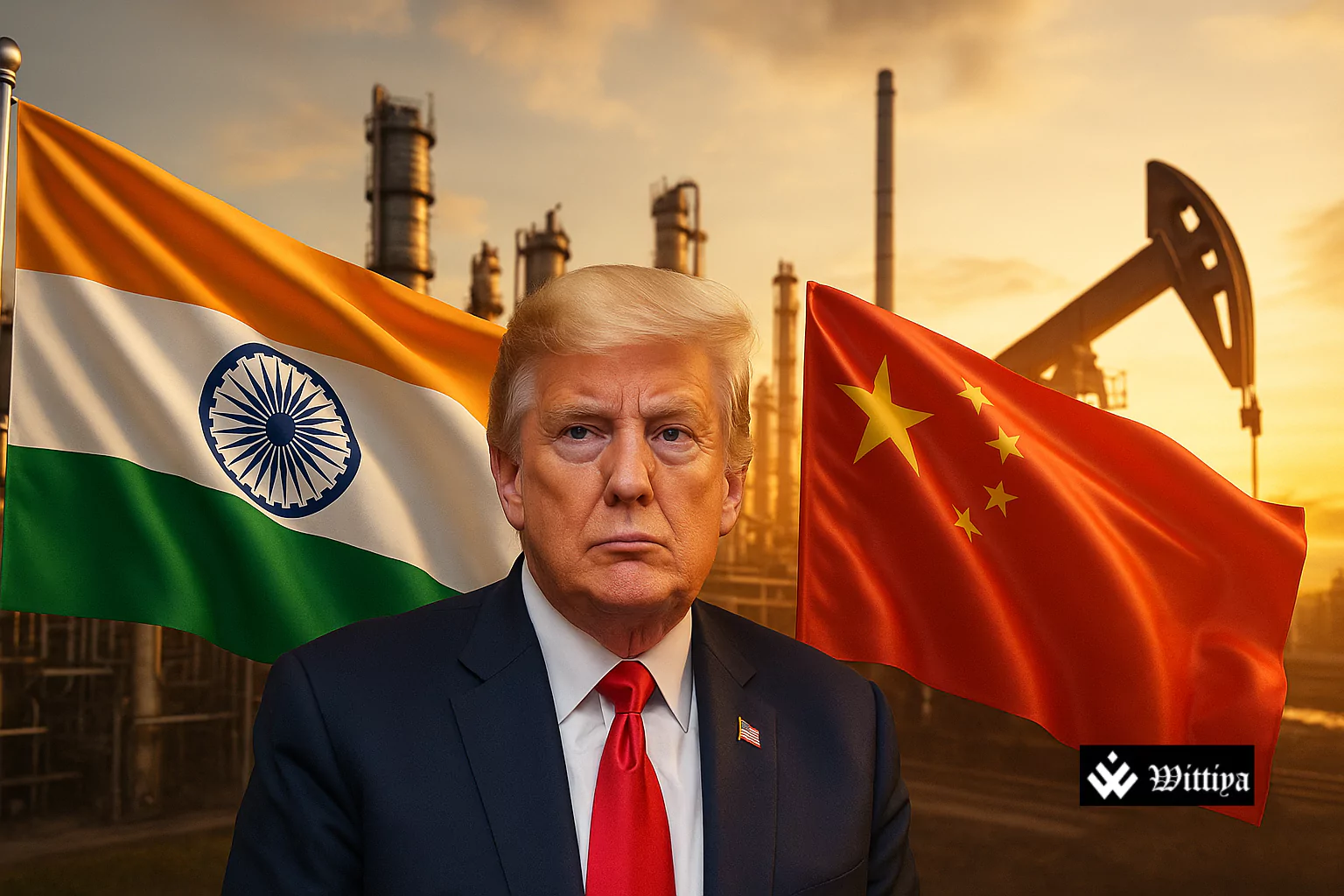
India and China are facing renewed scrutiny following a warning from former US President Donald Trump regarding potential financial penalties on countries importing Russian oil. With India significantly increasing its dependence on Russian crude since the onset of the Ukraine war, the announcement could have economic and geopolitical implications. Markets, however, have remained calm amid the warning.
India and China, Asia’s two largest economies, are under the international spotlight following a stern warning issued by former US President Donald Trump about imposing financial penalties on nations continuing to purchase oil from Russia. The threat, made public on July 14, 2025, has reignited tensions surrounding global oil trade, particularly involving nations that ramped up Russian crude imports after the Ukraine conflict began.
India, headquartered in New Delhi, has emerged as a key importer of Russian oil in the last three years. According to data from Kpler, a global commodity tracking firm, Russian oil accounted for over one-third of India’s total crude imports this year — a dramatic surge from under 1% before early 2022. The rise was driven by discounted prices offered by Russia after facing Western sanctions post its invasion of Ukraine.
Meanwhile, China, the world’s largest oil importer, has continued to purchase Russian crude steadily, maintaining close energy ties despite growing international pressure. Both countries have taken advantage of the price arbitrage created due to Western restrictions on Russian exports.
While Trump’s comments have not yet resulted in market panic, energy analysts are closely monitoring developments. Crude oil prices showed limited movement following the remarks, indicating that traders are waiting for formal policy actions rather than responding to political rhetoric.
India’s refining industry, including major players like Indian Oil Corporation and Bharat Petroleum, is especially vulnerable, given the country’s heavy dependence on imported oil. Any disruption in Russian supply may force a shift to alternative sources like the Middle East or the US, albeit at higher costs.
Experts warn that financial penalties, if implemented by a future Trump-led US administration, could disrupt supply chains and compel Indian refiners to reassess their sourcing strategies. Still, India maintains that its oil purchases are based on national interest and energy security, and not subject to foreign political influence.
For now, the markets remain cautiously optimistic, but the geopolitical landscape could quickly shift depending on the outcome of the US elections and Trump’s future influence on policy.