






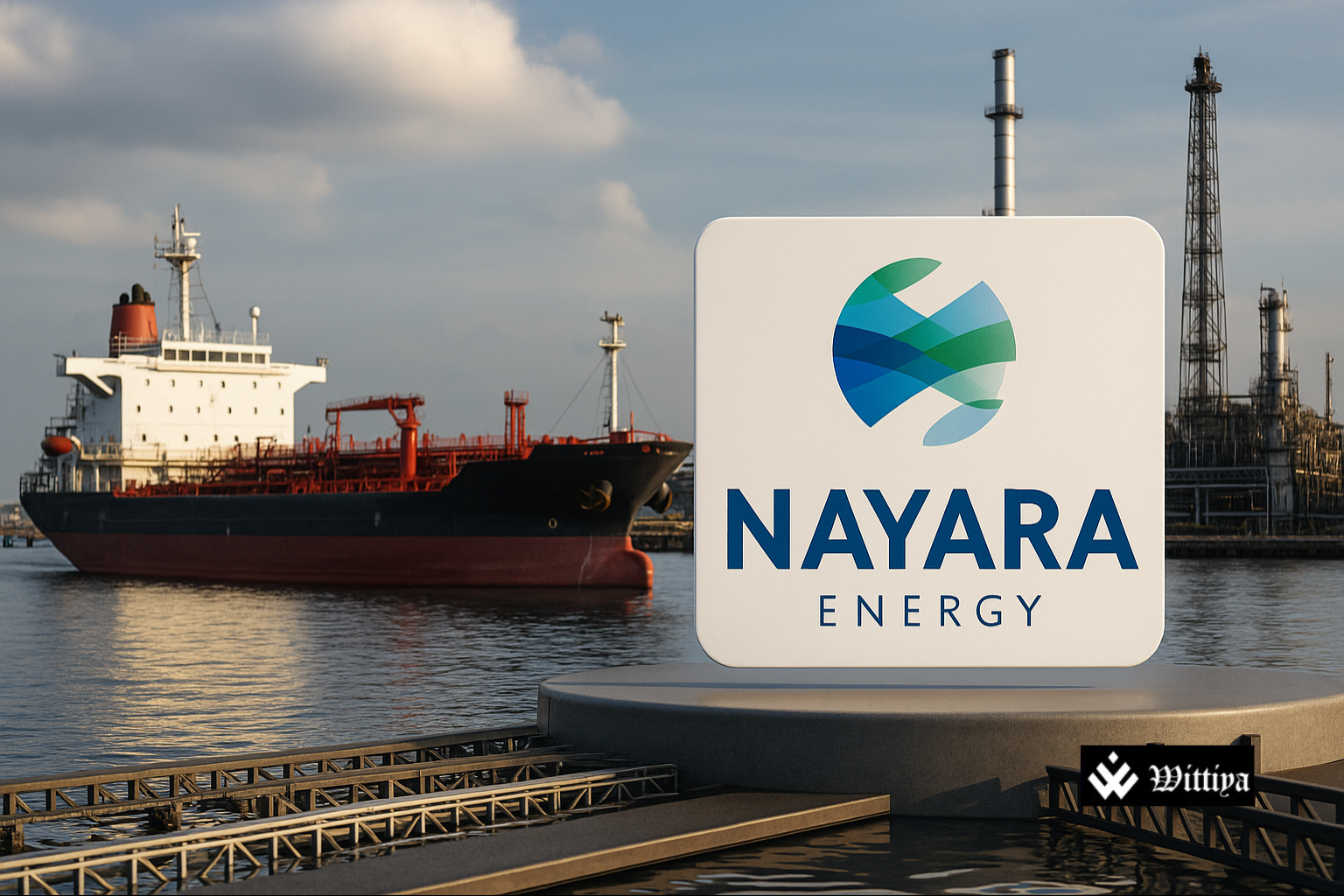
India’s Nayara Energy, a key private oil refiner and fuel retailer partially owned by Russian major Rosneft, is facing heightened global scrutiny following fresh European Union sanctions. The departure of a BP-chartered tanker without loading diesel signals growing geopolitical and compliance risks. With its strategic role in India’s refining sector, Nayara now finds itself at a critical juncture—navigating regulatory headwinds, ownership sensitivities, and evolving trade dynamics.
India’s energy sector is witnessing renewed geopolitical friction following the imposition of European Union sanctions on Nayara Energy—one of the country’s largest private oil refiners. A BP-chartered tanker, Talara, departed Nayara’s Vadinar port in Gujarat on July 21 without loading its scheduled shipment of ultra-low sulfur diesel, highlighting immediate ramifications of the sanctions.
According to shipping and trade sources, the 60,000 metric tonnes of diesel bound for Africa remained unloaded. While Nayara has condemned the sanctions as “unjust and unilateral,” this development raises operational concerns for a company heavily reliant on global exports and international logistics.
About Nayara Energy
Nayara Energy Limited, formerly known as Essar Oil, operates a 20 million metric tonnes per annum (MMTPA) refining facility in Vadinar, one of the most complex and modern refineries in Asia. The company also owns India’s largest private fuel retail network, with over 6,500 fuel stations, and plans to scale to 8,500+ outlets in the coming years.
Post-2017, Nayara became majorly owned by Rosneft—Russia’s largest oil producer—alongside a consortium of investors. Rosneft holds a 49.13% stake, with the remainder owned by global trader Trafigura and Russian investment group UCP. This shareholder structure, while strategic, has now become a focal point amid tightening sanctions on Russian-linked businesses.
Impact of EU Sanctions & Trade Disruption
The latest EU sanctions, part of a broader package targeting Russia’s energy revenues amid the Ukraine conflict, directly name Nayara Energy. The impact was swift—BP, wary of secondary sanctions and compliance liabilities, released the tanker after cancelling the cargo loading.
While India’s official position remains opposed to unilateral sanctions not endorsed by the United Nations, the move has triggered concern over the sustainability of refined product exports from Nayara to EU-linked or risk-averse destinations. Market participants are expected to take a more cautious approach in dealing with Nayara’s international trade operations.
Shipping insurance, charter agreements, and letters of credit could now face more stringent compliance reviews, even in non-EU jurisdictions, depending on counterparties’ global exposure.
Tariff and Policy Considerations
Though India has not imposed new tariffs or restrictions on Nayara’s operations, the global trade response may indirectly affect Nayara’s export margins and operating costs. There could also be a chilling effect on future crude oil procurement and product marketing, especially with traders avoiding dealings that could attract penalties from Western regulatory bodies.
Furthermore, India’s fuel pricing regime—which remains loosely market-linked but politically sensitive—may also complicate Nayara’s ability to pass through additional costs or operational inefficiencies to end consumers.
Competitive Landscape: Nayara vs Other Indian Players
Compared to Reliance Industries, which operates the world’s largest refining complex in Jamnagar and enjoys diversified global supply chains, Nayara is more exposed due to its Russia-linked shareholder base and a narrower export corridor.
Reliance Industries:
- Refining Capacity: ~68.2 MMTPA (across two units)
- Global trading arm and diversified export routes
- Minimal ownership risk from sanctioned entities
Indian Oil Corporation (IOC) and Bharat Petroleum Corporation Ltd. (BPCL):
- State-owned, thus shielded from ownership scrutiny
- Operate with both domestic priority and strategic export
- Enjoy direct government backing during global turbulence
In contrast, Nayara’s operations are private and export-oriented, with over 45% of its refined output historically targeted for overseas markets. Its retail expansion plans also face stiffer competition from public-sector firms upgrading networks and from Reliance’s digital-first Jio-BP joint venture.
Future Outlook and Strategic Considerations
Nayara has ongoing plans to invest over $850 million in petrochemicals and cleaner fuels as part of its long-term diversification. However, experts note that the immediate focus will be operational de-risking, possible legal recourse, and exploring alternative markets such as Africa, Latin America, and parts of Asia with neutral sanction stances.
The company must also assess its trade finance architecture, possibly restructuring transactions through alternative currency settlements, non-Western intermediaries, or strategic partnerships to bypass EU-linked compliance choke points.
India’s broader refining sector, meanwhile, must brace for geopolitics-driven volatility, where shareholder profile and global exposure are increasingly influencing day-to-day operations.