


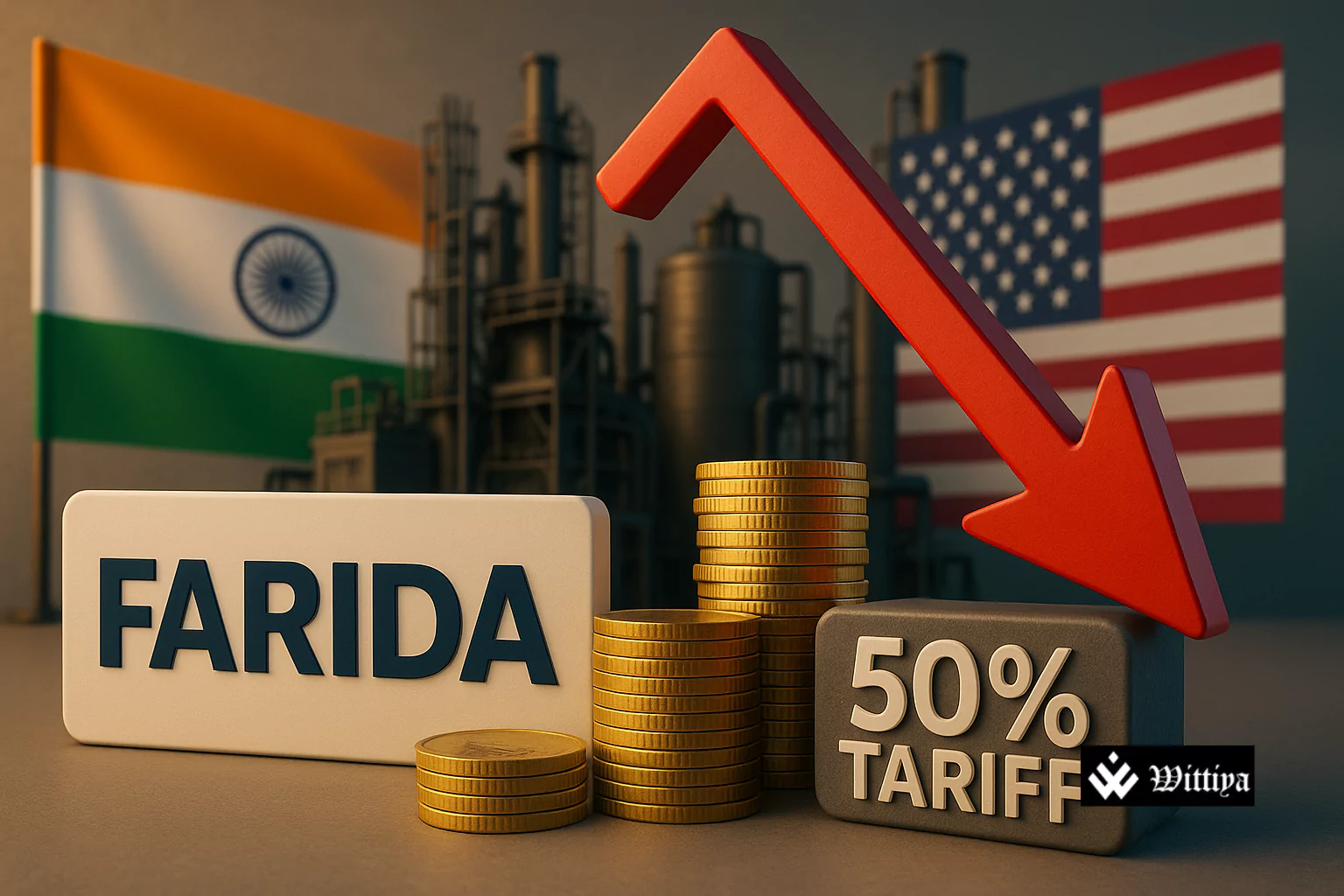
India faces a major economic challenge as US tariffs on imports from the country rise to 50%. The move threatens Prime Minister Narendra Modi’s decade-long manufacturing push, putting pressure on exporters and raising concerns about India’s global trade competitiveness.
India’s manufacturing ambitions face a major setback as the United States raises tariffs on imports from the country to 50%. The decision creates uncertainty for exporters and risks undermining India’s global trade position at a time when Prime Minister Narendra Modi’s administration has been pushing hard to make India a global manufacturing hub.
One of the biggest concerns comes from Farida Group, India’s largest shoemaker, which had already secured 150 acres in Tamil Nadu to expand its export operations. Company executives now warn that such high tariffs erode competitiveness, leaving little room for pricing adjustments or negotiations with international buyers.
Also Read: India Falls From Top to Least Favored Asian Market Amid Tariffs
Industry leaders estimate that exporters could see demand fall by as much as 20% in the short term. This is particularly critical as India continues to promote itself as an alternative to China in global supply chains. The sudden policy shift in Washington threatens to stall this momentum and force companies to reconsider investment plans.
Trade experts argue that while India’s long-term fundamentals remain strong, the tariff shock exposes vulnerabilities in its export-driven sectors such as footwear, textiles, and industrial goods. Unlike a 25% tariff where companies can negotiate margins, a 50% rate eliminates profit buffers, creating deeper uncertainty for businesses operating in global markets.
Analysts suggest that India may need to accelerate trade diversification, strengthen domestic demand, and push for strategic bilateral agreements to cushion the blow. The tariff move also underscores the urgent need for India’s manufacturing sector to upgrade competitiveness through innovation, cost efficiency, and supply chain resilience.
With India seeking to position itself as a global production hub, the rising trade barriers highlight the delicate balance between protectionism abroad and industrial ambitions at home.
READ MORE ON