


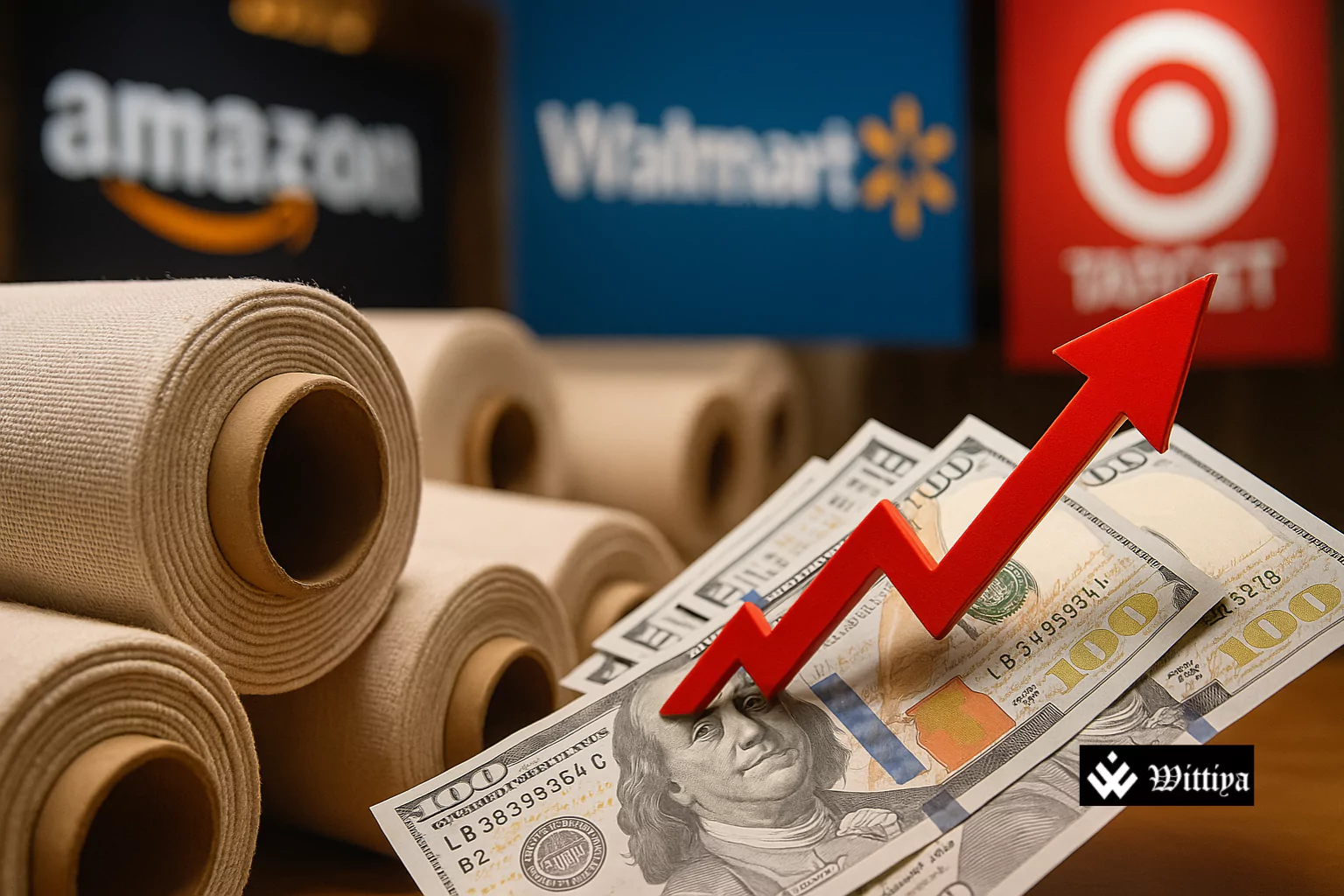
India faces a significant setback in its textile and apparel export sector as major US retailers halt orders following a steep 50% tariff imposed by the United States. This sudden shift, linked to India’s continued oil trade with Russia, may result in a loss of up to $5 billion, affecting top Indian exporters and the broader economy.
India’s textile and apparel export industry has been abruptly disrupted after several leading US retailers—including Amazon, Walmart, and Target—suspended orders following a 50% tariff imposed by US President Donald Trump on Indian goods.
This trade escalation stems from the United States’ opposition to India’s continued import of oil from Russia. Exporters confirmed receiving formal communication from US buyers requesting a complete pause on pending and upcoming shipments of textiles and apparel until further notice.
Exporters Bear the Cost Burden as Tariffs Bite
According to exporters, US buyers have refused to absorb the increased duties and have instead asked Indian exporters to bear the full cost impact. The higher tariffs, which include an initial 25% hike effective immediately and an additional 25% set to take effect on August 28, are expected to increase landed costs by 30–35%.
This abrupt cost escalation could lead to an estimated 40–50% drop in US-bound orders, translating to potential export losses of USD 4–5 billion over the fiscal year.
Major Indian textile manufacturers with significant US exposure—many of whom derive 40% to 70% of their revenue from the US—are particularly vulnerable. The US remains India’s single largest export market for textiles and apparel, accounting for 28% of total exports valued at USD 36.61 billion in FY2024–25.
Also Read: India Faces Immediate 50% Tariff Shock – Here’s What It Means
India Criticizes Move as “Unfair and Unjustified”
India’s Ministry of External Affairs condemned the tariff escalation, calling it “unfair, unjustified, and unreasonable.” In a strongly worded statement, the ministry defended its oil import policy, citing national energy security and global market stability.
The government emphasized that India began importing oil from Russia after traditional supplies were diverted to Europe following the Ukraine conflict in 2022. At that time, the US had, in fact, encouraged such diversification to help stabilize global energy markets.
Moreover, the ministry accused the US and several other Western nations of “hypocrisy,” citing their own ongoing trade with Russia in sectors including nuclear fuel, chemicals, palladium, fertilizers, and liquefied natural gas (LNG).
Global Competitors Stand to Gain
With India now facing prohibitive trade barriers in its top export market, countries such as Bangladesh and Vietnam, which continue to face only 20% tariffs on exports to the US, are expected to benefit. The loss of US orders may lead to a supply chain reallocation across Southeast Asia, putting Indian exporters at a competitive disadvantage.
Industry analysts note that this development could permanently shift global sourcing strategies, unless diplomatic or trade relief is achieved. Buyers typically favor stable pricing environments, and with high tariff uncertainty in India, shifting sourcing hubs may become a long-term trend.
Policy and Industry Response Awaited
While the Indian government has vowed to take “all necessary measures” to safeguard national economic interests, industry stakeholders are seeking immediate policy interventions—such as export rebates, subsidy revisions, and active trade negotiations to mitigate the impact.
Given the scale and timing of the disruption, analysts warn that the tariff escalation may have downstream effects on India’s manufacturing employment, spinning mills, and SME exporters, many of whom operate on narrow margins.
As global trade tensions rise, India’s textile sector—long considered a backbone of its export economy—now stands at a critical inflection point. How New Delhi and industry players respond in the coming weeks could shape the future competitiveness of India’s apparel sector on the global stage.
READ MORE ON