


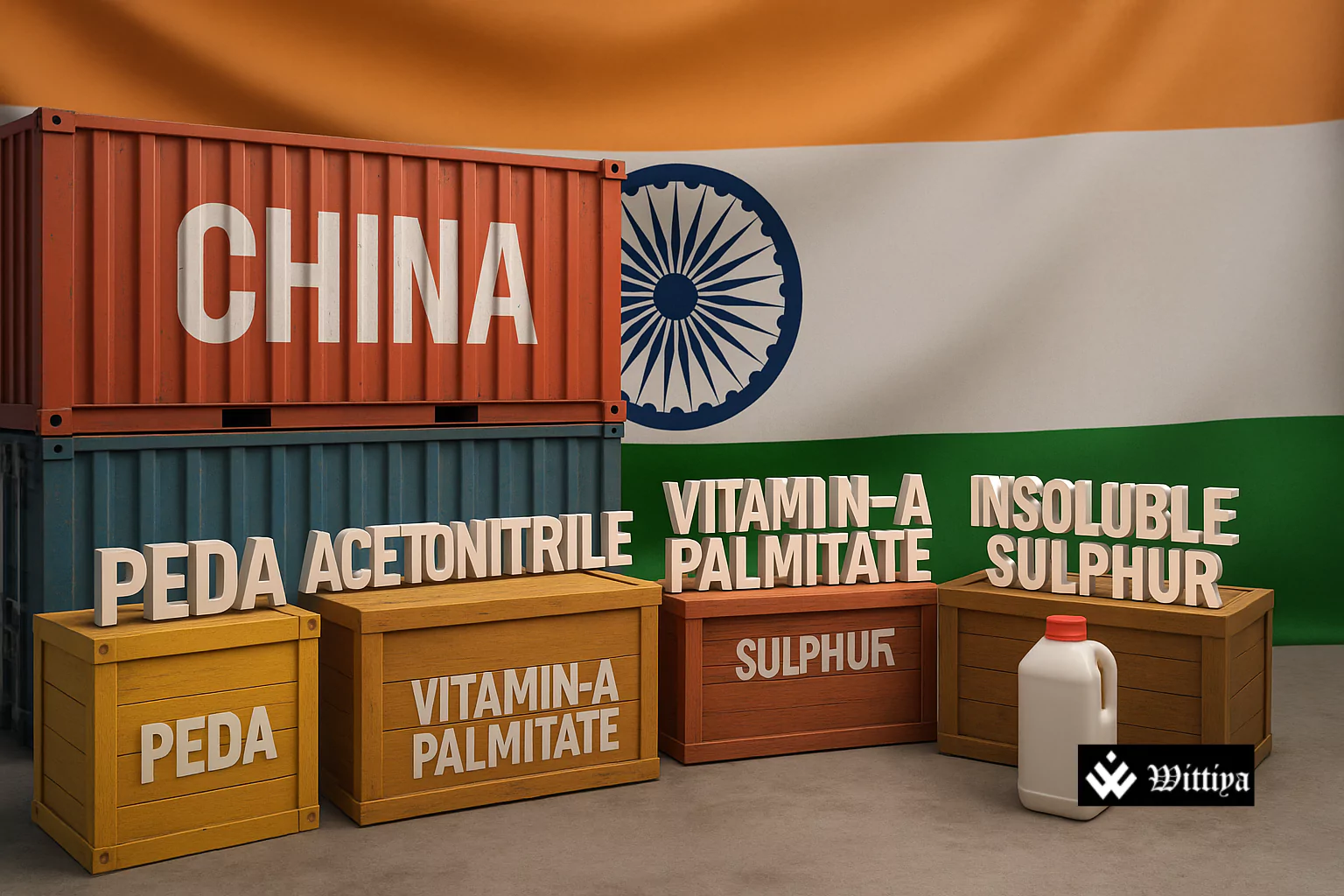
India has levied anti-dumping duties on four chemicals imported from China — PEDA, Acetonitrile, Vitamin-A Palmitate, and Insoluble Sulphur — in a move to shield domestic industries from unfair pricing practices. This action follows recommendations by the Directorate General of Trade Remedies under the Ministry of Commerce and Industry.
India has imposed anti-dumping duties on four key chemical imports from China in a decisive step aimed at protecting its domestic manufacturers from unfairly low-priced competition. The announcement was made on June 24, 2025, following detailed investigations and recommendations by the Directorate General of Trade Remedies (DGTR), which operates under India’s Ministry of Commerce and Industry.
The four chemicals under the new anti-dumping tariffs include para-phenylene diamine (PEDA), Acetonitrile, Vitamin-A Palmitate, and Insoluble Sulphur. These materials are widely used in pharmaceuticals, rubber manufacturing, and nutritional products.
According to trade officials, the decision aims to counterbalance the surge of underpriced imports from China, which have been impacting Indian producers and contributing to a widening trade gap. India’s trade deficit with China reached USD 99 billion in the last fiscal year, prompting regulatory actions to foster a more equitable trade environment.
The anti-dumping duties, which are tariff-based restrictions imposed on imports priced below fair market value, will ensure a level playing field for domestic industries. A senior official from the commerce ministry stated that the action was taken to “safeguard Indian industry from material injury caused by dumped imports from China.”
This marks the fourth such imposition in the month of June 2025 alone, signifying India’s growing reliance on regulatory trade tools to curb imbalanced foreign trade practices.
The DGTR, headquartered in New Delhi, is responsible for investigating unfair trade practices such as dumping and recommending appropriate measures in line with WTO guidelines.
The move is expected to benefit Indian chemical manufacturers and restore competitiveness across affected industries, while also reinforcing India’s broader strategy to reduce overdependence on Chinese imports.