


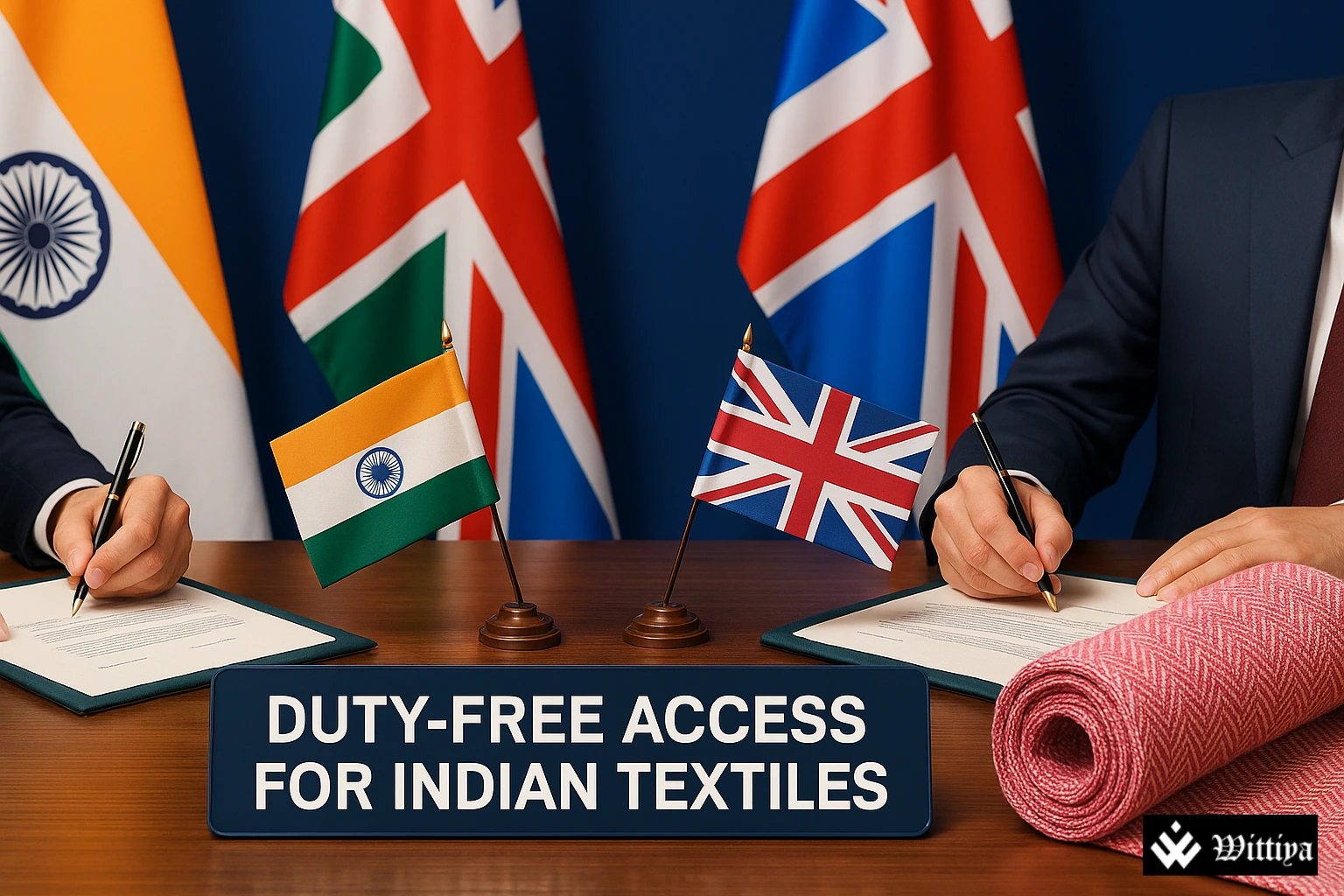
The India–UK CETA grants Indian textile products duty-free access to the UK, projected to lift exports by up to 45% by 2030 and add over USD 1 billion annually.
India has taken a significant step to strengthen its textile trade with the United Kingdom through the signing of the India–UK Comprehensive Economic and Trade Agreement (CETA) on July 24, 2025 in London. This landmark pact is set to provide duty-free access for a wide range of Indian textile products — including garments, home textiles, carpets, and handicrafts — to the UK market, immediately eliminating the tariff disadvantages Indian exporters previously faced.
The Ministry of Commerce and Industry confirmed that the UK is currently India’s third-largest textile export destination, contributing 5.8% of total shipments in 2024. India’s textile exports to the UK were valued at USD 1.79 billion, representing a 6.6% share of the market. The UK’s annual textile imports stand at USD 27 billion, with India positioned behind China (25.4%), Bangladesh (19.9%), and Turkiye (7.9%) in market share.
With CETA in place, Indian textiles will now enter the UK market at zero duty, providing a competitive advantage against regional rivals. Government projections indicate that this agreement could double India’s share of UK textile imports from 6% to 12%, potentially adding USD 1.1–1.2 billion in export earnings annually. In volume terms, exports are expected to grow by 30–45% by 2030, translating into an additional USD 500–800 million in annual trade value.
Also Read: Will Climate Taxes Stall the India-UK Trade Agreement?
Projected Growth in Key Textile Segments under CETA (By 2030)
| Segment | Current Export Value (USD Mn) | Projected Growth (%) | Projected Additional Value (USD Mn) |
| Ready-Made Garments | 950 | 35–45% | 330–430 |
| Home Textiles | 450 | 30–40% | 135–180 |
| Carpets | 220 | 35–45% | 77–99 |
| Handicrafts | 170 | 30–35% | 51–59 |
| Total | 1,790 | 30–45% | 500–800 |
The timing of this agreement is critical, as the United States has recently imposed 25% tariffs on Indian textiles from August 7, with an additional 25% set to apply from August 27, raising the total duty to 50%. This shift makes the UK market an increasingly strategic avenue for Indian exporters to maintain growth momentum.
India’s overall textile exports to global markets currently amount to USD 37 billion. The removal of UK tariffs is expected to drive accelerated growth across key segments — including ready-made garments, home décor fabrics, handwoven carpets, and traditional handicrafts — by boosting cost competitiveness and expanding access to premium buyers in the UK.
The government is expected to work closely with exporters to ensure full utilisation of CETA benefits, with a focus on meeting international quality standards, ensuring timely delivery schedules, and diversifying product offerings to capture a larger share of the UK’s high-value textile market.
READ MORE ON