


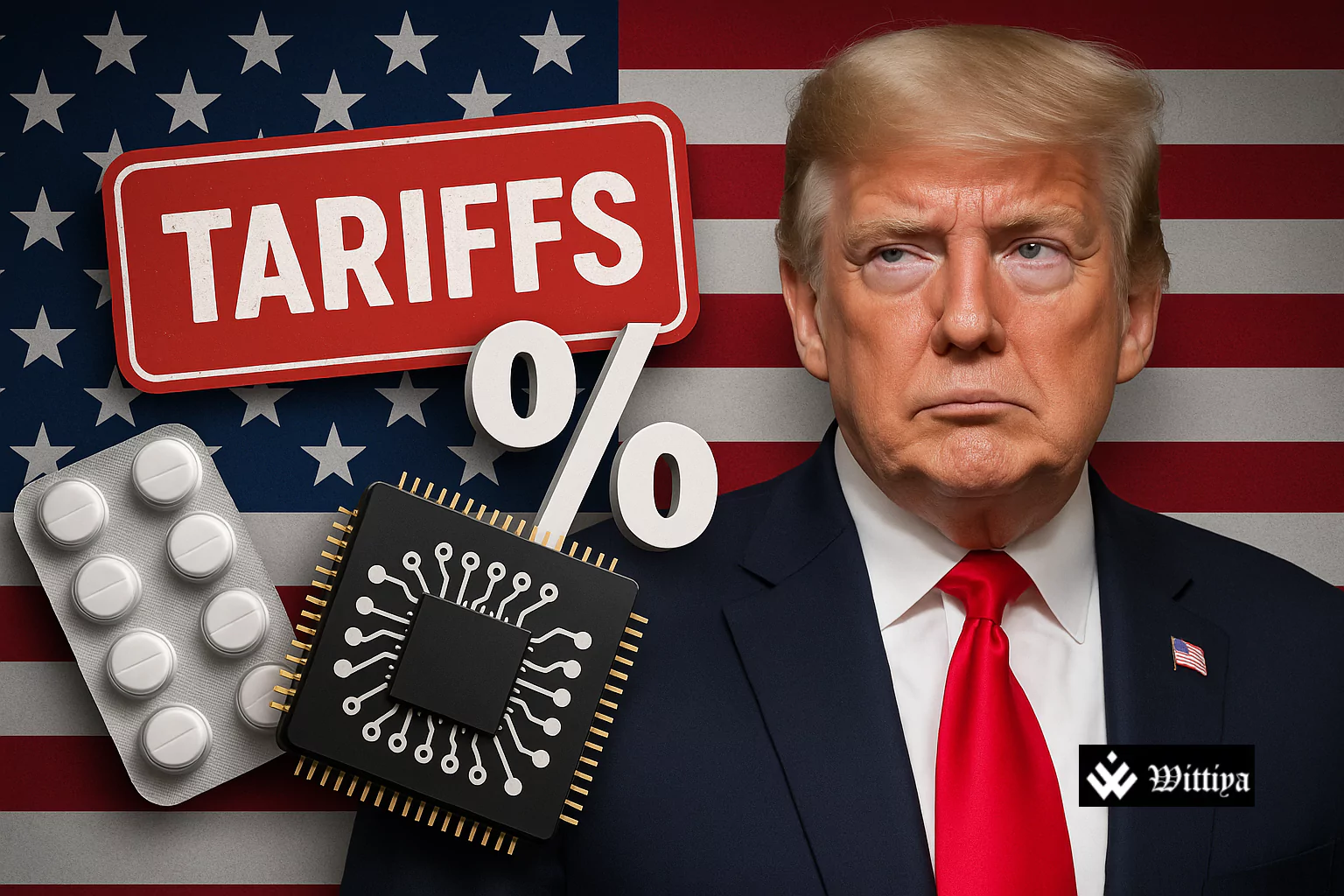
United States President Donald Trump has indicated that new tariffs on imported pharmaceuticals and semiconductors may be announced within the next week. The proposed tariffs could go as high as 250%, signaling a bold shift toward domestic manufacturing and triggering international concern, especially from countries like Switzerland and India.
Amid escalating trade tensions, United States President Donald Trump has hinted at sweeping new tariffs that may be announced “within the next week or so,” specifically targeting pharmaceuticals and semiconductors. The planned tariffs could reach as high as 250% on imported pharma products, as Trump doubles down on his agenda to bolster domestic manufacturing and reduce dependence on foreign supply chains.
In a recent television interview, Trump stated that the US would start with an “initially small tariff” on pharmaceutical imports but raise it in phases — first to 150%, and later to 250%. He emphasized that the goal is to ensure critical products like medicines are manufactured domestically, thus reshaping the pharmaceutical supply base to favor US-based production facilities.
Alongside this, the President signaled the imminent rollout of tariffs on imported semiconductors, a critical sector for national security and tech manufacturing. Though exact percentages were not disclosed, industry experts believe this move could significantly impact global chipmakers that rely on access to the US market.
Also Read: Trump’s Trade War: A Self-Inflicted Wound on the US Economy?
These measures follow a broader pattern of tariff escalations introduced earlier this year, when Trump levied a 10% tariff on most trading partners, with additional sector-specific duties. Tariffs of 50% are already in place for steel and aluminum, while auto and parts imports face lower, but still impactful, duties.
Trump’s latest focus on pharma and semiconductors is expected to reverberate globally, particularly in countries like Switzerland, whose exports to the US are dominated by pharmaceutical products. The impending tariff decisions prompted urgent diplomatic outreach from Swiss officials aiming to mitigate the impact of potential 39% import duties due to take effect this week.
Meanwhile, tensions with India also surfaced. Trump stated that the US may substantially raise tariffs on Indian imports within 24 hours, citing India’s continued energy trade with Russia as a geopolitical concern. This adds another layer of complexity to the US-India trade relationship, especially as both countries navigate shifting geopolitical dynamics.
Economists warn that these aggressive tariff policies may increase domestic inflation, strain supply chains, and heighten uncertainty for investors. Weak employment figures released last week have already signaled potential challenges for the US economy. Companies remain cautious on hiring and capital spending as they await clarity on the future direction of trade policy.
Despite these concerns, Trump maintains that tariffs remain a strategic tool to protect American industries and enhance negotiation leverage. The administration argues that by discouraging imports and shifting production domestically, the US can reduce supply vulnerabilities and increase economic resilience.
As the world’s largest economy recalibrates its trade approach, market participants, policymakers, and global exporters will be closely watching the “next week or so”, as the White House prepares to announce another round of sweeping economic reforms.
READ MORE ON