




On July 2, 2025, companies across Europe are increasingly using currency options to hedge against exchange rate volatility as trade tensions triggered by Donald Trump’s tariff threats impact global financial markets. Firms like IKEA Supply AG and institutions such as BNP Paribas and Citigroup are witnessing a sharp rise in demand for options-based strategies as businesses seek more flexibility amid uncertainty.
As global markets reel from renewed trade tensions, European companies are increasingly adopting currency options to safeguard against exchange rate volatility. This shift is largely fueled by uncertainty over tariffs introduced by former U.S. President Donald Trump, set to take effect on July 9, 2025.
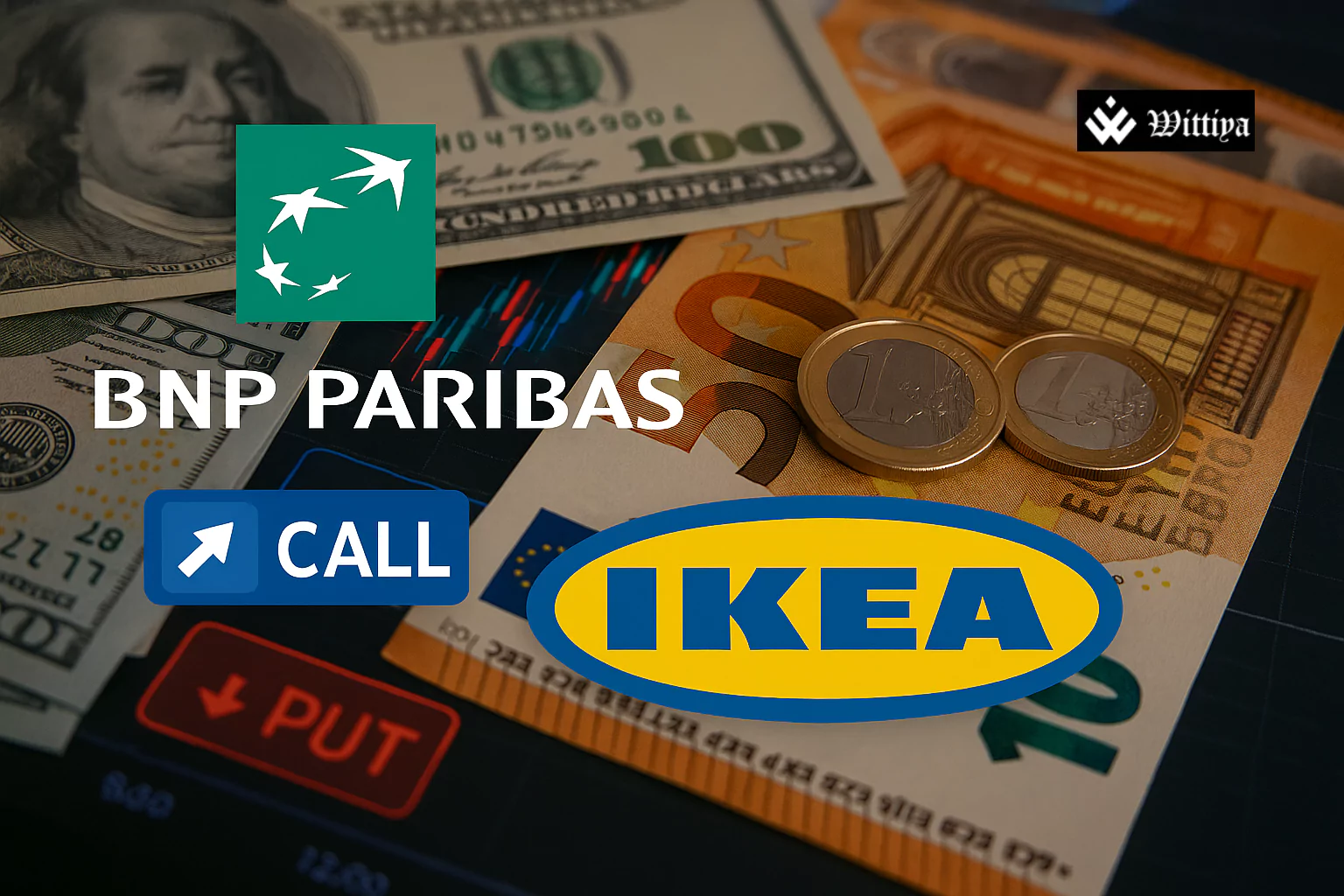
BNP Paribas SA, one of Europe’s largest banking institutions headquartered in Paris, has reported that its corporate FX option sales have doubled year-over-year, hitting all-time highs in 2025. According to Fabrice Famery, Global Head of Corporate Sales at BNP Paribas, companies are leaning into options for their insurance-like flexibility. “If you need to adapt your hedging program, it’s easier than if you enter into a straight forward,” he said.
This strategy is also being embraced by global corporations such as IKEA Supply AG, a Switzerland-based unit of Swedish furniture giant IKEA, responsible for managing the company’s global supply chain. Treasury Manager Jonas Falk noted that his team is using more options this year than usual. “Trump has created a lot of uncertainty when it comes to trade,” said Falk. “I’d rather pay up” for options-based protection than risk exposure.
Currency options, unlike forward contracts, give companies the right—but not the obligation—to exchange currencies at a pre-set rate. This flexibility is particularly valuable during turbulent periods when forecasting cash flows becomes challenging. While forward contracts remain the more popular hedging tool due to zero upfront costs, options require an initial premium but allow companies to opt out if market conditions turn favorable.
Data from the Depository Trust and Clearing Corp. shows daily volumes of currency options hit record highs in April, shortly after Trump’s announcement of “Liberation Day” tariffs. Analysts view this as a direct consequence of heightened volatility triggered by protectionist trade measures.
Adding to this shift, Citigroup Inc., a major U.S. bank with a strong Asia-Pacific presence, has also reported rising interest in FX options among Asian companies. Nathan Swami, Citigroup’s Head of FX Trading for Asia-Pacific, said that companies across the region are locking in options to maintain flexibility amid ongoing uncertainty over tariff levels.
Although options are not new to the corporate risk management toolkit, many firms had historically avoided them due to cost and complexity. However, recent market swings have reignited demand, with companies reconsidering their earlier reservations.
“There’s more openness now to buy or sell options,” said Lisa Dukes, co-founder of treasury advisory firm Dukes & King and a representative on the Bank of England’s FX Committee. “Options were once viewed skeptically—often linked to speculation—but in reality, they’re just another prudent way to manage risk.”
Trump’s aggressive tariff stance is reshaping how companies manage their currency risk. While final tariff structures are still being negotiated, the uncertainty alone has made options trading a core part of corporate treasury strategy across Europe and beyond.