






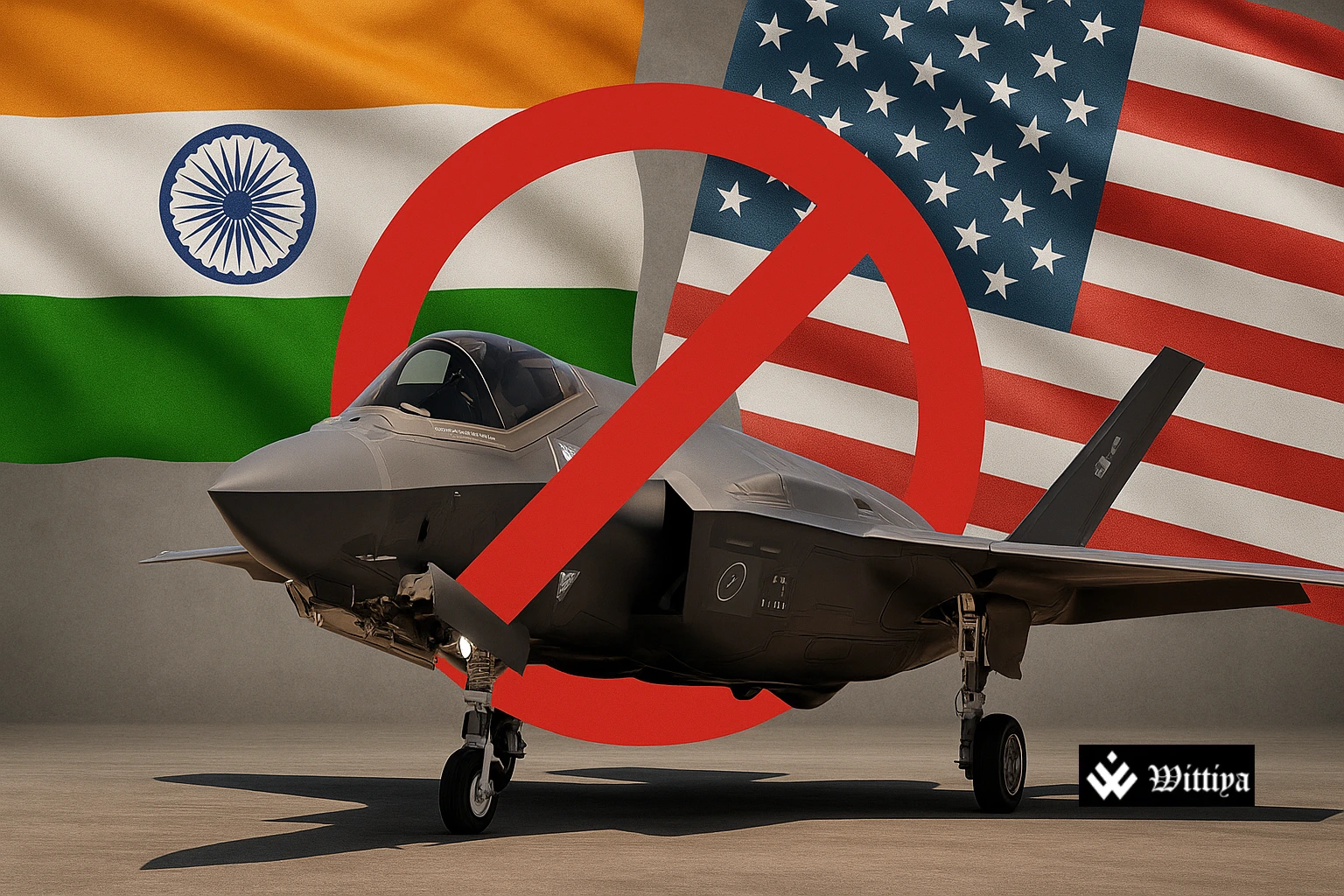
India has reportedly shelved plans to acquire F-35 fighter jets from the United States following the US administration’s decision to impose a 25% tariff on Indian exports. This strategic shift reflects India’s evolving defence procurement priorities and a recalibration of trade relations amid escalating tariff tensions.
In a significant move reflecting shifting geopolitical and trade dynamics, India has reportedly decided not to proceed with the acquisition of F-35 stealth fighter jets from the United States. The decision follows the recent announcement of a 25% tariff on Indian exports by the US, a policy shift that has triggered diplomatic and economic recalibrations in New Delhi.
According to officials familiar with the matter, India has communicated its disinterest in the high-value fighter jet deal, which had previously been under discussion during high-level bilateral exchanges. The withdrawal from the deal highlights India’s increasing emphasis on indigenous defence production, aligning with its broader Aatmanirbhar Bharat (self-reliant India) initiative.
The proposed sale of the advanced fighter aircraft was expected to represent a strategic leap in Indo-US defence collaboration. However, analysts suggest that the imposition of punitive tariffs on Indian exports has altered the calculus, prompting India to rethink its defence procurement dependencies.
Also Read: List of Indian Stocks Most Impacted by U.S. Tariffs
India’s stance now tilts towards co-development and co-manufacturing models that focus on domestic capability building. With a growing emphasis on localising the defence supply chain, the country is accelerating joint production initiatives that offer technology transfer and long-term manufacturing benefits.
While defence imports from the United States are expected to slow down, India is exploring alternative avenues to maintain the trade balance and avoid diplomatic strain. Measures reportedly under consideration include increased imports of US natural gas, communication equipment, and gold—all aimed at narrowing the bilateral trade surplus over the medium term.
Despite the economic headwinds, India remains committed to engaging in constructive trade dialogue and is not considering immediate retaliatory measures. The emphasis appears to be on preserving long-term strategic interests while asserting economic sovereignty.
Also Read: Made in India, Taxed in America: Which Indian Sectors Will Bleed the Most?
From a financial standpoint, the immediate impact of the 25% tariffs could weigh on export-driven sectors, potentially dragging GDP growth marginally in the coming quarters. Yet, with India’s domestic consumption remaining resilient and policy support for manufacturing, the overall growth trajectory remains intact.
Trade experts view this development as a reflection of India’s maturing trade posture, one that seeks to assert strategic autonomy while navigating complex global pressures.
As India distances itself from the US F-35 deal, the move sends a clear signal: economic and strategic decisions will now be increasingly filtered through the lens of self-reliance, resilience, and reciprocal trade equity.
READ MORE ON