






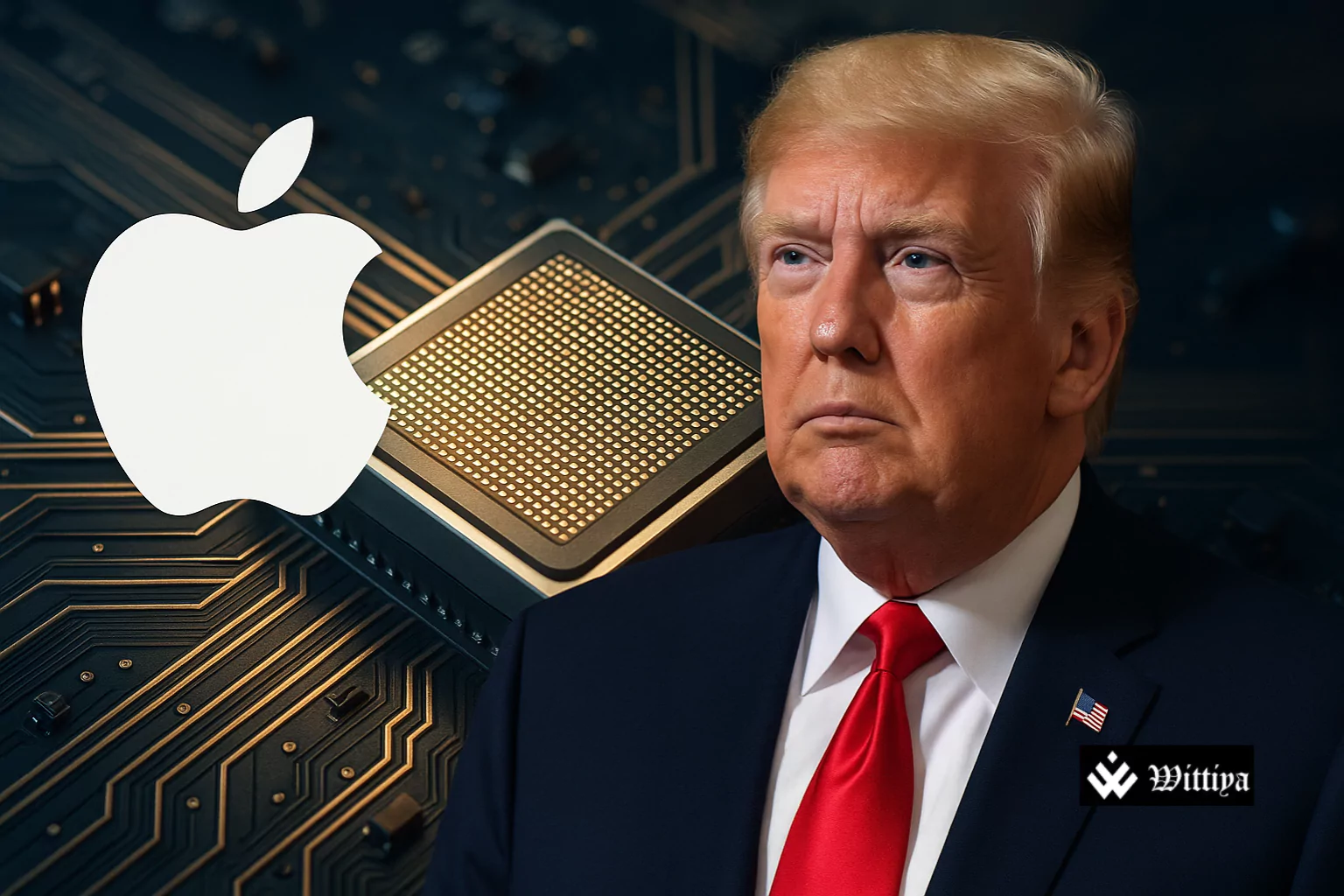
U.S. President Donald Trump has announced a 100% tariff on imported computer chips unless companies manufacture them domestically. The move, revealed during a meeting with Apple CEO Tim Cook, aims to push global tech giants to expand chip manufacturing within the United States. Major tech firms have already committed around USD 1.5 trillion to U.S. production, with Apple alone pledging USD 600 billion. The policy shift is expected to impact global supply chains and pricing in electronics, autos, and home appliances.
U.S. President Donald Trump announced a sweeping plan to impose a 100% tariff on imported semiconductors and computer chips unless they are manufactured within the United States. The policy, revealed during a meeting at the Oval Office with Apple CEO Tim Cook, is a direct push to shift global technology supply chains toward domestic production.
If you are building in the United States of America, there is no charge.”
President Donald Trump
This announcement marks a significant departure from the existing chip revival strategies introduced by the previous administration, replacing subsidies and tax credits with tariff enforcement. The immediate consequence of this policy could be felt in the pricing of electronic devices, automobiles, and household appliances, all of which are heavily reliant on semiconductors.
Also Read: India’s Semiconductor Dream Becomes a Global Reality
The decision follows a previous temporary exemption of electronics from similar trade measures. Now, companies that fail to establish or expand their chip manufacturing facilities in the U.S. will be subject to heavy tariffs, a move aimed at reducing reliance on foreign supply chains that contributed to inflationary pressures during the COVID-19 pandemic.
The policy is already generating a strong market response. Following the announcement, Apple’s stock surged 5% in regular trading and an additional 3% in after-hours trading. This momentum reflects investor optimism that the company’s deepening investment in U.S. manufacturing will shield it from new tariffs. Apple has committed USD 600 billion to U.S.-based facilities, including an additional USD 100 billion increase this year.
Other semiconductor leaders such as Nvidia and Intel also recorded gains in extended trading, indicating investor confidence in their domestic investment strategies. Nvidia, which has seen its market value climb by USD 1 trillion during Trump’s second term, is among those ramping up U.S. operations.
Demand for semiconductors continues to soar globally, with a 19.6% rise in sales in the year ended June, according to global trade data. With rising geopolitical tensions and supply chain fragility, U.S. policymakers are attempting to reassert leadership in this strategic sector.
Trump’s tariff threat is viewed as a shift from incentive-driven policies, such as those seen in the previous CHIPS and Science Act, toward a more protectionist stance. By leveraging tariffs, the administration aims to accelerate onshore manufacturing, even at the potential cost of short-term price increases and corporate margin pressures.
Financial experts suggest that while this approach introduces volatility, it also creates substantial opportunities for companies already invested in American infrastructure. The tariff may act as a catalyst for job creation and capital inflow into high-tech manufacturing zones across the U.S.
The policy’s long-term impact will depend on how swiftly global tech firms adjust their operations and whether consumer prices absorb or reflect the increased production costs.
READ MORE ON