


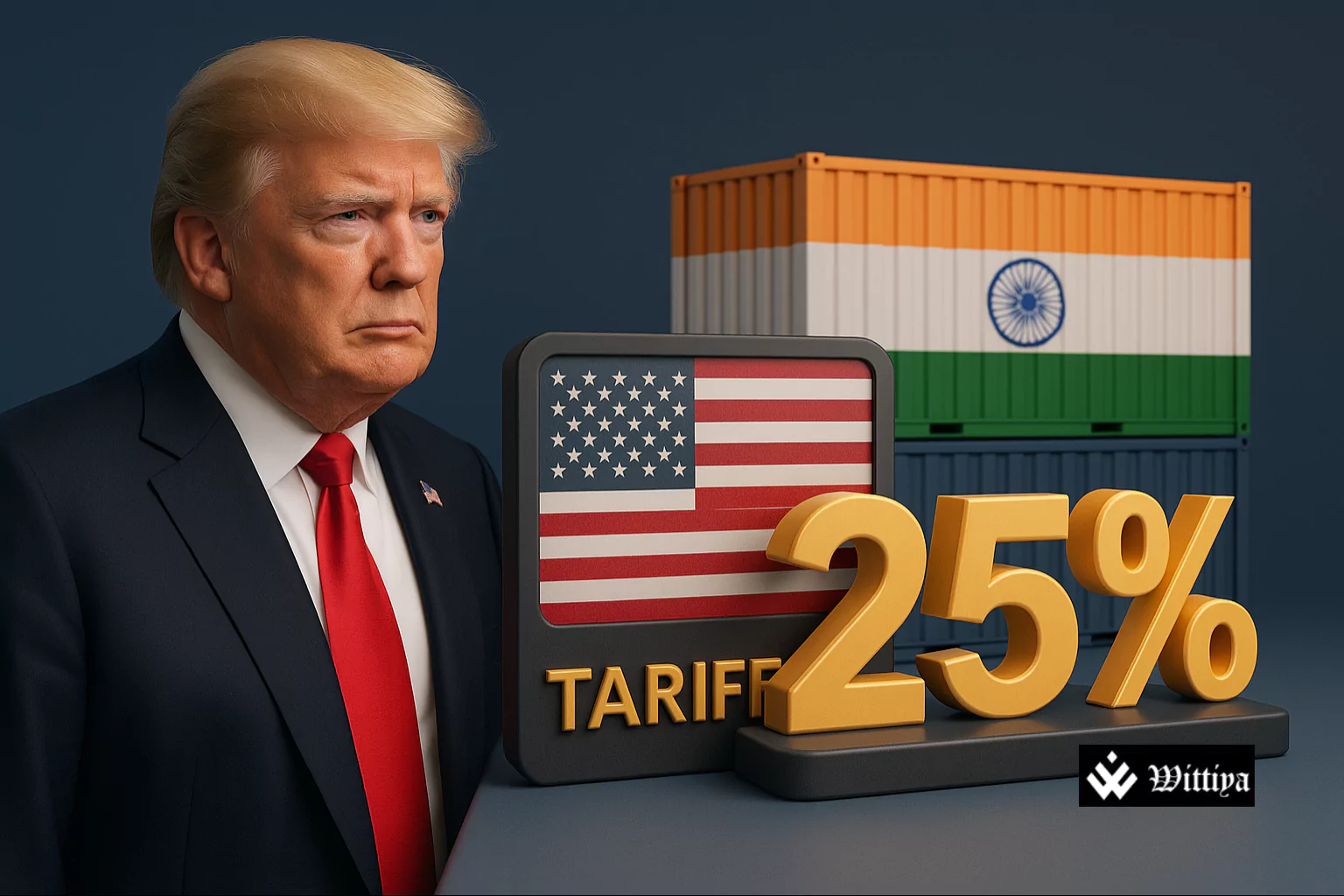
US President Donald Trump has imposed a 25% tariff on Indian exports starting August 1, citing concerns over high tariffs, restricted market access, and India’s energy ties with Russia. The move puts pressure on India’s export sectors and opens questions about future bilateral trade negotiations.
US President Donald Trump has implemented a 25% tariff on Indian goods exported to the United States, effective August 1. The move comes amid ongoing trade disputes and escalated rhetoric around India’s continued energy and defense engagement with Russia.
The tariff—among the steepest levied by the US on an Asian nation—has sparked volatility in India’s markets and renewed concerns over a deepening trade rift between the two economies.
Strategic Rationale Behind the Tariff Escalation
According to Trump’s public remarks and internal communications, the tariff aims to rebalance what the US considers an unfair trade structure. Trump cited India’s high import tariffs, restrictive trade practices, and lack of market access for American goods.
The US President further pointed out India’s “unfavorable trade behavior” through its ongoing energy and defense purchases from Russia, stating such actions compromise broader global security efforts.
Also Read: Trump Labels India, Russia as ‘Dead Economies’—Is He Right?
Impact on India’s Trade-Dependent Sectors
Trade analysts forecast that the 25% tariff will primarily affect Indian exporters in pharmaceuticals, engineering goods, and automotive components—sectors heavily reliant on US demand.
The announcement could put pressure on the Indian rupee, increase supply-chain risk, and lead to repricing in equity markets sensitive to trade exposure.
Bilateral Negotiations: Deadlock or Opportunity?
Trump indicated that trade negotiations with India are active but strained. Reports suggest earlier proposals failed to align with US expectations, particularly regarding tariff flexibility and market access for American agricultural and dairy products.
It is believed that the current tariff imposition is designed to draw direct attention from Prime Minister Narendra Modi, circumventing ongoing ministerial-level discussions.
Also Read: 5 Lakh Crore Gone: Indian Stock Market’s Steepest Fall in Months
India’s Preliminary Response and Strategic Review
The Indian government issued a formal statement acknowledging the announcement and stated it is studying the implications before finalizing a policy response.
Officials confirmed India would adopt measures in alignment with its strategic and economic interests, referencing past responses to global trade measures.
Possible Indian countermeasures may include targeted reciprocal tariffs, renegotiation of existing pacts, or realignment of import sources.
Long-Term Trade Outlook and Market Realignments
According to financial experts, Indian exporters may attempt to offset tariff costs by reducing prices or shifting partial production to US-based facilities, thereby avoiding direct trade levies.
There is also potential for India to diversify its export markets or restructure bilateral deals through incremental sector-based engagements.
India was just about the highest tariff nation in the world. We are talking to them now. We’ll see what happens.”
President Trump, United States
Escalation Reflects Broader Strategic Tensions
The 25% tariff not only reflects trade dissatisfaction but also increasing US scrutiny of India’s strategic alignments, particularly its Russia ties. With upcoming negotiations and global market sensitivities, the outcome will likely shape the trajectory of US–India economic relations for years ahead.
READ MORE ON