






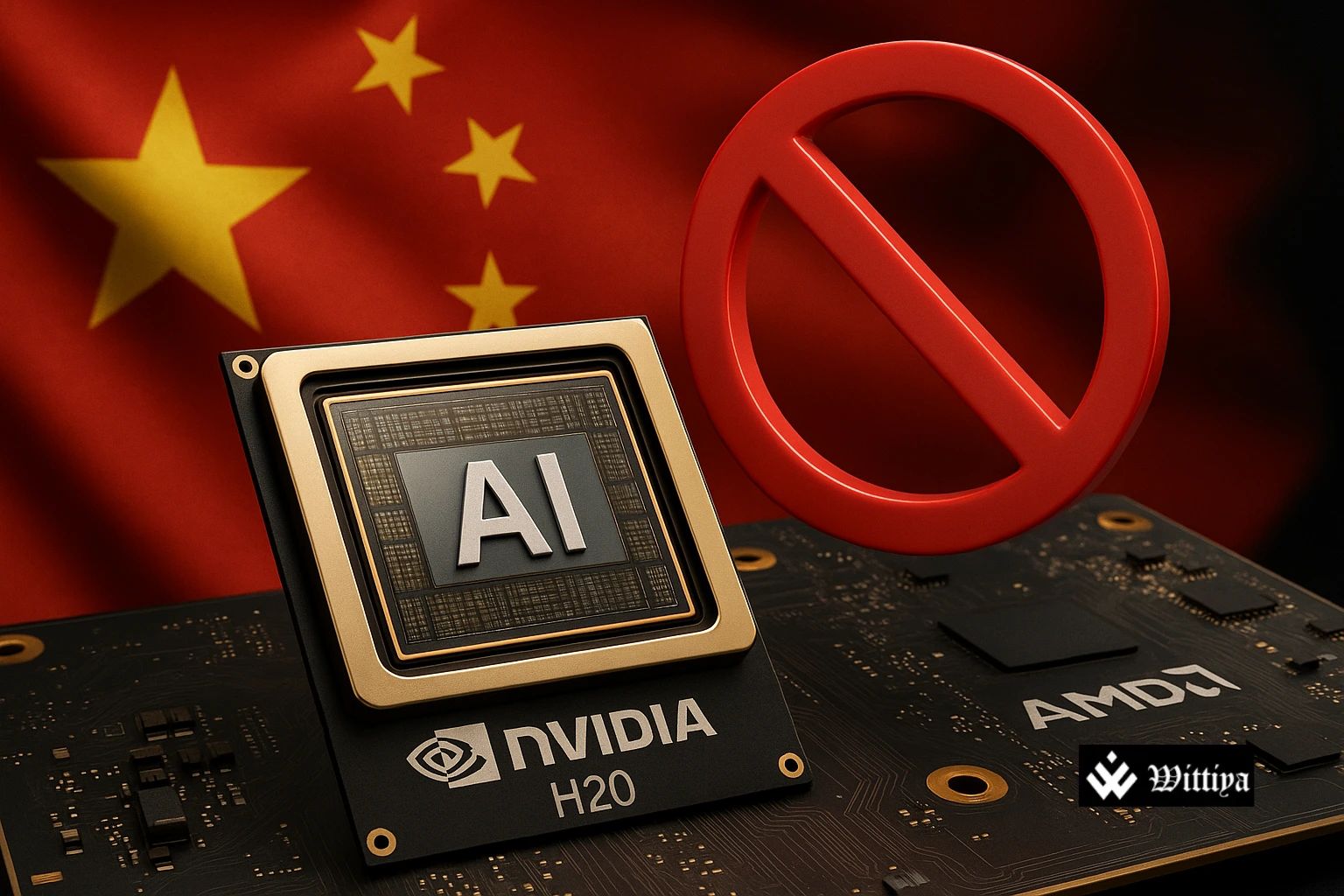
China’s latest guidance restricts use of Nvidia’s H20 AI processors in government projects amid broader efforts to promote domestic semiconductor alternatives. This move complicates Nvidia and AMD’s attempts to regain market share, highlighting escalating tech tensions between China and the US.
China has issued new guidance urging domestic companies to avoid using Nvidia Corp.‘s H20 processors, especially for government-related applications, complicating the US chipmaker’s efforts to recover lost revenue in the country. This move reflects China’s intensified focus on reducing reliance on Western technology and boosting its own semiconductor industry.
The guidance, circulated by Chinese authorities, specifically discourages state enterprises and private firms from employing H20 chips in national security or government projects. It also includes pointed inquiries into why companies continue to choose Nvidia’s products over domestic alternatives and whether any security concerns have arisen. Similar pressures reportedly extend to Advanced Micro Devices Inc.’s AI accelerators, notably the MI308 chip.
Despite Nvidia and AMD securing US government approval to resume exports of lower-end AI chips to China—with the unusual condition of remitting 15% of related revenue to the US government—Chinese customers face significant regulatory pressure to limit their use. Nvidia has stated the H20 chip is not designed for military or government infrastructure and emphasized China’s ample supply of local semiconductors.
Also Read: Why Are Two Tech Giants Giving 15% to the U.S. Government?
Beijing’s stance signals a cautious approach that parallels previous restrictions on American tech, such as Tesla vehicles and Apple iPhones in sensitive Chinese institutions. Officials are reportedly considering expanding these restrictions beyond sensitive applications, though broader policy decisions remain in early stages.
The Nvidia H20 chip, tailored to meet US export restrictions, offers less computational power than the company’s flagship models but features strong memory bandwidth, making it valuable for AI inference tasks. Major Chinese tech companies like Alibaba and Tencent have adopted the chip, especially as domestic manufacturer Huawei struggles to meet demand.
Experts note that limiting access to the H20 chip could substantially increase operational costs for Chinese firms working on advanced AI models. This dynamic underscores the strategic balancing act China faces: fostering domestic alternatives while managing practical market needs.
US officials, including former President Donald Trump, have dismissed the H20 as “obsolete,” arguing that China already possesses equivalent technology. The US administration has positioned the chip exports as a strategic tool to maintain China’s dependence on less advanced American AI components, thereby limiting Huawei’s competitive advantage.
The interplay between US export policy, China’s industrial strategy, and geopolitical tensions continues to shape the global semiconductor landscape, with the Nvidia H20 case exemplifying these complex dynamics.
READ MORE ON