


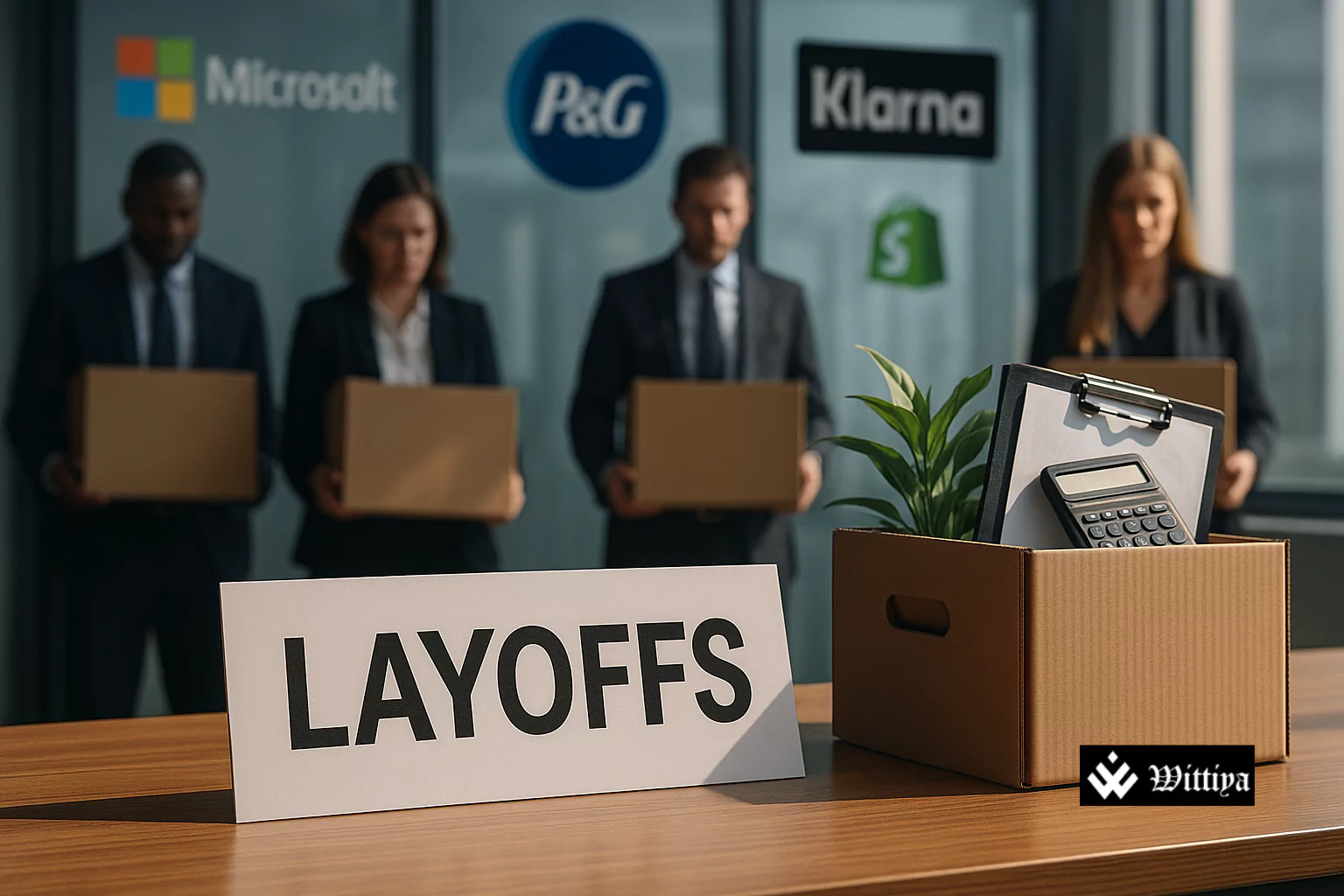
Amid rising economic uncertainty in the United States, major corporations across industries, including Microsoft, Procter & Gamble, Klarna, and Shopify, are implementing large-scale layoffs to reduce costs and restructure operations. Many leaders cite artificial intelligence and global trade tensions as key drivers for these decisions.
A new wave of layoffs is sweeping across the United States as some of the country’s biggest corporations are aggressively trimming headcounts in response to global trade instability and rapid technological advancements. The layoffs signal a critical turning point for industries attempting to balance cost efficiency with the realities of artificial intelligence and geopolitical tensions.
Procter & Gamble (P&G), headquartered in Cincinnati, Ohio, confirmed plans on June 20 to cut approximately 7,000 jobs, amounting to 15% of its non-manufacturing workforce. The consumer goods giant, which produces household brands such as Tide, Gillette, and Pampers, stated the layoffs are part of a comprehensive restructuring initiative. The changes aim to streamline operations across product portfolios, optimize supply chains, and reduce overhead costs. P&G’s Chief Financial Officer, Andre Schulten, emphasized during a presentation that the restructuring is a proactive response to both economic pressures and the demand for increased operational agility.
In the tech sector, Microsoft Corporation, based in Redmond, Washington, announced on May 13 that it would lay off about 6,000 employees, representing 3% of its global workforce. The cuts span various departments and geographies. A Microsoft spokesperson clarified that the latest layoffs are not tied to individual performance but are instead intended to flatten management layers and streamline decision-making processes. This announcement follows a smaller round of performance-based layoffs in January.
Meanwhile, AI’s growing role in workforce planning has become increasingly evident. Klarna, a global fintech firm with a strong presence in the U.S., has reduced its workforce by 40%. CEO Sebastian Siemiatkowski attributed the decision in part to improved efficiency through artificial intelligence, allowing the company to maintain output with fewer employees.
Similarly, Shopify CEO Tobias Lütke informed employees in April 2025 that additional headcount requests must be accompanied by justification as to why tasks cannot be automated. The Canadian e-commerce platform, which employs thousands in the U.S., is tightening its resource allocation as it leans into AI-driven automation.
Beyond individual company decisions, broader economic indicators are flashing warning signs. While the U.S. Labor Department reported a stronger-than-expected jobs gain in April, a separate report from ADP highlighted that private-sector hiring had dropped to its slowest pace in over two years. The contrast underscores a bifurcated labor market, where some sectors remain resilient while others face steep declines.
Trade tensions — particularly between the U.S. and key trading partners like China and the European Union — have also added to corporate anxiety. President Donald Trump’s tariff policies have disrupted global supply chains and increased production costs, prompting companies to either raise prices or cut expenditures, including labor.
As these layoffs ripple through the economy, questions remain about the sustainability of current employment levels, especially as AI adoption accelerates and global trade remains uncertain. More workforce reductions are expected in the coming months as companies brace for prolonged instability and reevaluate their future staffing needs.