






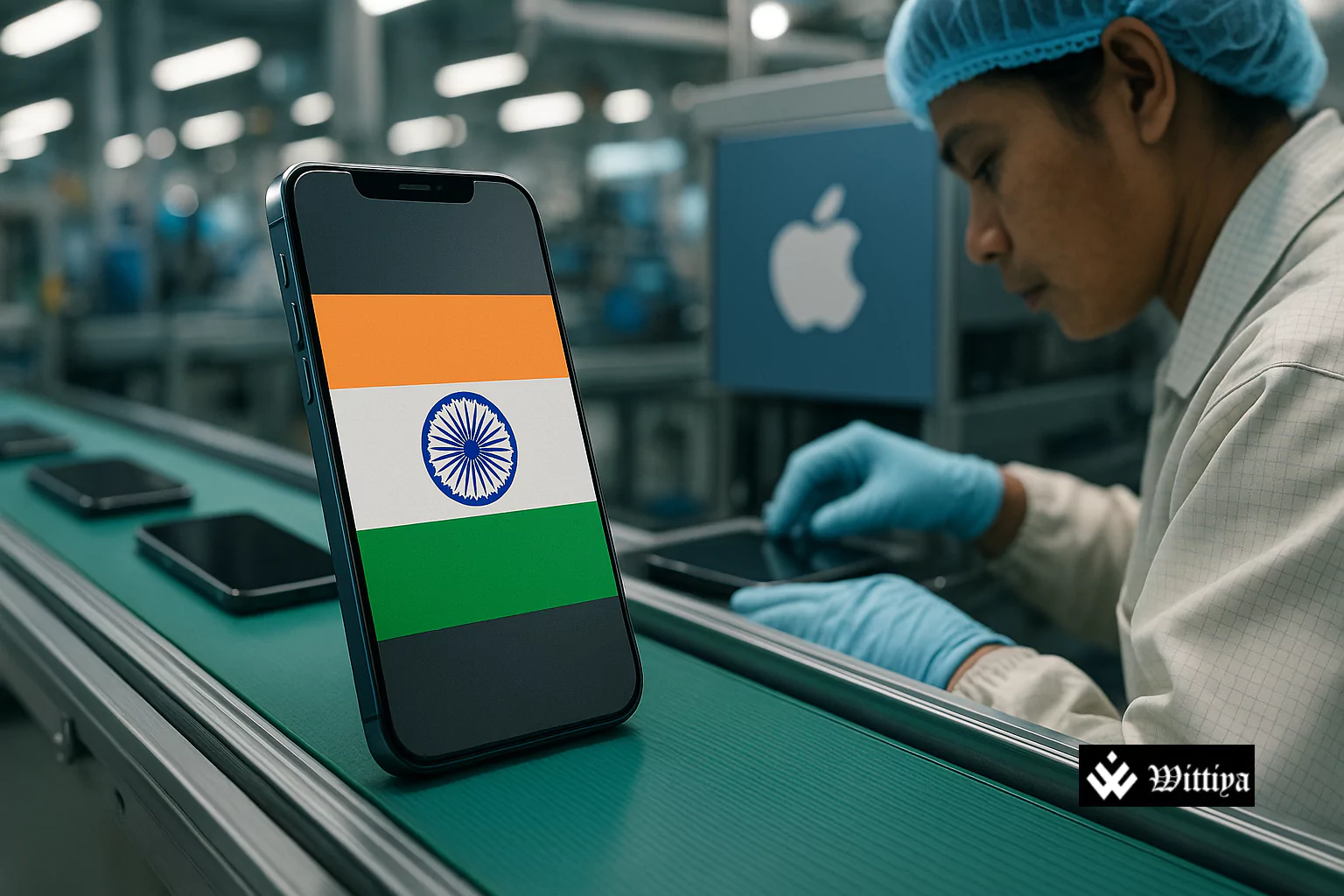
India has surpassed China to become the leading exporter of smartphones to the U.S., driven by a 240% surge in production and a strategic supply chain shift amid geopolitical tensions and tariff uncertainty.
India has officially overtaken China to become the largest exporter of smartphones to the United States, as the South Asian country reported a staggering 240% increase in smartphone manufacturing volume in the second quarter of 2025.
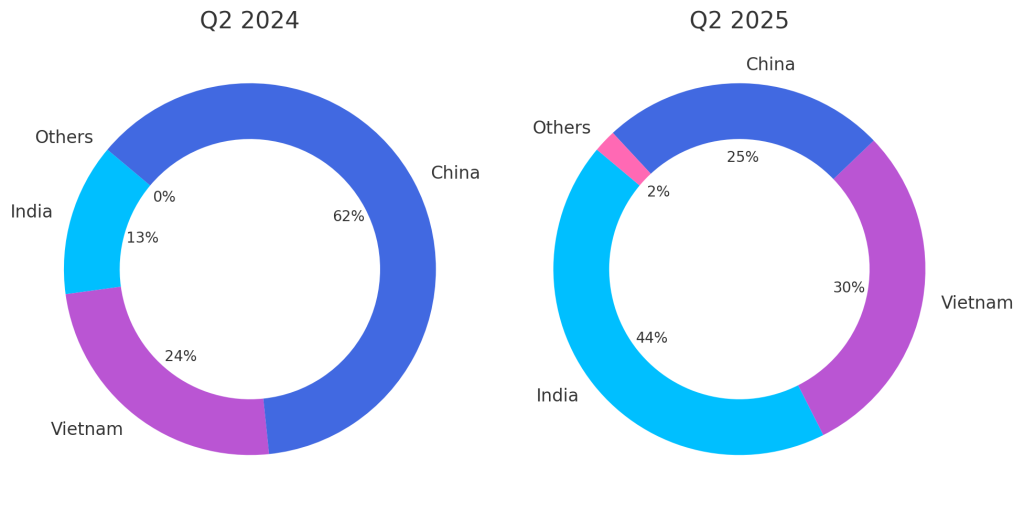
Smartphones assembled in India accounted for 44% of total U.S. imports between April and June 2025, up sharply from 13% during the same period last year. In stark contrast, China’s share of U.S. smartphone imports declined to 25%, falling from 61% a year earlier. Vietnam now ranks second, contributing 30% of the U.S.-bound exports.
This shift marks the first time in history that India has exported more smartphones to the U.S. than China, signaling a major realignment in the global electronics supply chain.
India, Vietnam overtake China in U.S. smartphone manufacturing:

Apple’s Strategic Shift Fuels India’s Surge
The exponential rise in India’s smartphone exports is largely attributed to strategic decisions by Apple to accelerate its manufacturing operations in India. The tech giant is reportedly targeting to assemble nearly a quarter of all iPhones sold globally within India in the next few years.
Apple’s increased focus on India comes amid persistent tariff uncertainty between the U.S. and China. This includes ongoing pressures for domestic manufacturing and concerns about excessive concentration of supply chains in China, which has long been considered the backbone of electronics manufacturing.
While Apple has begun trial production of iPhone 16 Pro models in India, analysts indicate the company still depends heavily on China’s mature infrastructure to meet premium-tier U.S. demand.
Also Read: Apple, Samsung Dominate India’s Smartphone Exports with 94% Share
Trade Dynamics and Tariff Strategy
India’s rapid ascent is occurring against a backdrop of global trade recalibration. In April, U.S. authorities implemented a 26% tariff on Indian imports — significantly lower than the triple-digit duties previously placed on Chinese goods. Although this tariff was paused with an August 1 deadline for review, it highlights the volatile policy environment shaping trade decisions.
While shipments are not indicative of end-user sales, they serve as a strong proxy for demand and market confidence. iPhone shipments to the U.S. fell 11% year-on-year in Q2 to 13.3 million units, reversing the prior quarter’s 25.7% growth. Globally, iPhone shipments declined 2%, totaling 44.8 million units.
Despite the shipment drop, India’s role in the global supply chain has expanded, with last-mile assembly and production ramping up across multiple electronics categories.
Manufacturing Hurdles Remain
While momentum is strong, experts note challenges in yield rates—a key measure of manufacturing efficiency—when producing devices in India and Vietnam, compared to China. This disparity remains a hurdle for companies aiming to scale quickly while maintaining product quality and consistency.
Electronics manufacturers with existing bases in China are now investing in Indian infrastructure, signaling a long-term commitment to diversification. Production trials are already underway, with expectations of full-scale manufacturing in the near term.
Other Global Players Follow Suit
Although Samsung and Motorola have also taken steps to relocate assembly lines for U.S.-bound smartphones to India, their transition has been more gradual and remains limited in scale compared to Apple’s aggressive strategy.
India’s rise as a key manufacturing hub for high-tech goods reflects a broader geopolitical trend: corporations are increasingly seeking risk-hedged supply chains outside China, not only due to tariffs but also to reduce exposure to political and logistical disruptions.
India’s Role in a New Global Order
India’s dramatic leap in smartphone exports illustrates its growing importance in global manufacturing realignment. If the current trajectory continues, India could soon become a central pillar for electronics production not only for U.S. companies but also for the broader global market.
With rising investment in production facilities, infrastructure upgrades, and policy incentives, India is poised to reshape the balance of global trade in electronics, turning from an emerging assembly base into a leading tech manufacturing powerhouse.
READ MORE ON