


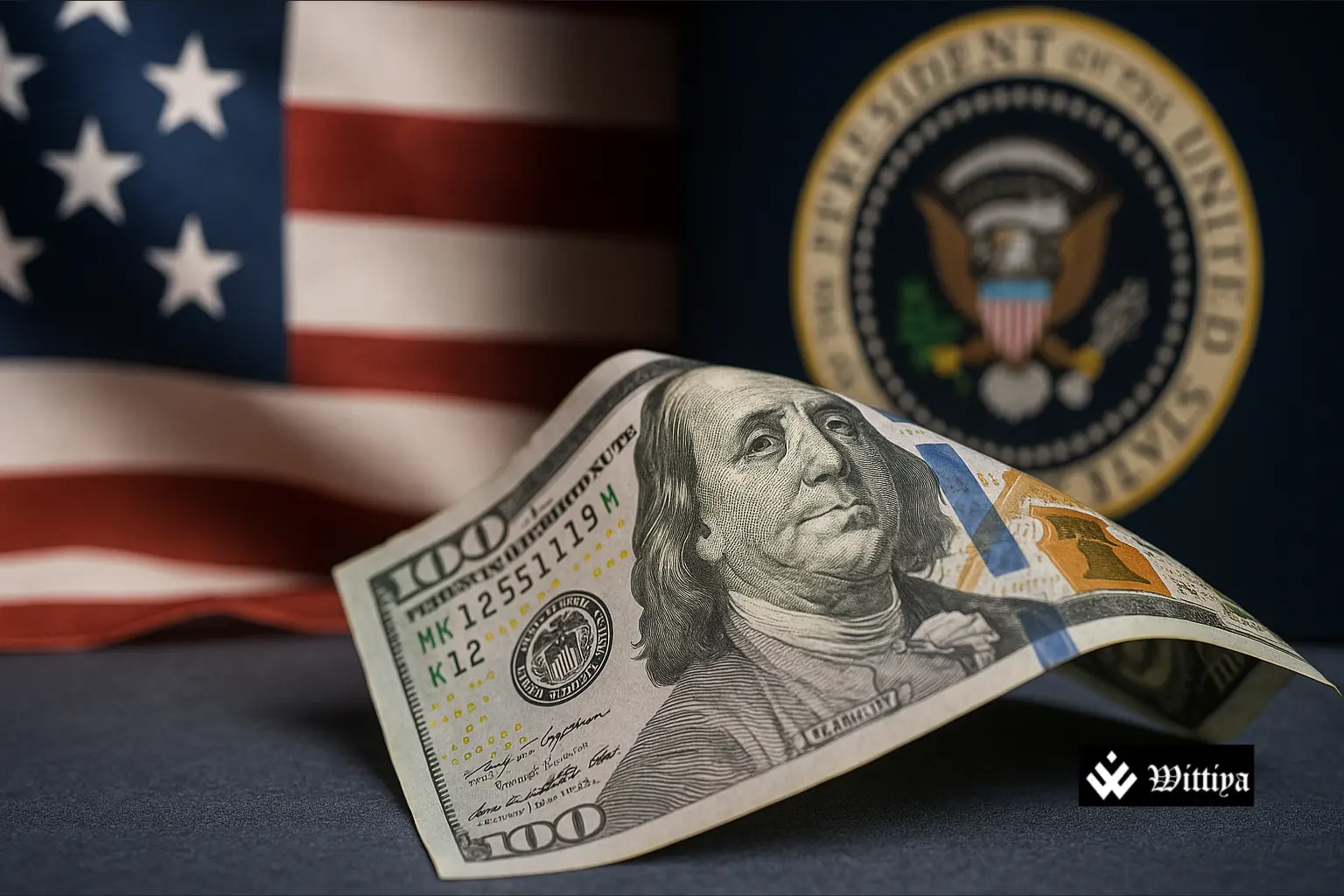
The U.S. dollar hovered near multi-year lows on July 7, 2025, as investors awaited President Donald Trump’s tariff deadline. Currency movements remained cautious amid trade uncertainty, with the administration preparing to announce steeper levies on key trading partners starting August 1.
The U.S. dollar remained under pressure on Monday, trading near multi-year lows as global investors awaited the July 10 deadline for new trade tariffs announced by President Donald Trump. The dollar’s muted movement reflects heightened caution in the market, as the White House prepares to implement a sharp escalation in duties on its trade partners beginning August 1.
The new tariffs are a continuation of Trump’s “Liberation Day” strategy, aimed at enforcing reciprocal trade terms. The end of the 90-day moratorium will see significantly higher levies imposed on many nations, with final details expected by midweek.
President Trump stated on July 6 that several trade agreements were close to being finalized but confirmed that around a dozen countries would receive formal notifications of increased duties. He also signaled a potential 10% tariff on nations aligning with the policies of the BRICS coalition.
So far, only the United Kingdom, China, and Vietnam have successfully negotiated agreements with the United States ahead of the impending deadline. Trade talks with Japan and the European Union remain unresolved, raising concerns over further friction in global markets.
The dollar index rose slightly by 0.26% to 97.223, still hovering close to a 3.5-year low of 96.373 hit last week. The euro dipped to $1.1750 while the greenback rose against the yen to 145.15. Sterling also fell 0.3% to $1.36, although it remains near recent highs.
The Swiss franc remained strong at 0.7959, pushing back towards levels not seen since January 2015. Meanwhile, the Australian dollar dropped 0.7% to $0.6507 ahead of the Reserve Bank of Australia’s expected rate cut on July 8. The Reserve Bank of New Zealand is widely expected to maintain its policy rate on July 9, contributing to a 0.7% decline in the Kiwi to $0.6008.
Against other North American currencies, the U.S. dollar rose 0.4% to C$1.366 against the Canadian dollar and to 18.67 against the Mexican peso.
The broader currency market remains cautiously positioned, with some pricing in the possibility of another extension to the tariff rollout. However, investors remain alert for any major policy statements from Washington in the lead-up to the formal implementation.
As markets await official confirmation, trade uncertainty continues to dominate the forex landscape, keeping global currencies volatile and the U.S. dollar under close scrutiny.