


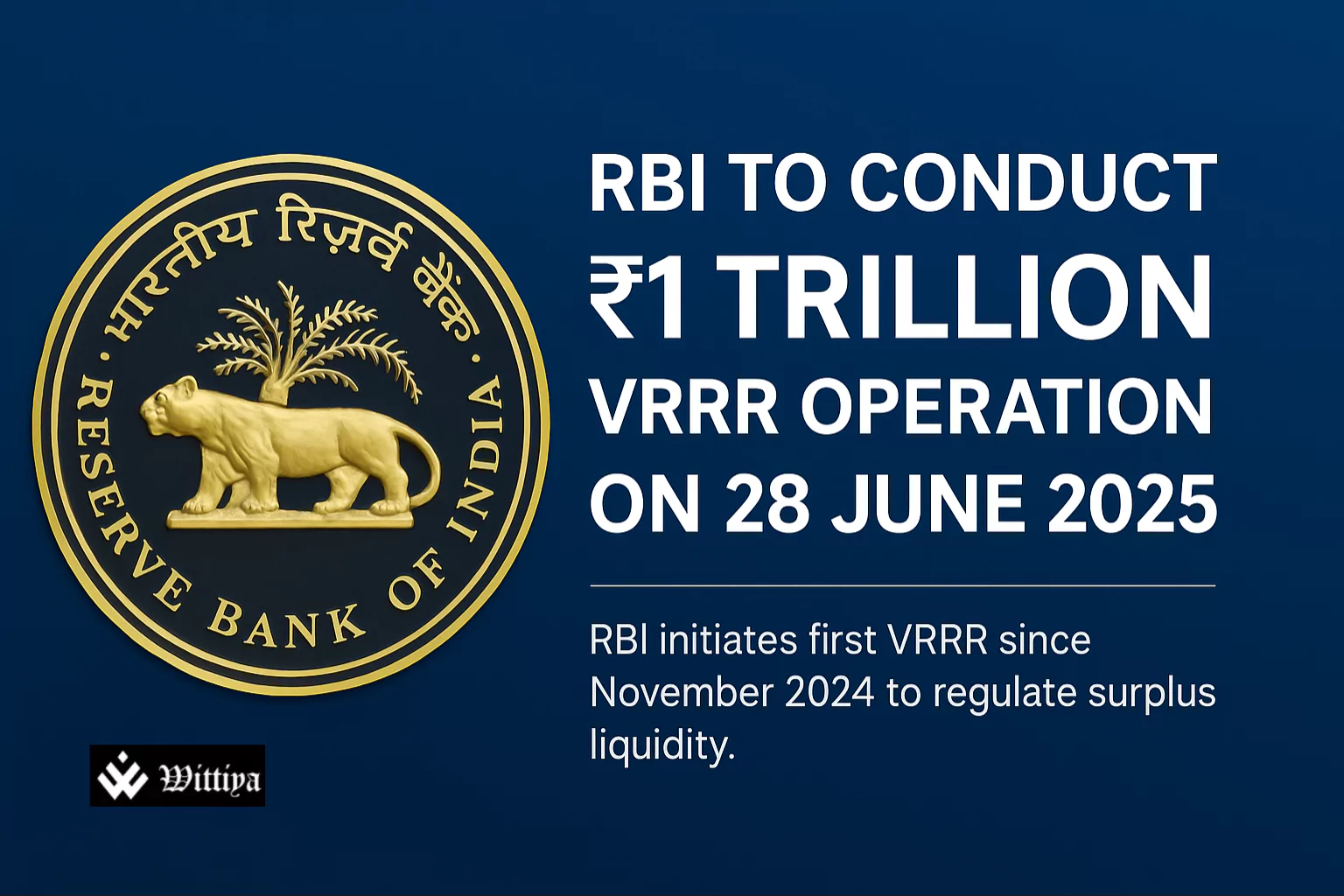
India’s central bank, the Reserve Bank of India (RBI), will conduct a seven-day variable rate reverse repo (VRRR) operation worth ₹1 trillion (USD 11.64 billion) on 28 June 2025 to withdraw surplus liquidity. This move, the first since November 2024, follows a period of high surplus funds in the banking system and could influence short-term interest rates and money market sentiment across the country.
The Reserve Bank of India (RBI), India’s central banking institution headquartered in Mumbai, is set to conduct a ₹1 trillion (USD 11.64 billion) seven-day Variable Rate Reverse Repo (VRRR) operation on 28 June 2025. This marks the RBI’s first liquidity withdrawal action via VRRR since November 2024 and signals a significant shift in the central bank’s approach to managing surplus liquidity in the banking system.
The VRRR auction comes just weeks after the RBI adopted a softer monetary stance, including a repo rate cut and other cash-injecting measures. Despite these steps, the banking system has continued to witness high surplus liquidity levels, averaging ₹2.76 trillion daily in June—well above the central bank’s acceptable limit of around 1% of total bank deposits.
The move indicates the RBI’s effort to push short-term rates, particularly overnight and treasury bill yields, closer to the repo rate, which serves as the benchmark policy rate for monetary operations. For several weeks, the weighted average call rate has remained near the Standing Deposit Facility (SDF) rate, lower than the policy repo rate.
This liquidity absorption through VRRR is aimed at reinforcing the RBI’s operative rate corridor and addressing excess funds that can distort interest rate transmission. By targeting overnight funds through shorter-tenor VRRRs, the RBI intends to bring more discipline into short-term lending markets.
The central bank had earlier hinted at resuming VRRRs when needed and recently sought feedback on measures to align the call rate more closely with the repo rate. The current operation’s outcome and its impact on market rates may influence RBI’s decision on future liquidity operations and tenor adjustments.
As India’s monetary policy environment remains sensitive to global and domestic economic indicators, the upcoming VRRR is expected to act as a barometer for the RBI’s liquidity stance in the near term.