


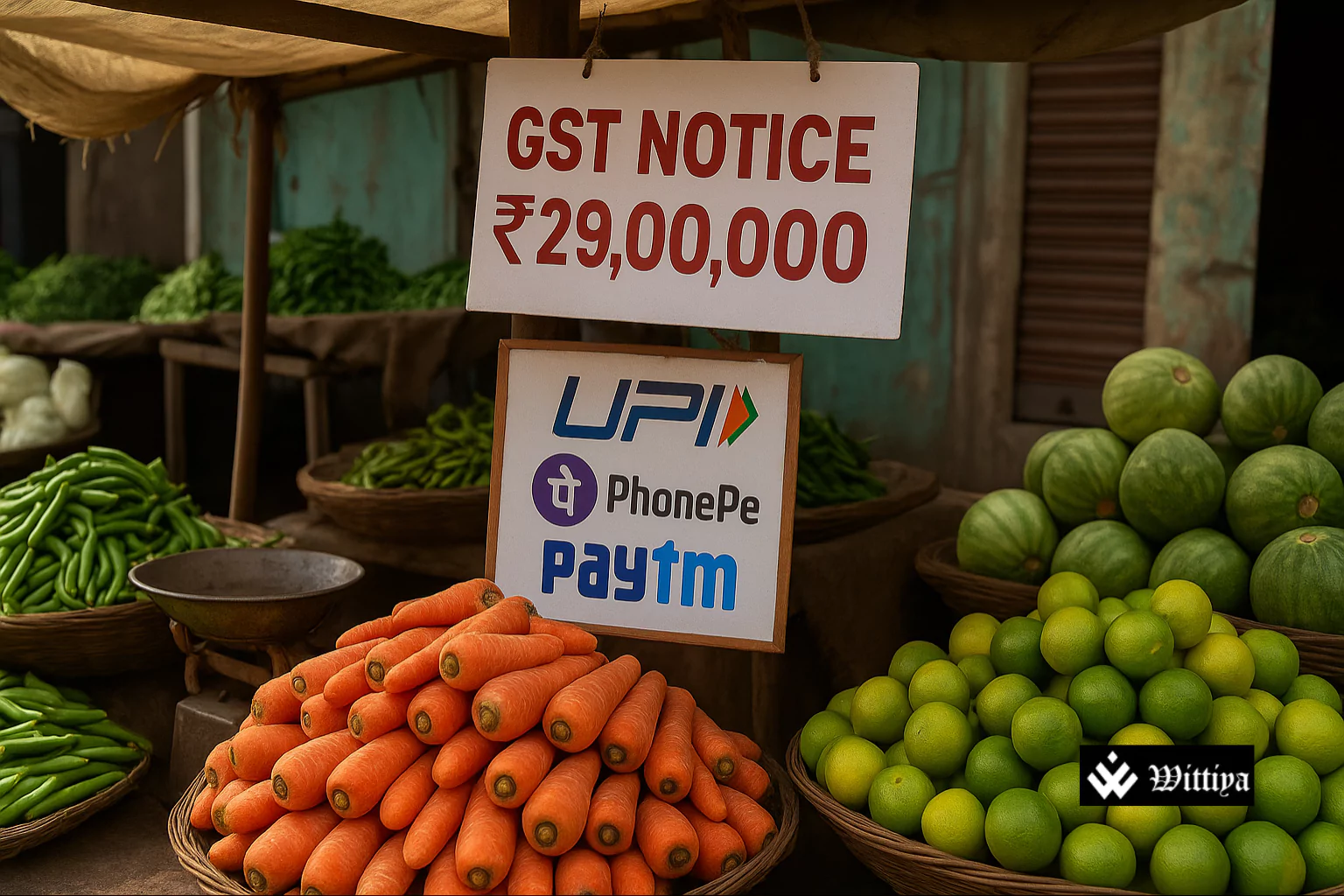
In India, a small vegetable vendor in Karnataka has been served a Rs 29 lakh GST notice based on UPI transactions, sparking protests among small traders and street vendors who claim such digital scrutiny is disproportionate
A vegetable vendor in Karnataka, India, has become the epicenter of a growing storm over digital taxation after being served a ₹29 lakh GST notice. The tax demand, which is reportedly based on four years of UPI transactions amounting to over ₹40 lakh, has raised broader concerns about the treatment of informal businesses in India’s digital economy.
The vendor, who operates a small stall near a municipal school in Haveri district, received the notice despite selling GST-exempt goods such as fresh vegetables. The controversy has since triggered widespread protests among small traders and street vendors, highlighting the unintended consequences of digital compliance in sectors with traditionally thin margins.
How Digital Trails Sparked a Tax Storm
While fresh vegetables are outside the purview of Goods and Services Tax (GST), the vendor’s increasing use of UPI apps like PhonePe and Paytm to accept Rs 10–20 payments resulted in a digital trail that flagged authorities.
I file my income tax returns every year and maintain proper records, but GST officials calculated dues based on gross digital receipts without considering the nature of goods sold.”
Vendor
This case points to a potential gap in enforcement logic — relying heavily on transaction volumes without factoring in GST exemptions, vendor margins, or the lack of structured invoicing in the informal sector.
Also Read: India’s Textile Industry Charts a Path to Uniform Taxation
Industry Insight: A Policy vs Practice Conflict
Financial experts believe this incident reflects a broader policy tension between India’s aggressive digital push and the ground realities of its informal economy. “While formalization is key to long-term tax compliance, the transition needs to be supported by proper awareness, advisory support, and technology enablement for micro-entrepreneurs,” said a senior tax consultant.
Many vendors operate on margins as low as 5–10%, making it nearly impossible to absorb sudden liabilities that include backdated GST, penalties, and interest. A tax demand that amounts to nearly 50% of gross receipts could bankrupt small businesses overnight.
Street Vendors and Small Traders Push Back
The Karnataka Pradesh Street Vendors Association has submitted a memorandum to the state government, demanding intervention and policy clarity. Several vendors reported receiving similar notices, sparking fears of mass harassment amid India’s drive to formalize informal trade.
“Digital payments were encouraged during demonetization and the pandemic. Now that same transparency is being used against us,” said one street vendor at a recent protest rally.
A Broader Debate: Equity in Taxation
The case has triggered wider debates about fairness in taxation. Some salaried taxpayers argue that income, whether earned through salary or trade, must be taxed equally. They point to inconsistencies in enforcement and loopholes that allow some to avoid taxes altogether.
But the core issue may not be about tax rates — it’s about whether the regulatory framework is equipped to distinguish between high-value evasion and subsistence trade. Experts suggest that the lack of differentiation may lead to mistrust in the system, discouraging further adoption of digital tools among micro-enterprises.
Also Read: How Did GST Collections in India Double in Just 5 Years?
What Comes Next?
The outcome of this high-profile case could shape India’s digital tax compliance landscape. If mishandled, it risks undoing years of financial inclusion efforts and deterring small vendors from using digital payment systems. On the other hand, it could also push for much-needed reforms in how informal trade is treated under the GST regime.
The vendor’s plea underscores a simple truth — without supportive policy alignment, the road to a cashless, tax-compliant India may leave its smallest contributors stranded.
READ MORE ON