






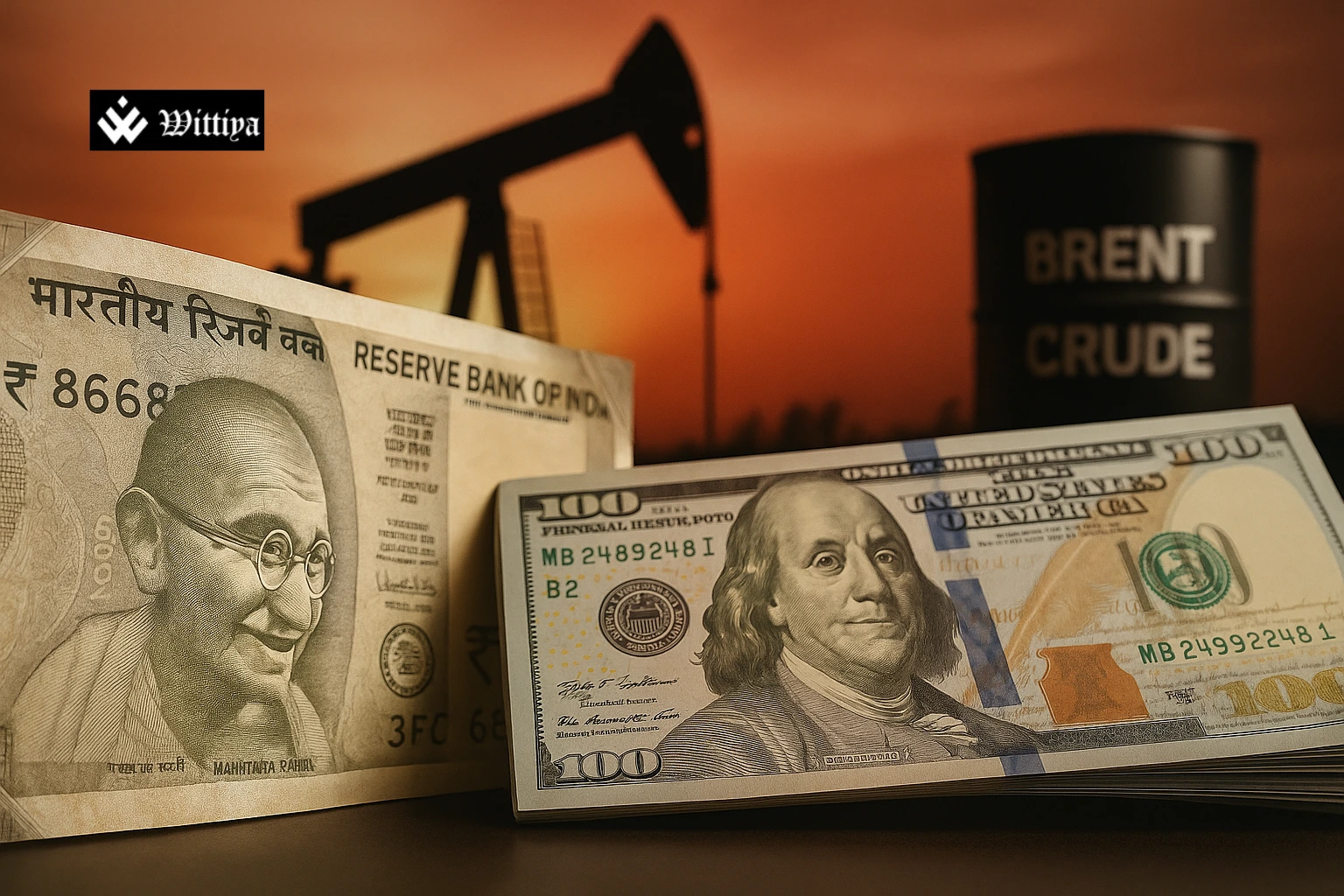
Amid escalating Middle East tensions and high oil prices, the Indian rupee weakened to its lowest level in over two months on June 19. Rising dollar demand from importers and sustained geopolitical uncertainty continue to pressure the currency, with financial markets bracing for further volatility.
The Indian rupee weakened to its lowest level in over two months on June 19, as escalating tensions in the Middle East and strong dollar demand from importers weighed heavily on the local currency.
At 12:20 p.m. IST, the rupee was quoted at ₹86.6875 per dollar, slipping 0.2% from its previous close of ₹86.4475. Earlier in the session, it touched ₹86.71, marking its weakest level since April 9.
The geopolitical strain, driven by reports that Israel targeted nuclear-related sites in Iran, has intensified market anxiety. The Israeli military confirmed that it had struck locations in Arak and Natanz, known for nuclear activity. This comes amid fears that the United States may be drawn into the conflict, further unsettling financial markets.
Crude oil prices surged in response, with Brent crude last quoted at $76.8 per barrel, up nearly 19% month-to-date. Higher oil prices put additional pressure on the Indian rupee, given India’s heavy reliance on oil imports.
“Elevated crude and continued dollar strength could push the rupee toward ₹86.80,” said Amit Pabari, Managing Director at CR Forex, a currency risk management firm based in India.
Meanwhile, demand for dollars from importers added to the rupee’s downward momentum. Several traders noted that importers were actively covering their positions, contributing to the local currency’s weakness.
On the global front, the U.S. Federal Reserve, led by Chair Jerome Powell, held interest rates steady as expected. However, Powell warned of upcoming “meaningful” inflation as the U.S. plans new import tariffs. The dollar index rose about 0.2% to 99, impacting Asian currencies across the board.
The Reserve Bank of India (RBI) has yet to intervene in the forex market during this session, according to traders. The central bank may remain on watch as volatility increases due to global uncertainty.
With a delicate macroeconomic balance at stake, the rupee’s trajectory will largely depend on geopolitical developments, oil market dynamics, and U.S. policy cues in the days ahead.