


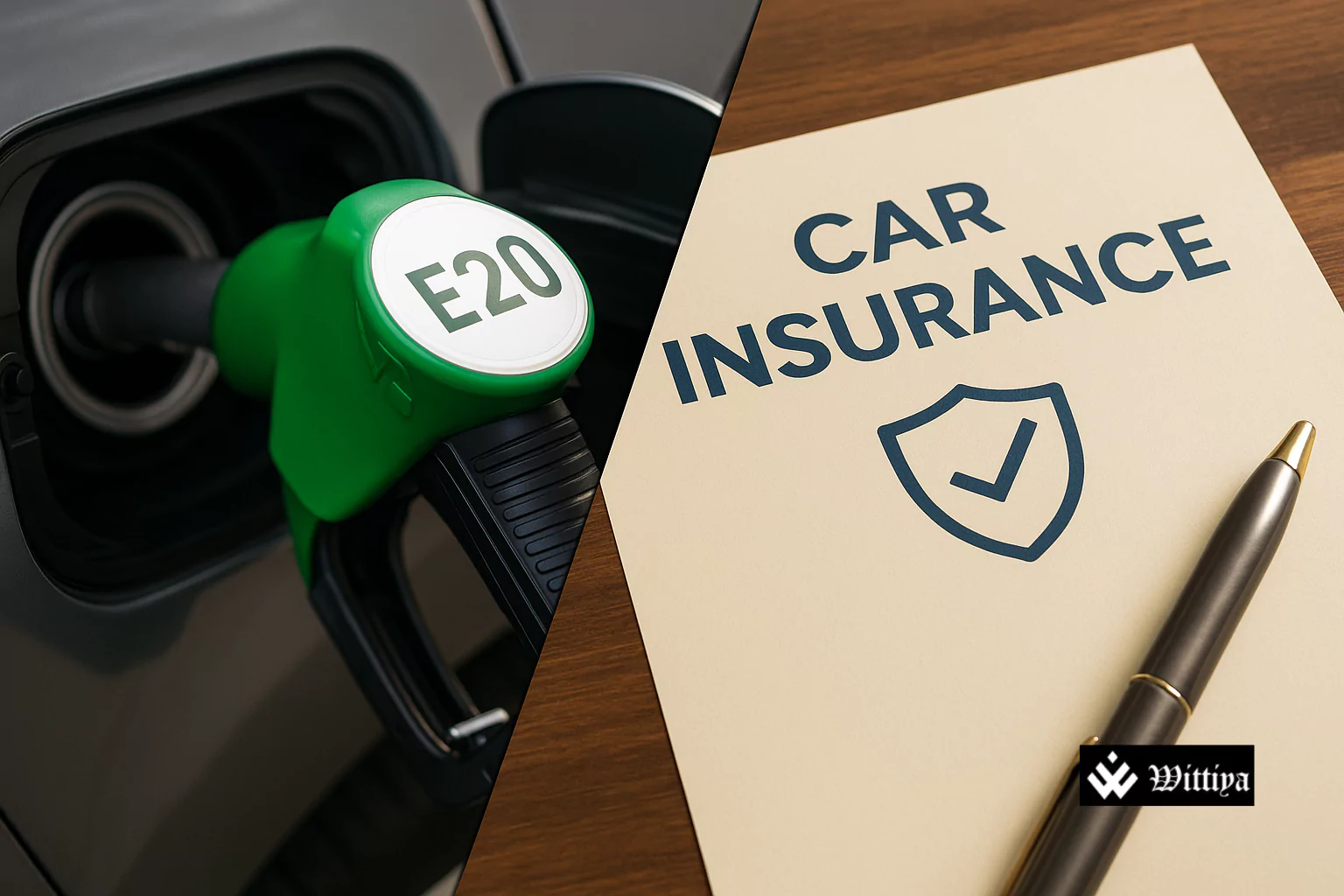
India’s shift to E20 fuel won’t impact car insurance premiums for now. Older vehicles may require add-ons like engine protection for better coverage.
India is accelerating its transition to E20 fuel — a blend of 20% ethanol and 80% petrol — as part of its broader energy diversification and carbon reduction strategy. This move is in line with the National Policy on Biofuels, which aims for 20% ethanol blending by 2025 to reduce reliance on crude oil imports, improve energy security, and cut greenhouse gas emissions.
While this shift represents a major leap toward sustainable fuel alternatives, vehicle owners have raised a critical question: Will E20 fuel impact car insurance premiums, especially for older vehicles that may not be fully compatible?
Impact on Motor Insurance Premiums
For now, E20 fuel does not affect motor insurance premiums in India. Car insurance pricing is based on several parameters such as:
- Insured Declared Value (IDV) of the vehicle
- Claims history and risk profile
- Age and model of the vehicle
- Geographical risk zones
- Add-ons opted by the policyholder
The type of fuel, whether petrol, diesel, or ethanol-blended, is not currently a premium-determining factor. Most new vehicles manufactured after April 2023 are E20-compliant, meaning they are designed to handle ethanol-blended fuel without affecting engine health.
Also Read: Wefox’s €151M Launchpad to Redefine Global Insurance Distribution
Challenges for Older Vehicles
For BS-IV or older vehicles, which were not originally designed for ethanol blends beyond E10, potential risks include:
- Corrosion of fuel systems: Ethanol is hygroscopic (absorbs water), which can corrode metal components.
- Reduced energy content: E20 has slightly less energy density than pure petrol, potentially impacting mileage.
- Engine performance issues: Non-compliant engines may experience rough starts, knocking, or reduced power output.
While these risks do not impact premiums directly, they increase the probability of engine-related issues, which are generally not covered by standard motor insurance policies.
Why Engine Protection Add-ons Are Crucial
With E20 adoption, engine protection add-ons become highly relevant for car owners, particularly for older or non-compliant vehicles. These add-ons cover:
- Damage due to fuel contamination or adulteration
- Repair or replacement of internal engine parts due to wear from ethanol-blended fuels
- Water ingress damage during monsoons or floods
Other recommended add-ons include:
- Zero depreciation cover
- Consumables cover
- Fuel adulteration protection
Government’s E20 Roadmap
The Indian government is implementing a phased rollout of E20 fuel pumps nationwide, with a target of 100% availability by 2025. Benefits of E20 include:
- Lower emissions: Reduction in carbon monoxide and particulate matter.
- Economic boost: Increased ethanol production provides better returns to farmers by using sugarcane, corn, and other bio-based feedstocks.
- Energy security: Reduced reliance on imported crude oil, saving billions in foreign exchange.
E20 vs Regular Petrol: Key Differences
| Parameter | E20 Fuel | Regular Petrol |
| Ethanol Content | 20% | 0-10% |
| Energy Density | Slightly lower (~3-5%) | Higher |
| Mileage | Slightly reduced (~1-2 km/litre) | Optimal |
| Engine Compatibility | BS6 & E20-ready models | All petrol engines |
| Cost (per litre)* | Expected to be lower | Higher |
*Cost varies across states and oil marketing companies.
Insurance Implications Going Forward
While E20 currently has no impact on premiums, insurers may reassess this in the future as more data emerges on the long-term effects of ethanol blends on vehicle engines and maintenance costs. Telematics-based insurance products (pay-as-you-drive policies) may also evolve to factor in vehicle efficiency on different fuel types.
The rollout of E20 fuel in India is a positive step for sustainability and energy independence, with no current impact on motor insurance premiums. However, vehicle owners — particularly those with older models — should focus on add-on covers like engine protection to safeguard against potential risks associated with fuel contamination or compatibility issues.
READ MORE ON