






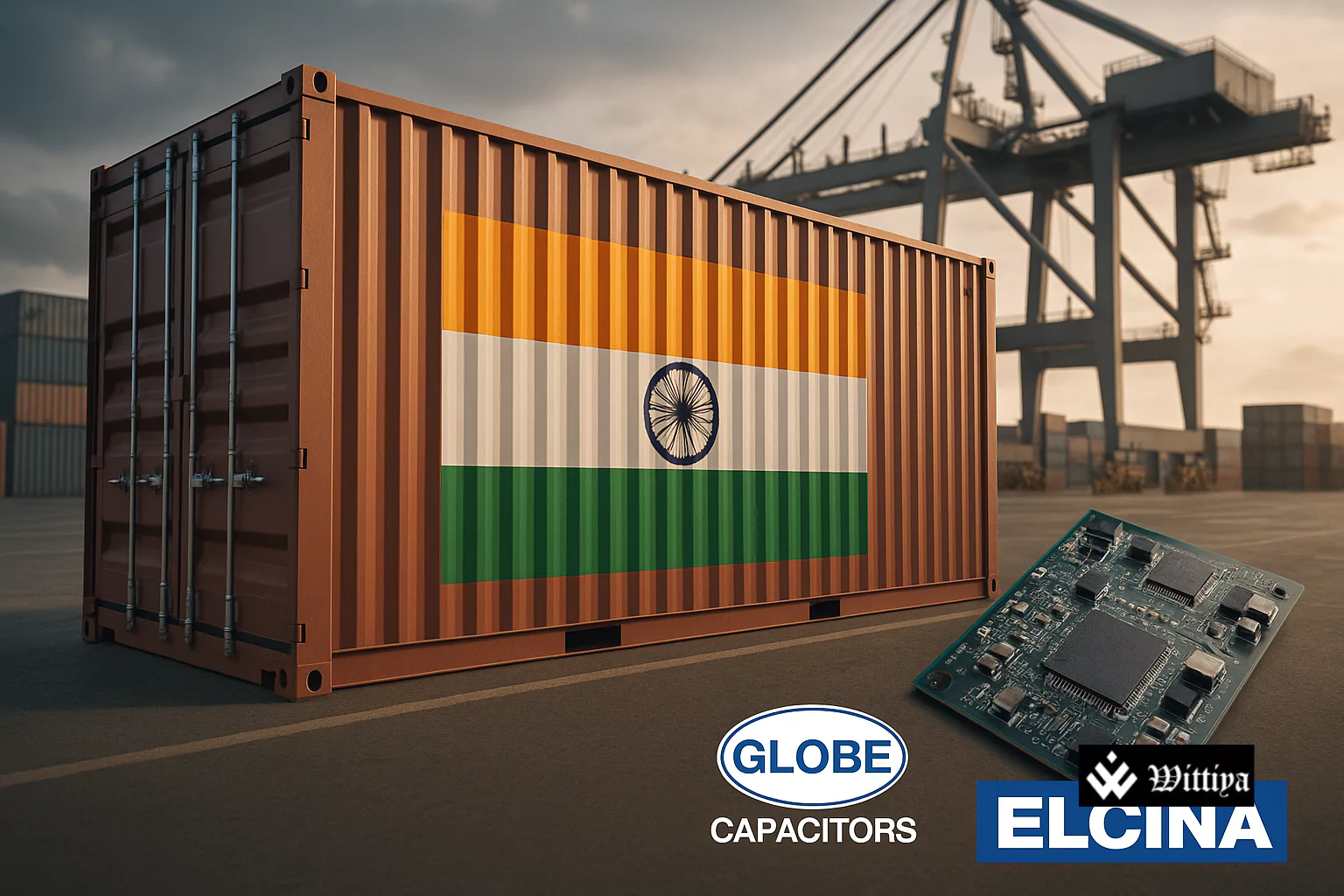
Indian electronics exporters confront rising U.S. tariffs on key goods and are exploring export markets beyond the U.S., strengthening investor resilience amid trade policy shifts.
Indian electronics exporters are intensifying efforts to diversify their markets amid the potential introduction of steep U.S. tariffs on select products. While core segments such as smartphones and IT devices remain exempt for now, the threat of duties on higher value-added goods like PCB assemblies, telecom hardware, and power electronics is prompting strategic shifts.
Exports to the U.S. reached $15.89 billion in FY 2025, with smartphones alone contributing $10.56 billion—about two-thirds of the total. However, if the proposed tariffs materialize, products representing roughly a quarter of the electronics export basket could see profitability erode, especially for mid-sized and smaller manufacturers.
Also Read: 100% Tariff Looms for Chipmakers Unless They Build in the U.S.
Globe Capacitors Pvt. Ltd. noted that while U.S. orders are still being fulfilled, the pace of new material purchases is being moderated to manage risk. The company is actively targeting emerging demand in Europe, the Middle East, Africa, and Southeast Asia to reduce reliance on a single market.
ELCINA, India’s leading electronics industry association, emphasizes that strategic diversification is becoming a core resilience measure for exporters. Companies with existing or planned overseas manufacturing units may be better positioned to navigate tariff-driven disruptions.
Trade policy uncertainty is accelerating interest in markets like Australia and even Russia, as well as consideration of establishing localized production in the U.S. if long-term tariff barriers emerge. This shift reflects a broader industry move from reactive supply chain adjustments to proactive, multi-market growth planning—positioning India’s electronics sector for greater agility in a volatile global environment.
READ MORE ON