






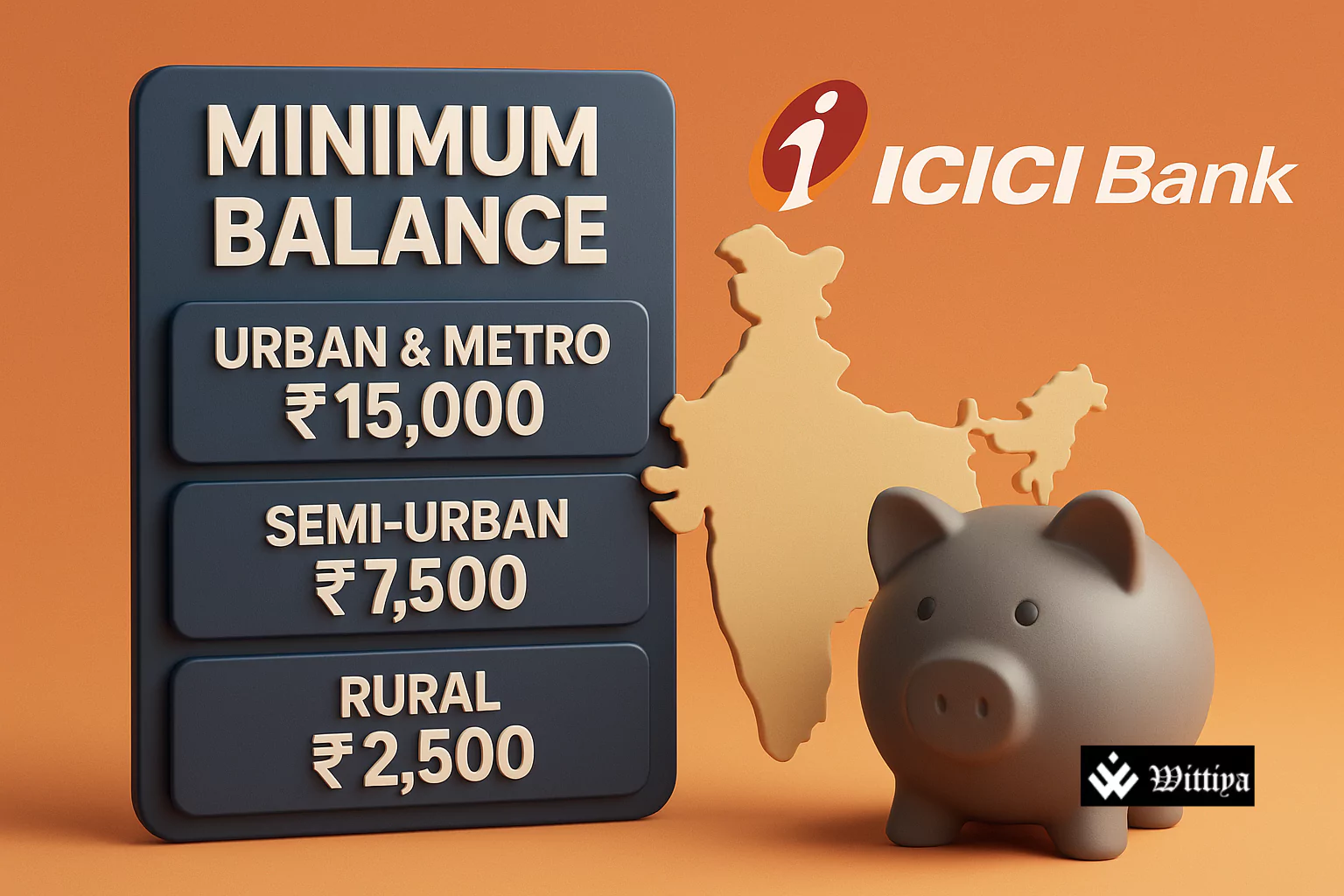
ICICI Bank in India has revised its minimum account balance requirements, lowering thresholds for metro, semi-urban, and rural regions after public criticism. The move impacts customers who opened accounts after August 1, 2025, with penalties applicable for non-compliance.
ICICI Bank has revised its minimum balance requirements for savings accounts across the country, easing thresholds after significant backlash to earlier hikes. The new rules, effective from August 13, 2025, apply to accounts opened after August 1, 2025, and represent a recalibration of its strategy to balance customer accessibility with financial discipline.
New Minimum Balance Rules
- Urban & Metro Branches: ₹15,000 (reduced from ₹50,000)
- Semi-Urban Branches: ₹7,500
- Rural Branches: ₹2,500
Failure to maintain the minimum average monthly balance (MAB) will attract a penalty of 6% of the shortfall or ₹500, whichever is lower. This penalty is higher than the earlier ₹450, signaling a firmer stance on compliance even as balance requirements were eased.
What This Means for Customers
The revision is aimed at addressing criticism from retail customers, especially urban and semi-urban account holders who faced a steep increase just days prior. Experts suggest that the rollback reflects the competitive pressures in India’s retail banking space, where digital banking alternatives and customer mobility make policy reversals more likely.
Also Read: Banking Stocks to Watch Today After India’s Rating Upgrade
Comparison with Other Major Banks
- State Bank of India: Zero minimum balance requirement across savings accounts.
- HDFC Bank: Requires ₹10,000 in urban branches, ₹5,000 in semi-urban branches, and ₹2,500 in rural areas, with alternatives available via fixed deposits.
This comparison highlights that while ICICI Bank’s new requirements are lower than its earlier hikes, they remain higher than those of public sector competitors like SBI, but broadly in line with private sector peers.
Banking analysts indicate that ICICI Bank’s adjustments reflect both regulatory sentiment and market realities. While the lender aims to strengthen its liability franchise and maintain CASA (current account savings account) ratios, the reduced thresholds demonstrate sensitivity to customer backlash and competitive positioning. In a market where financial inclusion and customer retention are critical, striking this balance is key.
READ MORE ON