


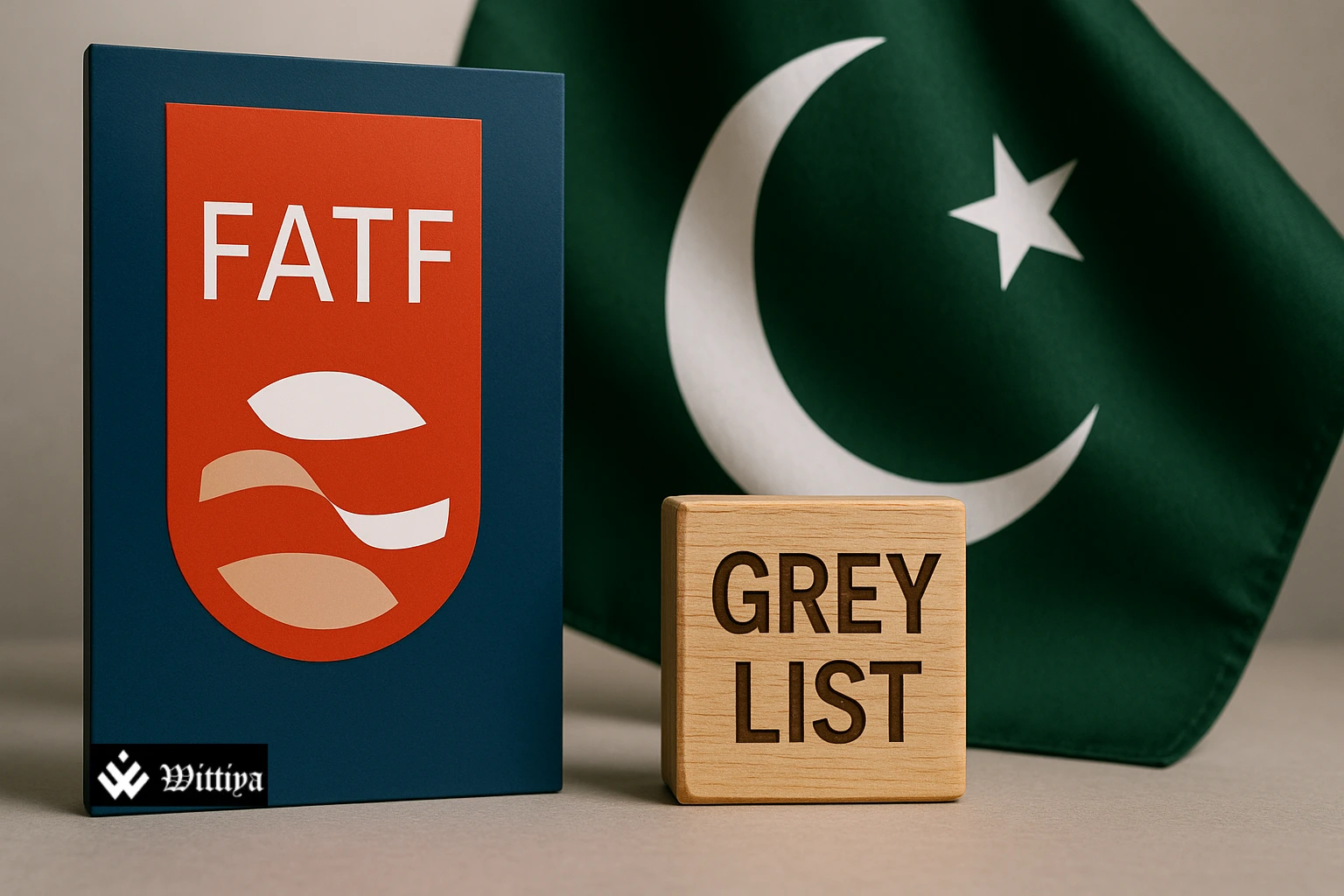
The Financial Action Task Force (FATF), a Paris-based global watchdog on money laundering and terror financing, may consider placing Pakistan back on its “grey list” in the coming weeks. The potential move follows India raising concerns over Islamabad’s failure to effectively curb terror financing, especially in light of the recent Pahalgam terror attack in Jammu & Kashmir. An official report is expected to be released by late June or early July 2025.
The Financial Action Task Force (FATF), an intergovernmental body headquartered in Paris, is likely to return Pakistan to its “grey list” in the coming weeks due to its ongoing failure to curb terror financing. This development follows concerns raised by India during a recent FATF plenary meeting held in Strasbourg, France, especially in the aftermath of the Pahalgam terror attack in Jammu & Kashmir on April 22, 2025.
Established in 1989, FATF sets global standards for combating money laundering, terrorist financing, and other financial threats. Its “grey list,” formally called “Jurisdictions Under Increased Monitoring”, includes countries that are actively working with FATF to address strategic deficiencies but are under close scrutiny.
India flagged Pakistan’s support for terrorist groups and cited intelligence that identified two Pakistani nationals among the perpetrators of the deadly Pahalgam attack, which left 26 people dead. FATF issued a rare condemnation of the incident on June 16, stating such attacks could not occur without financial backing and means to move funds.
Sources say FATF is preparing an evaluation report, officially called a Mutual Evaluation Report (MER), to be released by late June or early July 2025. If Pakistan is found lacking in effective measures to control terror funding, the country may face its fourth inclusion on the grey list. Pakistan was previously grey listed in 2008–2009, 2012–2015, and 2018–2022 before being removed after completing two action plans.
While the grey listing doesn’t lead to direct sanctions, it can impact a nation’s economy by reducing foreign direct investment and increasing compliance burdens on businesses due to stricter scrutiny by global financial institutions.
India’s strategic move follows Operation Sindoor, where Indian forces struck at terror and military bases across the border in early May. Since then, India has sent multiple diplomatic delegations to expose Pakistan’s alleged ongoing support for terrorism.
FATF’s growing focus is not only on legislation but on the effectiveness of countries’ enforcement against terror funding — marking a shift in how evaluations are conducted.
Currently, three countries—Myanmar, Iran, and North Korea—are on the FATF black list, facing stringent financial restrictions. For a country to be grey or blacklisted, there must be consensus among FATF’s 39 member nations, with no more than three members opposing the resolution.
In 2022, Pakistan had been taken off the grey list after becoming “compliant” or “largely compliant” with 38 out of 40 FATF recommendations. However, the latest developments could reverse that progress unless Islamabad takes substantial action.
As FATF works to combat evolving threats including virtual asset abuse, social media funding networks, and crowdfunding, its upcoming report may have significant geopolitical and economic implications for Pakistan and the wider South Asian region.