






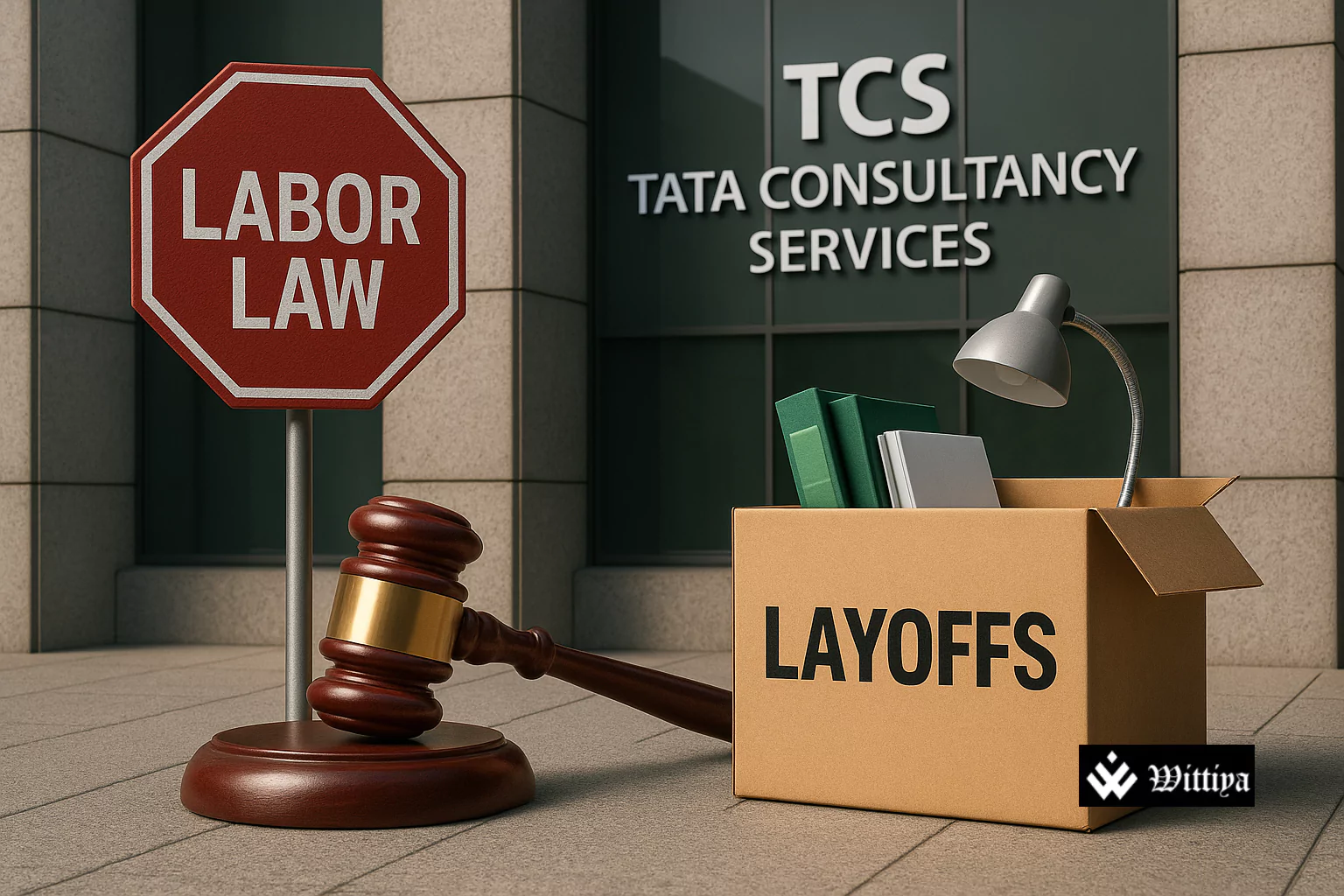
In India, the Karnataka State IT/ITeS Employees Union has filed an industrial dispute against Tata Consultancy Services over its decision to cut 2% of its global workforce. The union alleges the move violates labor laws and is pushing for intervention by the Labour Department.
India’s largest IT services firm Tata Consultancy Services (TCS) is under growing scrutiny after the Karnataka State IT/ITeS Employees Union (KITU) filed an industrial dispute over its recently announced global workforce reduction. The union alleges that the company’s planned layoffs—expected to impact around 12,000 employees globally by FY2026—violate provisions of India’s Industrial Disputes Act, 1947.
The complaint was submitted to the Additional Labour Commissioner by KITU representatives, who claim TCS failed to comply with mandatory regulations for layoffs, particularly the requirement for prior government approval before any retrenchment in organizations employing over 100 workers. Such action, under Indian law, is only permissible under specific and approved conditions.
Also Read: Layoffs or Strategy? TCS Move Sparks Industry Debate
According to the union, TCS did not adhere to the labor compliance mandates set by the Government of Karnataka, particularly concerning the disclosure of service particulars and approval processes tied to employment termination. KITU has called for criminal proceedings against the officials involved and has demanded immediate enforcement by the Labour Department.
Sources within the state administration confirmed that a meeting between the Labour Department and TCS management is being scheduled, though a specific date is yet to be announced. Karnataka’s Labour Minister has reportedly directed that the matter be expedited, underscoring the seriousness of the issue.
The union argues that the layoffs, especially those targeting mid- and senior-level employees, may create a precedent that weakens protections for IT workers across India if left unchallenged. They have urged stricter oversight and the enforcement of labor protections within the technology sector, which often operates under flexible staffing models that skirt traditional labor frameworks.
In its official statement, TCS characterized the move as part of its long-term strategy to become a “future-ready organisation.” The company emphasized its ongoing investments in AI integration, workforce reskilling, and technology modernization. According to the statement, redeployment and upskilling efforts are underway, but where redeployment is not feasible, employee exits will be initiated.
Also Read: TCS Stock Takes a Hit Amid Major Layoff Move
The 2% global workforce impact, while numerically moderate given TCS’s size, is strategically significant. It reflects a broader trend in the tech industry toward realignment, automation, and margin optimization amid increasing pressure to deliver efficiency at scale. Experts note that as AI-driven transformation accelerates, companies are likely to revisit traditional staffing structures, especially at middle and senior levels.
The situation continues to evolve, with regulatory discussions likely to shape how India’s IT industry balances business priorities with legal obligations and employee rights. The outcome of this dispute may serve as a benchmark for how India’s labor laws are interpreted in the rapidly changing landscape of digital employment.
READ MORE ON