


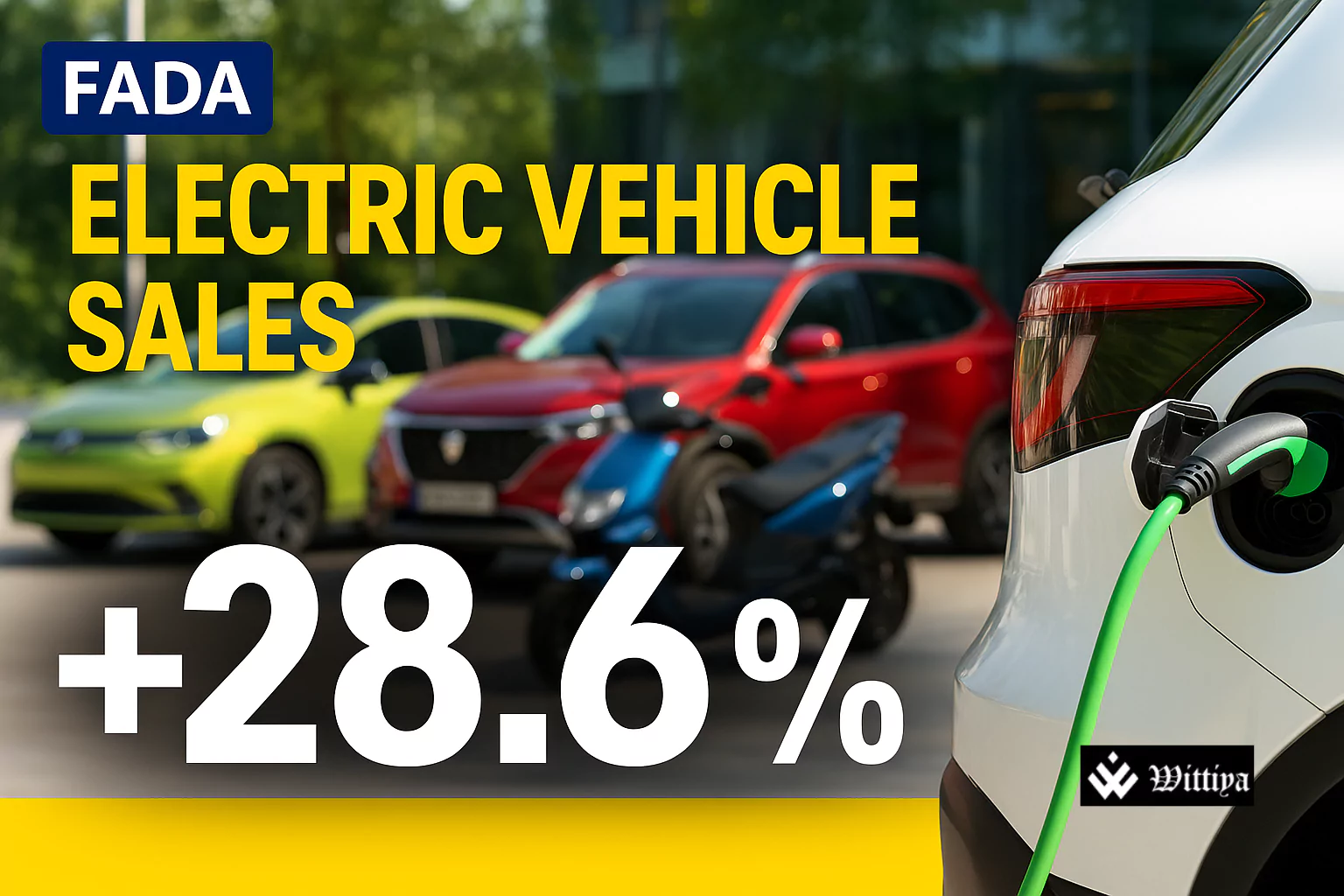
Electric vehicle (EV) sales in India grew by 28.6% in June 2025, reaching 1,80,238 units, according to the Federation of Automobile Dealers’ Associations (FADA). The surge was led by a nearly 80% increase in electric passenger vehicle (e-PV) sales and a 122.5% jump in electric commercial vehicle (e-CV) volumes. Maharashtra recorded one of the highest shares in electric mobility growth, reflecting growing consumer confidence and strong government support through the PM e-Drive Scheme.
Electric vehicle (EV) sales in India jumped 28.6% year-on-year to reach 1,80,238 units in June 2025, as reported by the Federation of Automobile Dealers’ Associations (FADA), the apex national body representing automobile dealers. The rise was driven by robust growth in electric passenger vehicles, two-wheelers, and commercial vehicles across the country.
Electric passenger vehicle (e-PV) sales surged by 79.95% to 13,178 units in June 2025 from 7,323 units a year ago. The e-PV market share increased to 4.4% of total EV sales from 2.5% in June 2024, indicating a sharp uptick in consumer demand.
The electric three-wheeler (e-3W) segment also saw steady growth, with 60,559 units sold in June 2025—up 15.79% from 52,302 units in the same month last year. This category continues to dominate the EV space, contributing 60.2% to total EV demand, up from 55.4% a year earlier.
Electric two-wheeler (e-2W) retail sales grew by 31.69% year-on-year, reaching 1,05,355 units in June 2025, compared to 80,003 units in June 2024. Similarly, electric commercial vehicles (e-CVs) saw the highest growth rate, jumping 122.5% to 1,146 units from 515 units in the previous year.
FADA attributed this growth to rising consumer confidence and the support of government initiatives like the PM e-Drive Scheme, which aims to make electric mobility more accessible and affordable in India.
In June 2025, electric two-wheelers commanded 7.3% of the market, up from 5.8% a year ago,Electric three-wheelers now account for over 60% of all three-wheeler sales, while PV EV penetration rose to 4.4%, and e-CVs more than doubled to 1.56% YoY.”
C. S. Vigneshwar, President of FADA.
He added that the expansion of charging infrastructure and a focus on domestic innovation under the central government’s vision have significantly contributed to this growth trajectory.
The EV boom is expected to continue, with demand rising across both urban and semi-urban markets. Maharashtra, Karnataka, Delhi, and Tamil Nadu are among the states witnessing high EV penetration and infrastructure development.
The rise in EV sales marks a pivotal shift in India’s mobility landscape, paving the way for a cleaner, smarter, and more self-reliant transportation ecosystem.