






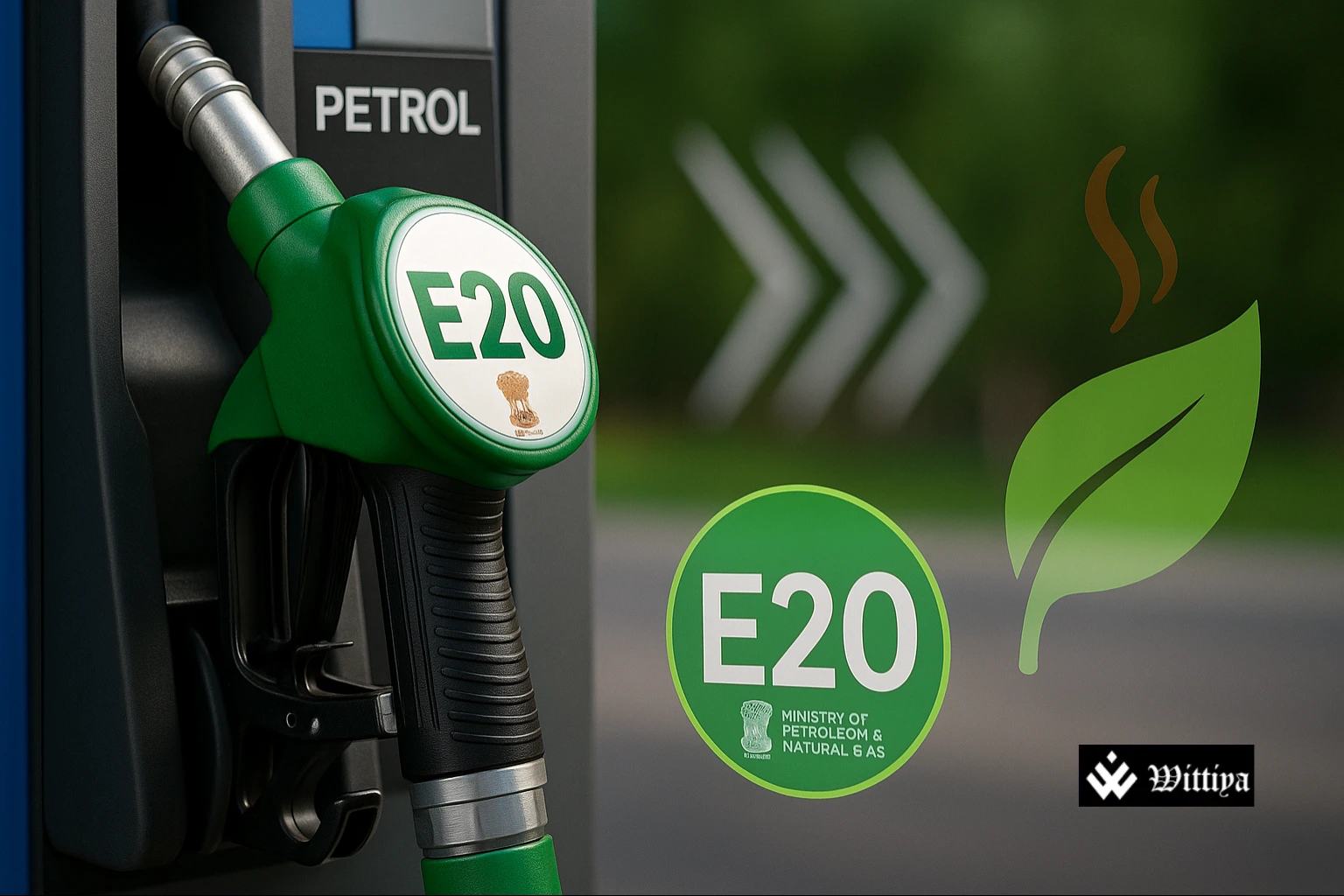
India defends E20 ethanol fuel, highlighting better performance, emission cuts, and rural income gains, while downplaying mileage concerns.
The Government of India has reiterated its full support for the nationwide implementation of 20% ethanol-blended petrol (E20), underscoring its potential to deliver significant economic savings, reduce greenhouse gas emissions, and enhance vehicle performance. This announcement comes amid ongoing public debate about potential mileage reductions and long-term engine impacts.
Economic Impact and Cost Savings
Data from the Ministry of Petroleum and Natural Gas shows that between the Ethanol Supply Year (ESY) 2014-15 and July 2025, ethanol blending initiatives by Public Sector Oil Marketing Companies have:
- Saved over ₹1.44 lakh crore (USD 17.3 billion) in foreign exchange
- Substituted approximately 245 lakh metric tonnes of crude oil
- Reduced CO₂ emissions by 736 lakh metric tonnes, equivalent to planting 30 crore trees
At the current 20% blending level, projected farmer payments for 2025 are expected to reach ₹40,000 crore (USD 4.8 billion), with forex savings of approximately ₹43,000 crore (USD 5.1 billion).
Also Read: Mileage vs Environment: Are Indian Drivers Paying the Price?
Performance and Vehicle Compatibility
Government officials addressed performance concerns, noting that E20’s octane rating of 108.5 (compared to petrol’s 84.4) delivers superior acceleration and smoother ride quality, particularly in urban driving conditions.
While some reduction in mileage has been observed in vehicles not optimised for E20, extensive industry testing suggests these drops are marginal. Moreover:
- Many models sold in India for over a decade have been E20-compatible
- For older vehicles, only occasional gasket or rubber part replacements may be required, easily addressed during routine servicing
Environmental and Climate Advantages
Ethanol produced from sugarcane reduces greenhouse gas emissions by 65%, while ethanol from maize achieves a 50% reduction compared to petrol. These environmental benefits are aligned with India’s target of achieving net-zero emissions by 2070.
The ethanol blending mandate remains in place despite current ethanol prices exceeding refined petrol costs. The government maintains that long-term gains in energy security, rural income growth, and climate resilience outweigh short-term price differentials.
Policy Roadmap and Review Timeline
The current E20 blending programme will continue until October 31, 2026, after which a comprehensive review will consider:
- Technical performance data
- Stakeholder feedback from manufacturers, fuel distributors, and consumers
- Economic analysis of blending costs and benefits
Market Outlook and Sector Implications
Energy analysts project that sustained E20 adoption could:
- Strengthen domestic ethanol markets
- Increase agricultural demand for feedstock crops
- Reduce exposure to global oil price volatility
While consumer acceptance will depend on real-world mileage performance, the broader macroeconomic, environmental, and agricultural benefits support the continuation of the policy.
READ MORE ON