





As climate change accelerates, global insurers warn that growing catastrophe risks could render parts of the world uninsurable, potentially disrupting the foundation of financial markets.
Global insurance firms are issuing a stark warning: if climate trends continue at their current pace, vast regions may soon become too risky to insure. The consequences could ripple across financial systems, real estate markets, and economies dependent on risk transfer to function.
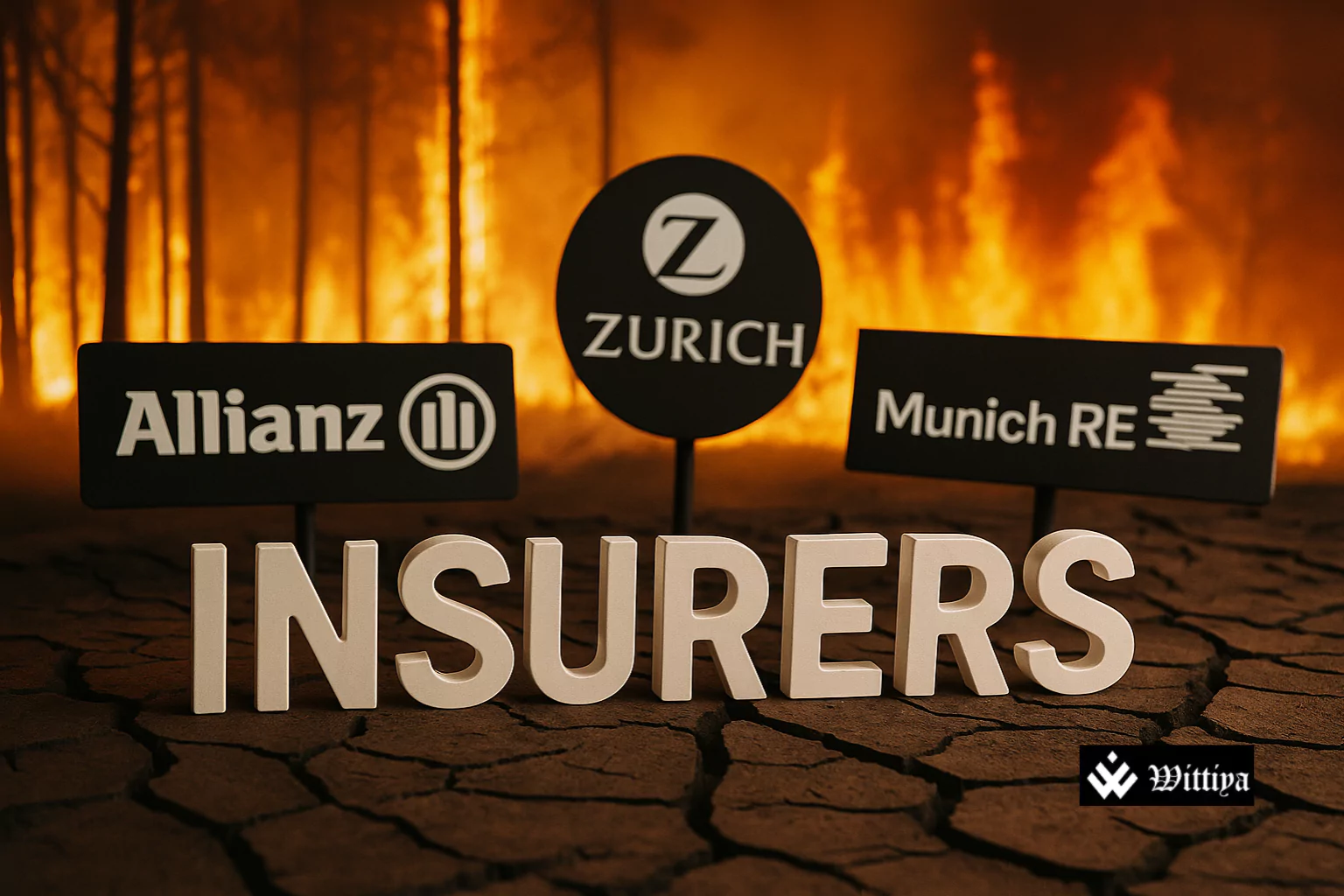
Executives from some of the world’s largest insurers—Allianz, Zurich Insurance Group, and Munich Re—have sounded the alarm on the growing challenge of maintaining insurability in a rapidly warming world.
Insurability at a Breaking Point
Günther Thallinger, board member of Germany-based Allianz, has emphasized that as global temperatures move toward a projected rise of 2.7°C to 3.1°C, adaptation becomes “simply not doable.” Entire asset classes are already degrading due to intensified weather patterns, with some insurers increasingly unable to price or underwrite risks accurately.
Insurance plays a critical role in enabling capital allocation and investment. Without it, financial institutions—from banks to pension funds—lose a foundational tool for managing risk. According to Allianz, approximately two-thirds of global economic losses from natural disasters remain uninsured, reflecting a widening “protection gap.”
This gap places disproportionate financial pressure on individuals, governments, and economies, eroding resilience and long-term stability.
The Economics of Risk and Adaptation
Allianz’s internal analysis estimates that the cost of catastrophic weather events is now ten times greater than the investment required for adaptive infrastructure, such as flood defenses, fireproof buildings, and resilient energy grids.
Despite this, global policy responses remain slow. Thallinger warns that without systemic adaptation and decarbonization, “we simply have a societal situation that is not bearable anymore.”
Zurich Insurance Group echoed this sentiment in a recent assessment, calling the global outlook “alarmingly bleak.” The insurer highlighted that insured losses have outpaced GDP growth by more than double over the last 30 years, increasing nearly 6% per year on average versus 2.7% for global GDP. This means the cost of insuring climate risks is rising faster than the economy itself can support.
Capital Markets and CAT Bond Surge
As risk increases, traditional insurance models are being supplemented by instruments such as catastrophe bonds (CAT bonds). These securities, which transfer risk to capital markets, have grown by 75% since 2020, according to Swiss Re.
While this surge indicates market innovation, it may also signal underlying instability. If extreme weather events become too frequent or severe, even alternative capital sources may find the risk profile unmanageable.
Thallinger warns that the traditional logic of “more risk equals more opportunity” is beginning to break down. The insurance industry, once a net beneficiary of volatility, may now find itself overwhelmed by compounding and correlated risks.
Can Resilience Be Built Fast Enough?
Not all voices in the industry foresee a complete breakdown. Munich Re’s climate science lead, Tobias Grimm, argues that insurability is ultimately a question of pricing and risk appetite. As long as the market supports adequate premiums, coverage can be sustained—though at increasing cost.
However, Grimm also points to a structural flaw: high-risk areas continue to see unchecked development. For instance, fire-prone zones in California and flood zones in Asia remain popular for real estate investment, despite repeated losses. Without stronger land-use management and loss prevention, even the most robust insurance models may falter.
Conclusion: A Financial Tipping Point
The implications are far-reaching. Should climate risks surpass insurability thresholds, the global economy could experience cascading failures—from mortgage defaults to investment devaluation. With insurance acting as the backbone of financial confidence, losing that buffer in key sectors would challenge capitalism’s core mechanisms.
For now, the industry urges immediate investment in adaptation and resilience. But the clock is ticking. Without a coordinated global response, the financial cost of climate change may soon outstrip the world’s ability to insure against it.
READ MORE ON