






China has rolled out minimal cash benefits to boost its declining birth rate, signaling a larger strategic shift rather than immediate relief. While the financial commitment is small, the move reflects Beijing’s growing urgency in addressing long-term demographic and economic risks.
No longer the most populous country in the world, China now faces a new economic reality—one defined by shrinking birth rates, an aging population, and a diminishing labor force. In response, the Chinese government has announced a symbolic yet strategic measure: modest baby benefits. Though the financial sum may be minor, the message is monumental.
The new benefits, amounting to just 0.1% of the national budget, are unlikely to reverse declining fertility trends on their own. If applied universally, they would represent only 3% of the average child-rearing cost. However, experts suggest this initiative is less about immediate impact and more about the policy direction it signals for the years ahead.

Economic Rebalancing Amid Demographic Pressures
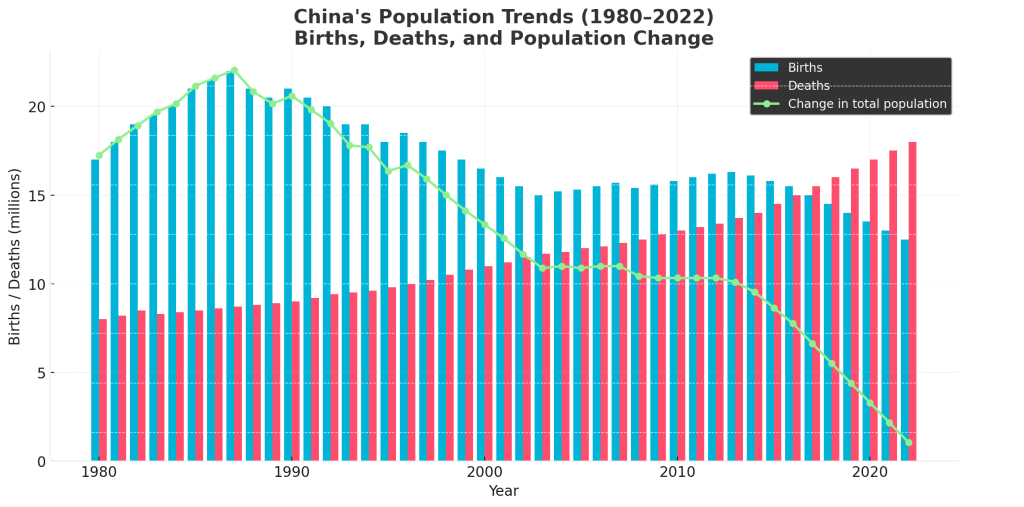
China’s birth rate has been steadily falling since 2017, with the country now projected to lose hundreds of millions in population by the end of the century. This shift poses serious macroeconomic risks: reduced labor supply, rising healthcare burdens, slower consumption growth, and potential stagnation.
Rather than focusing on the modest monetary allocation, economic analysts emphasize what this signals: a pivot in national economic strategy. For years, China relied on a vast working-age population to drive its manufacturing-heavy growth model. But as that advantage wanes, the government is beginning to lay the groundwork for a more consumption-led, innovation-driven economy.
Also Read: Understanding the Impact of China’s Economic Promises
Policy Shift Over Symbolism
What makes this baby benefit noteworthy is its psychological and political weight. By formally addressing family incentives—even minimally—China’s leadership is opening the door to broader reforms in housing, education, healthcare, and employment policies, all of which directly impact fertility decisions.
This step may also indicate the beginning of a multi-decade recalibration in fiscal policy. Future support could include tax deductions, extended parental leave, subsidized childcare, and pro-natal housing schemes—each of which would have direct implications for GDP growth, labor market trends, and long-term investment strategies.
Capital Markets and Private Sector Implications
For investors and businesses, the signal is clear: China is preparing to support its domestic consumer base more actively. Companies in childcare, healthcare, real estate, and consumer goods may see increased government cooperation and financial tailwinds. Local governments, previously pressured to manage debt and infrastructure, could receive directives to support family-building initiatives.
Markets may not respond immediately to these subtle policy cues, but the long-term structural implications are substantial. As the population shrinks, each household’s economic contribution becomes more vital. Encouraging family formation becomes an economic imperative, not just a demographic one.
Conclusion: A Small Step Toward a Larger Transformation
While the baby benefit introduced by China may be financially minor, it signals the start of a more comprehensive response to one of the country’s most pressing challenges: demographic decline. The future of China’s economy may no longer rest solely on its population size—but on its ability to adapt policy to a changing economic reality.
As the world’s second-largest economy shifts its gears, the financial world will be watching closely—not for handouts, but for hints of transformation.
READ MORE ON