






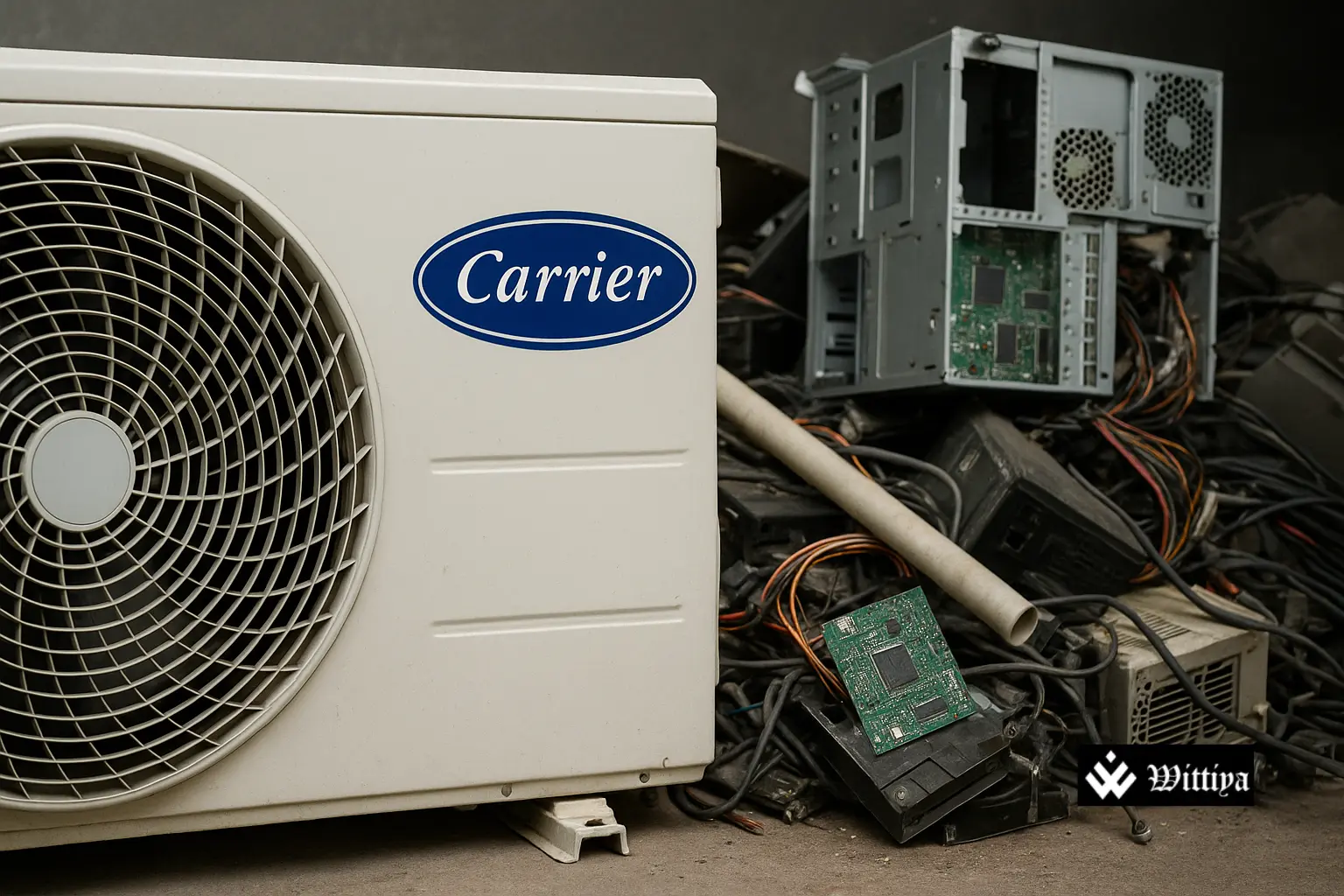
Carrier Airconditioning & Refrigeration Ltd, the Indian arm of U.S.-based air conditioning giant Carrier, has filed a legal petition against the Indian government’s updated electronic waste (e-waste) recycling rules. The company argues that the increased fees mandated by the new regulations place an undue financial burden on manufacturers. Similar lawsuits have been filed by Samsung Electronics, LG Electronics, Daikin, and Voltas, with the Delhi High Court scheduled to hear the cases on July 9.
Carrier Airconditioning & Refrigeration Ltd, the Indian subsidiary of U.S.-based Carrier Global Corporation, filed a lawsuit in the Delhi High Court challenging India’s revised electronic waste (e-waste) recycling regulations. The case adds to a series of legal actions by major global manufacturers protesting the financial burden caused by new minimum fee mandates for recycling electronic products.
The Indian government, under Prime Minister Narendra Modi, introduced revised rules in September 2024 that impose a minimum payment of ₹22 per kilogram for recycling consumer electronics. According to Carrier’s 380-page court filing, reviewed by Reuters, this price is three to four times higher than the previously negotiated rates between manufacturers and recyclers. Carrier argues that the rules violate commercial autonomy and unfairly shift the financial burden onto producers.
Carrier, which reported sales of $248 million in India in 2024, stated in its submission that “recyclers were willing to continue their work at the older prices,” and the government should not interfere in private business arrangements. The company added that the mandate would impose a “huge financial burden” and termed the rule “arbitrary and unfair.”
Carrier is not alone. Other industry giants including South Korea’s Samsung Electronics, LG Electronics, Japan’s Daikin, and Indian conglomerate Tata’s Voltas have also filed suits demanding that the rule be struck down. The Delhi High Court will hear these petitions on July 9, 2025.
India, the world’s third-largest generator of electronic waste after China and the U.S., recycled only 43% of its e-waste last year, according to government data. The Ministry of Environment has defended the rule in previous court hearings, stating that it was a “reasonable intervention” aimed at ensuring better waste management practices. However, it has yet to issue a statement in response to the latest round of legal challenges.
The dispute highlights the tension between environmental policy and industrial costs. While government authorities emphasize sustainable practices, manufacturers warn that sudden cost escalations may undermine profitability and operations.
Carrier, which has operated in India since installing the country’s first air conditioning system in Jaipur in 1936, remains a key player in the Indian cooling and refrigeration sector.
As the legal process unfolds, the outcome of this case could significantly shape the future of India’s e-waste management framework and its relationship with international manufacturers.