


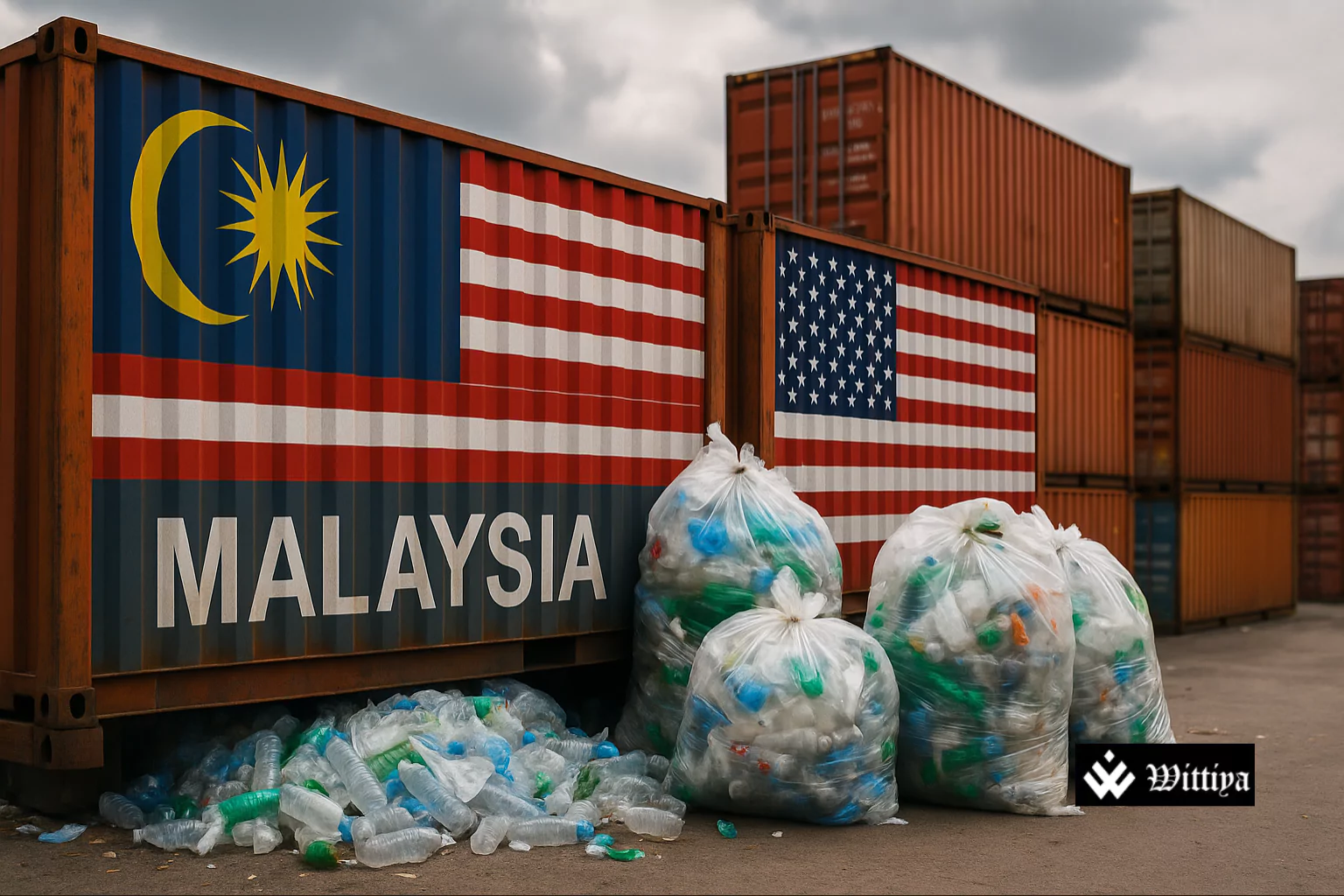
Malaysia has banned plastic waste imports from the United States, intensifying the global debate on how developed nations handle their plastic trash. The move highlights a growing environmental pushback in Southeast Asia and reflects rising concerns about plastic pollution and illegal waste dumping.
In a significant shift that may reshape the global plastic waste trade, Malaysia has officially banned plastic waste imports from the United States, citing mounting concerns over environmental harm and illegal dumping. The move came after authorities uncovered hundreds of shipping containers filled with misdeclared plastic and e-waste from the US, as reported by The New York Times.
The announcement was made by Malaysia’s Minister of Natural Resources and Environmental Sustainability, who reaffirmed that the country would no longer act as “the world’s rubbish bin.” This policy decision is expected to heavily impact global waste exporters and recyclers, especially from the US, which shipped over 35,000 tons of plastic waste to Malaysia last year.
The ban specifically affects countries that haven’t ratified the Basel Convention—a UN-backed global treaty regulating hazardous waste movements. The United States, which signed but never ratified the agreement, now faces a significant setback in its global waste management strategy.
Under Malaysia’s revised Customs Act, even compliant countries must adhere to strict contamination controls—allowing no more than 2% impurities and requiring plastics to be sorted by type. This presents challenges, as most consumer plastic waste from the US is mixed and difficult to purify to that standard.
The situation echoes a broader trend that began in 2018, when China—once the largest global importer of plastic waste—shut its doors to foreign trash, triggering a surge in waste shipments to Southeast Asian countries like Thailand, Indonesia, and Malaysia. However, these countries have struggled to manage the influx and are now pushing back.
The impact on the US recycling industry has been immediate. Steve Wong, head of global plastic broker Fukutomi, notified clients that shipments to Malaysia had “come to a virtual standstill.” In response, US trade associations like America’s Plastic Makers, led by President Ross Eisenberg, stated they are reassessing the situation but reaffirmed their commitment to increasing domestic recycling infrastructure.
Still, the ban has sparked criticism from Malaysian manufacturers who rely on clean imported waste to meet recycled-content goals set by global brands like Coca-Cola, PepsiCo, and Nestlé. These companies have pledged to include more recycled material in their packaging, but face growing hurdles due to tightening international regulations.
Researchers like Kate O’Neill from UC Berkeley warn that these disruptions are just the beginning. “The recycling industry still hasn’t caught up with the global shift,” she said, adding that more countries could follow Malaysia’s lead. The long-term solution, she argues, lies not just in better recycling, but in drastically reducing the production of single-use plastics.
The United States, where less than 10% of plastic waste is recycled, now faces mounting pressure to rethink its plastic lifecycle. Several states have already introduced localized measures. For instance, Illinois recently banned small plastic toiletry bottles in hotels, while Delaware imposed new restrictions on foam containers and plastic stirrers.
As nations negotiate a global plastics treaty under the UN’s guidance, experts hope the focus will shift from managing plastic waste to curbing its production at the source—marking a decisive step in the global fight against pollution.