




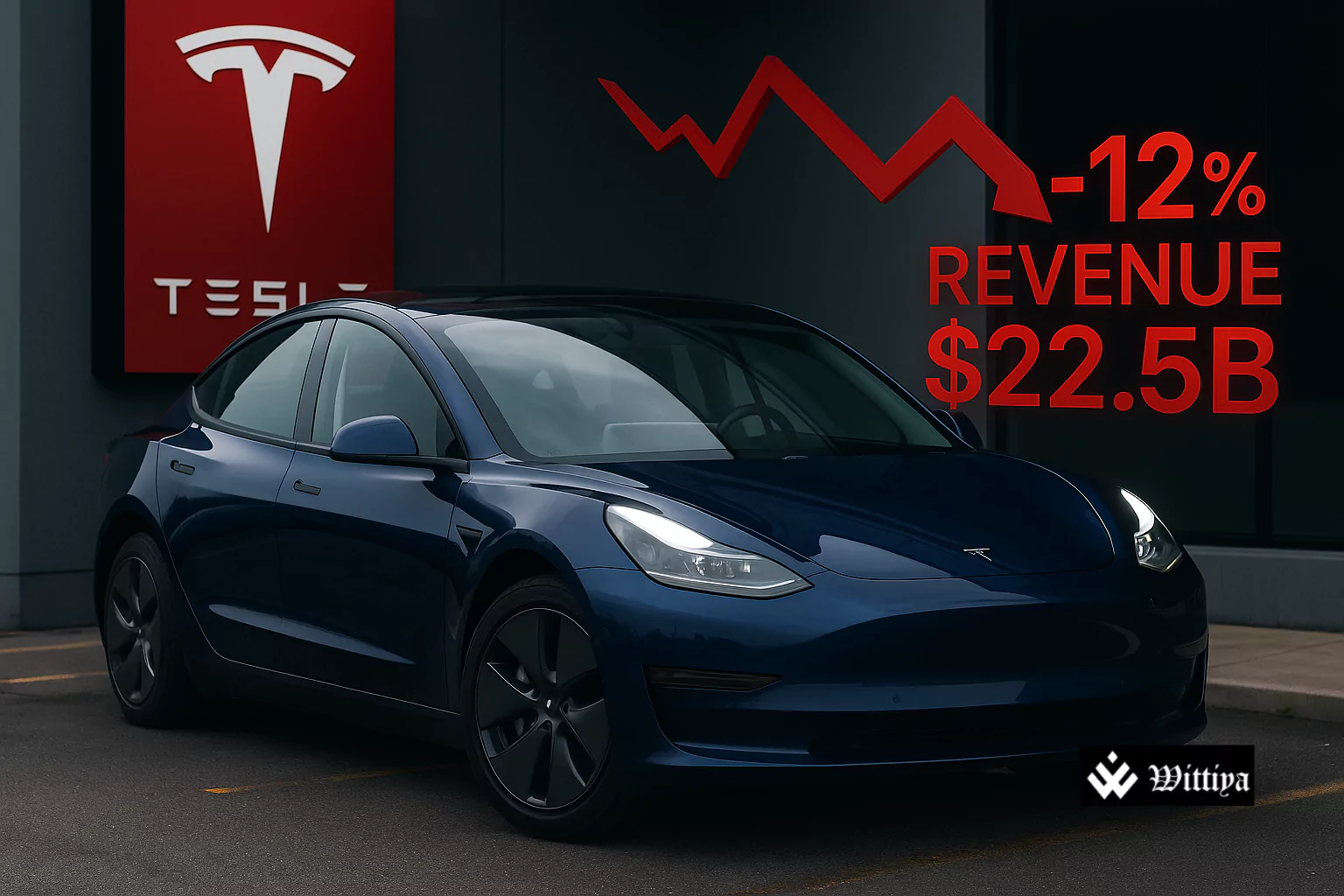
Tesla Inc. reported its weakest quarterly performance in 10 years with revenue falling 12% to $22.5 billion and adjusted earnings of 40 cents per share, signaling the growing challenges from rising competition, pricing pressures, and political uncertainties.
Tesla Inc. has reported one of its steepest sales declines in a decade, underscoring the increasing headwinds facing the electric vehicle pioneer. Revenue for the April-June quarter fell 12% year-on-year to $22.5 billion, while adjusted earnings came in at $0.40 per share, slightly below market expectations.
The revenue decline stemmed from a drop in vehicle deliveries, reduced regulatory credit revenue, and a lower average selling price across its fleet. Tesla also posted a decline in energy generation and storage revenue, though its supercharging network business continued to show growth momentum.
Despite the weak performance, the company reiterated its commitment to advancing robotaxi operations and affordable EV projects, positioning these as long-term growth catalysts. However, Tesla acknowledged ongoing uncertainty due to shifting tariffs, fiscal policy changes, and evolving political sentiment that continue to pressure the EV industry.
Also Read: Why Did Trump Suddenly Back Tesla Despite Feud with Musk?
Market experts point to Tesla’s dual identity as both an auto manufacturer and AI-driven technology company. While Q2 results may appear weak to those focused solely on car sales, investors with an eye on Tesla’s AI and robotics pipeline remain optimistic.
The company’s regulatory credit revenue—once a strong revenue stream—fell 26% to $439 million in Q2, with expectations for further declines as U.S. policy changes reduce penalties for traditional automakers. Despite these challenges, Tesla’s gross margin surpassed analyst expectations, offering a glimmer of resilience in its operational model.
Shares of Tesla remained volatile in after-hours trading, with the stock down 18% year-to-date, reflecting ongoing investor concerns about pricing strategy and market competition from global EV players.
READ MORE ON