


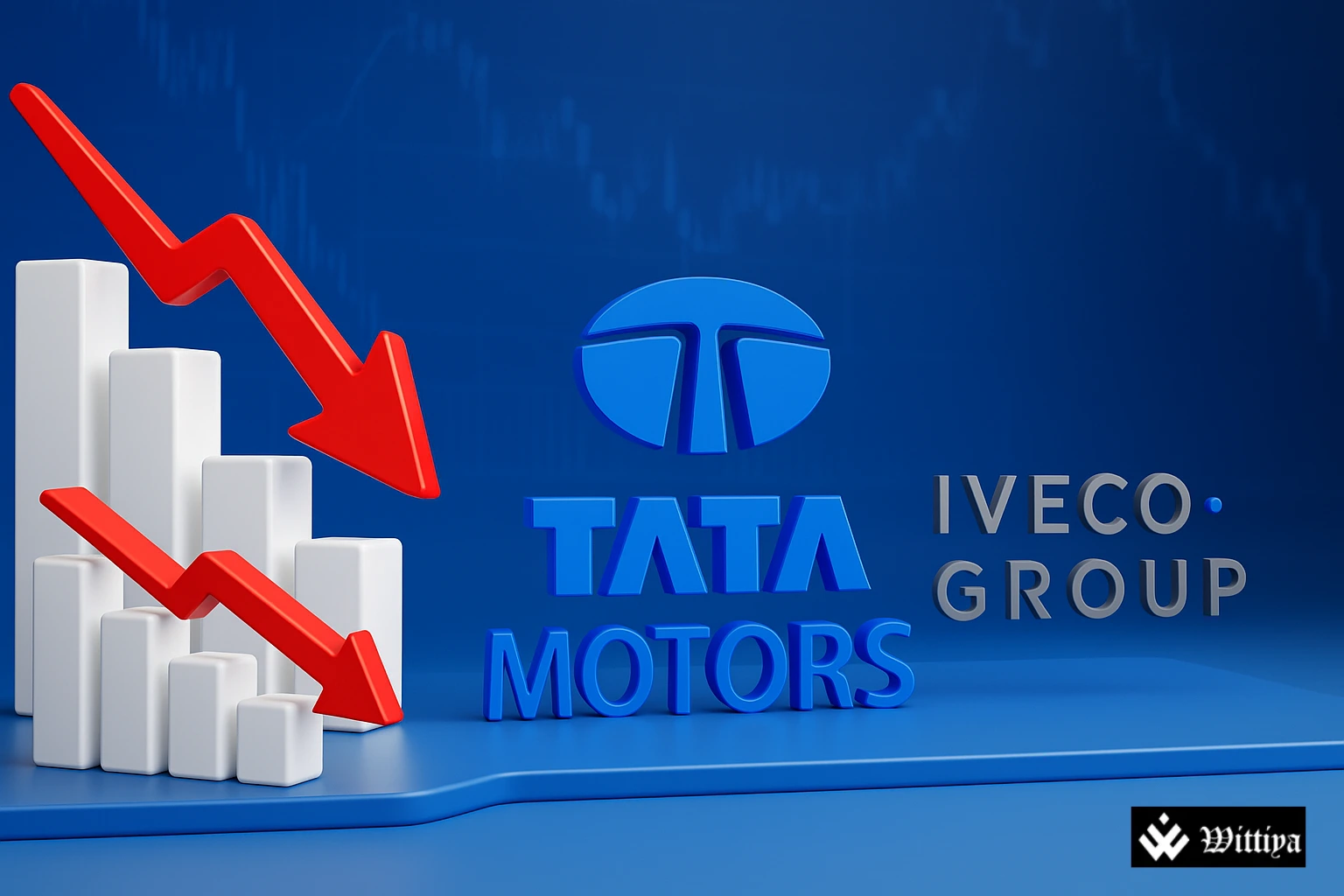
Tata Motors’ stock declined by nearly 4% following reports of a potential $4.5 billion acquisition of Italy-based commercial vehicle manufacturer Iveco. The move underscores the company’s aggressive global expansion strategy as it seeks to strengthen its presence in international commercial vehicle markets.
Tata Motors Limited, is a leading Indian automotive manufacturer and part of the Tata Group. Operating across the passenger and commercial vehicle segments, the company also owns the Jaguar Land Rover brand through its UK-based subsidiary. Tata Motors has consistently focused on innovation, electric mobility, and sustainable transportation solutions.
On July 29, 2025, shares of Tata Motors fell 3.9% to close at ₹987.15 on the National Stock Exchange, following developments around a strategic global acquisition. The company is reportedly advancing discussions to acquire Italian commercial vehicle maker Iveco Group for approximately $4.5 billion in a cash and stock deal.
The proposed acquisition marks a significant milestone in Tata Motors’ international growth strategy. Iveco, headquartered in Turin, Italy, specializes in manufacturing trucks, buses, off-road vehicles, and defense mobility solutions. By integrating Iveco’s product range and geographic reach, Tata Motors aims to enhance its competitiveness in key global markets, particularly in Europe and Latin America.
Also Read: Tata Motors in Advanced Talks to Acquire Controlling Stake in Italy’s Iveco Group
While the transaction is still under negotiation, it reflects Tata Motors’ commitment to scaling its global operations and building a comprehensive commercial vehicle ecosystem. The acquisition, once finalized, would position Tata Motors as a more diversified global mobility player with increased capabilities across technology, manufacturing, and distribution.
The company continues to maintain a disciplined approach to capital allocation while focusing on improving margins and sustaining leadership in the domestic automotive market. Tata Motors remains aligned with long-term objectives of technological advancement, electric vehicle adoption, and cross-border business synergies.
As the deal progresses, further clarity on execution timelines, integration plans, and financial structuring is anticipated. The company continues to evaluate strategic opportunities that support its global ambitions while strengthening operational performance across all business units.
READ MORE ON